Uncover History’s Secrets with Daily Updates!
Daily News Entertainment
  • Home
  • History
  • Biographies
  • Eras
  • Regions
  • Timeline
No Result
View All Result
History Ours
  • Home
  • History
  • Biographies
  • Eras
  • Regions
  • Timeline
No Result
View All Result
History Ours
No Result
View All Result
Home Regions

Borderlands and Nations: Mapping Regional Identity Over Time

in Regions
Borderlands and Nations: Mapping Regional Identity Over Time

Border regions often reveal more about national identity than central capitals do. Their shifting boundaries, mixed populations, and contested memories create layered geographies. Studying these areas requires attention to movement, trade, administrative change, and everyday cultural practices. This article outlines approaches to understanding how regions form and re-form through time.

Historical Boundaries and Movement

Historical borders were frequently porous, shaped by migration, warfare, and diplomacy rather than immutable lines. Cartographic records, treaties, and local accounts together illuminate how borders expanded, contracted, or blurred. Transport corridors and seasonal labor patterns often mattered more to residents than official frontiers. Recognizing fluidity helps explain enduring ambiguities in regional identity.

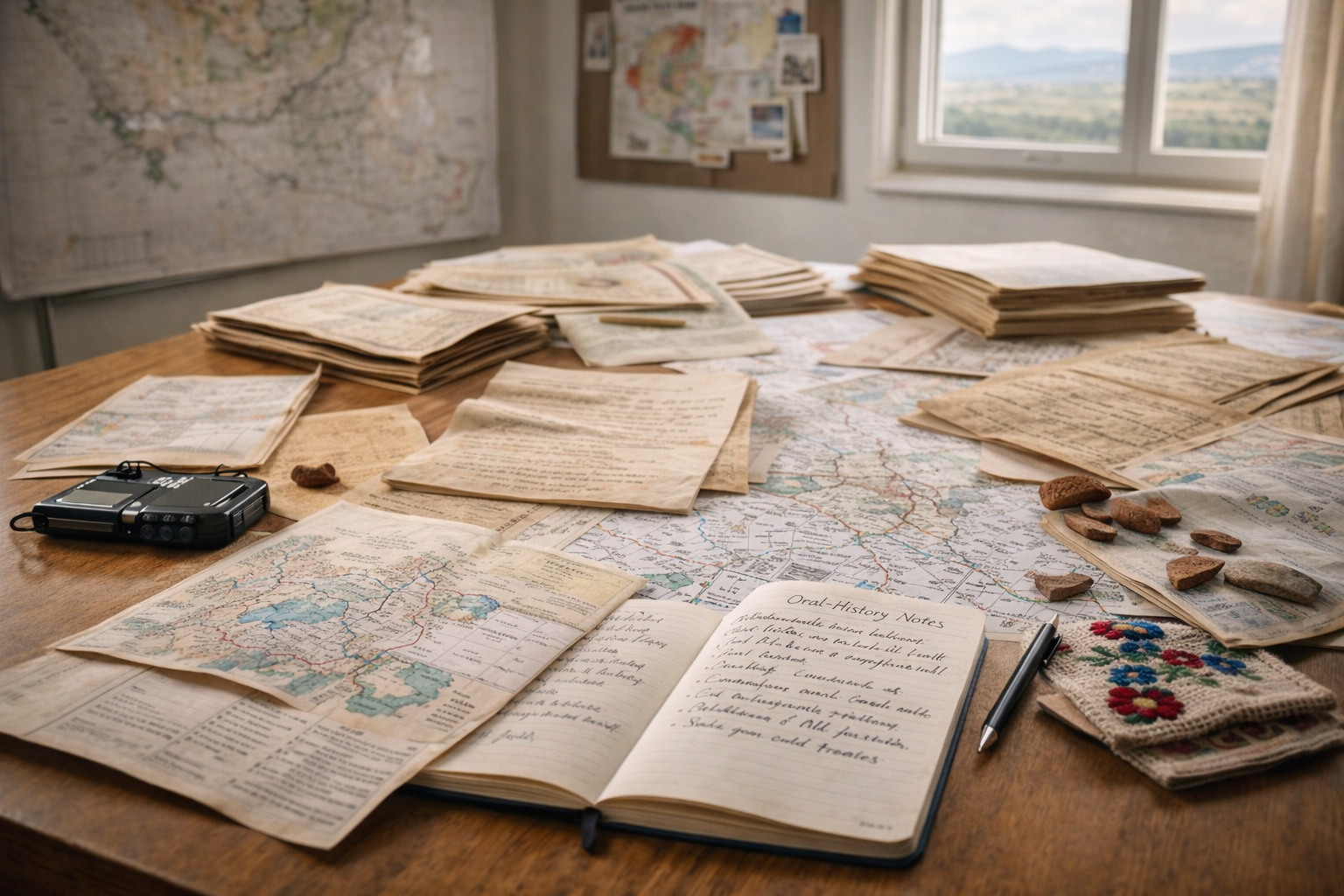
Archival research combined with oral histories can recover these dynamics. This mixed evidence highlights the contingency of national narratives.

Cultural Exchange and Local Practices

Trade, marriage, religious practice, and language use create everyday networks that cross administrative divides. Markets and pilgrimage routes diffuse crafts, culinary habits, and political ideas across regions. Local rituals and space use can persist even as state authority shifts, producing hybrid cultural forms. Mapping these practices reveals how inhabitants negotiate belonging.

  • Material culture like pottery, clothing, and tools.
  • Oral traditions and multilingual inscriptions.

Documenting material and immaterial exchanges provides insight into resilience and adaptation. It also shows how regional identity is actively maintained and transformed.

Landscape, Memory, and Governance

Landscapes carry political meaning through monuments, place names, and land tenure systems. Public memory and commemorations often reflect competing claims and selective histories. Administrative reforms, schooling, and resource allocation shape perceptions of who belongs in a region. Scholars must link policy history to local memory to understand contested terrains.

Such analysis uncovers how governance interacts with lived experience to stabilize or unsettle regional identities. It points to policy levers that influence long-term regional cohesion.

Methodologies and Sources

Effective study of regions combines archival work with field surveys, oral history, and material analysis. Geospatial tools and historical mapping help visualize shifts over centuries and pinpoint areas of continuity. Ethnographic attention to festivals, household practices, and local governance reveals micro-level adaptations. Cross-referencing legal documents, tax records, and ecological data grounds cultural claims in economic and environmental realities. Collaboration with local communities ensures interpretations respect lived experience.

Transparent methodology improves comparability across case studies and helps refine hypotheses. Digital repositories and open data protocols increase the accessibility of regional research. This methodological rigor supports policy-relevant insights without reducing complex local meanings.

Conclusion

Borderlands and regions are products of constant negotiation between people, institutions, and environments. A comparative, interdisciplinary perspective reveals patterns that single-discipline studies miss. Paying attention to everyday life, material culture, and administrative history offers a fuller account of how regional identities persist and change.
Previous Post

Balancing Continuity and Change When Defining Eras

Next Post

Contours of Place: How Regions Grow Their Histories

Related Posts

Trieste: A Port at the Edge of Empires
Regions

Trieste: A Port at the Edge of Empires

September 15, 2026
Svalbard: How a Frozen Archipelago Became an International Outpost
Regions

Svalbard: How a Frozen Archipelago Became an International Outpost

September 15, 2026
Orkney: Where Norse Law and Scottish Life Intertwined
Regions

Orkney: Where Norse Law and Scottish Life Intertwined

September 15, 2026
Inside the Covered Streets: The Grand Bazaar and Istanbul’s Life
Regions

Inside the Covered Streets: The Grand Bazaar and Istanbul’s Life

September 15, 2026
Next Post
Contours of Place: How Regions Grow Their Histories

Contours of Place: How Regions Grow Their Histories

Search..

No Result
View All Result

Recent Articles

The Disguise That Broke Chains: Ellen and William Craft

The Disguise That Broke Chains: Ellen and William Craft

September 15, 2026
Bass Reeves: The Marshal Who Hunted Outlaws in Indian Territory

Bass Reeves: The Marshal Who Hunted Outlaws in Indian Territory

September 15, 2026
How the Crystal Palace Turned Glass and Iron into a Modern Stage

How the Crystal Palace Turned Glass and Iron into a Modern Stage

September 15, 2026
Anne Bonny: The Pirate Who Broke Rules and Expectations

Anne Bonny: The Pirate Who Broke Rules and Expectations

September 15, 2026
How Haiti Broke Its Chains: A 1791–1804 Timeline

How Haiti Broke Its Chains: A 1791–1804 Timeline

September 15, 2026

Subscribe Us

By clicking submit, I authorize History Ours and its affiliated companies to: (1) use, sell, and share my information for marketing purposes, including cross-context behavioral advertising, as described in our Terms of Service and Privacy Policy, (2) supplement the information that I provide with additional information lawfully obtained from other sources, like demographic data from public sources, interests inferred from web page views, or other data relevant to what might interest me, like past purchase or location data, (3) contact me or enable others to contact me by email with offers for goods and services from any category at the email address provided, and (4) retain my information while I am engaging with marketing messages that I receive and for a reasonable amount of time thereafter. I understand I can opt out at any time through an email that I receive, or by clicking here

Subscribe To Our Newsletter

By clicking submit, I authorize History Ours and its affiliated companies to: (1) use, sell, and share my information for marketing purposes, including cross-context behavioral advertising, as described in our Terms of Service and Privacy Policy, (2) supplement the information that I provide with additional information lawfully obtained from other sources, like demographic data from public sources, interests inferred from web page views, or other data relevant to what might interest me, like past purchase or location data, (3) contact me or enable others to contact me by email with offers for goods and services from any category at the email address provided, and (4) retain my information while I am engaging with marketing messages that I receive and for a reasonable amount of time thereafter. I understand I can opt out at any time through an email that I receive, or by clicking here.

© 2026 History Ours | All Rights Reserved

  • Contact Us
  • Privacy Policy
  • Terms of Service
  • Unsubscribe
  • Privacy Choices
  • Contact Us
  • Privacy Policy
  • Terms of Service
  • Unsubscribe
  • Privacy Choices

© 2026 History Ours | All Rights Reserved

No Result
View All Result
  • Home
  • History
  • Biographies
  • Eras
  • Regions
  • Timeline

© 2026 History Ours | All Rights Reserved

Skip to content
Open toolbar Accessibility Tools

Accessibility Tools

  • Increase TextIncrease Text
  • Decrease TextDecrease Text
  • GrayscaleGrayscale
  • High ContrastHigh Contrast
  • Negative ContrastNegative Contrast
  • Light BackgroundLight Background
  • Links UnderlineLinks Underline
  • Readable FontReadable Font
  • Reset Reset