Uncover History’s Secrets with Daily Updates!
Daily News Entertainment
  • Home
  • History
  • Biographies
  • Eras
  • Regions
  • Timeline
No Result
View All Result
History Ours
  • Home
  • History
  • Biographies
  • Eras
  • Regions
  • Timeline
No Result
View All Result
History Ours
No Result
View All Result
Home Eras

Constructing Flexible Periods to Illuminate the Past

in Eras
Constructing Flexible Periods to Illuminate the Past

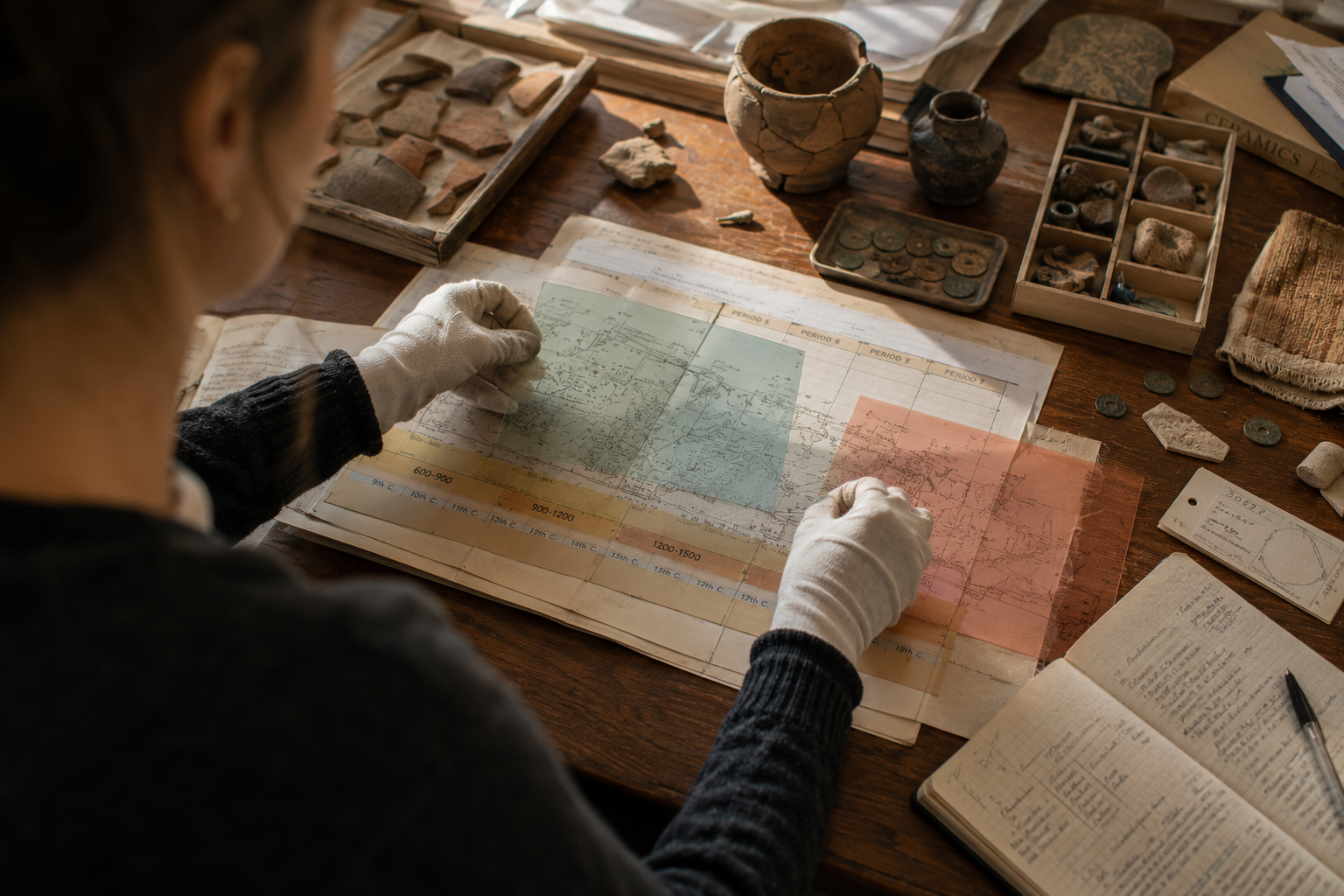
Historians and educators rely on periodization to organize complex narratives into manageable frameworks. Thoughtful eras highlight connections among political, social, economic, and cultural changes while still acknowledging continuity. Rather than treating boundaries as fixed, modern approaches favor flexible periods that can overlap and be reinterpreted. This article outlines principles and practical tools for constructing eras that clarify rather than obscure the past.

Principles for Defining Periods

Effective periodization starts with clear criteria tied to observable shifts, such as technological innovations, major institutional changes, or sustained cultural transformations. Periods should be defensible, meaning the reasons for their start and end are explicit and based on evidence rather than convenience. They must also allow for multiple scales: local, regional, and long-term frameworks can coexist without contradiction. Finally, transparency about limitations and ambiguities helps users understand why boundaries might be provisional.

Balancing these principles encourages eras that illuminate causation and context. When criteria are explicit, scholars and the public can debate and refine period choices constructively.

Tools and Criteria Historians Use

Historians employ a mix of qualitative and quantitative tools to justify period boundaries, including primary source analysis, artifact chronologies, demographic data, and economic indicators. Comparative studies across regions reveal whether a proposed era reflects widespread change or a localized phenomenon. Digital tools, like searchable corpora and timeline visualizations, have expanded the ability to test period hypotheses against large datasets. Collaboration across disciplines also strengthens period definitions by integrating environmental, technological, and social perspectives.

  • Identify durable markers that persist beyond short-term events.
  • Cross-check proposed boundaries using multiple kinds of evidence.
  • Use visualizations to reveal continuities and ruptures over time.

These methods help ensure periods are evidence-based and adaptable as new information emerges. They also make it easier to communicate why particular boundaries matter for interpretation.

Applying Flexible Periodization in Practice

In public history and education, flexible periods enable narratives to be tailored to audience needs without sacrificing rigor. Teachers can emphasize thematic threads—such as migration, trade, or technological change—across different timeframes to illustrate continuity. Museum exhibits and digital projects can layer overlapping eras so visitors see concurrent developments rather than a single linear story. Flexible approaches also invite marginalized voices by allowing alternative timelines that center different experiences.

Adopting flexible periodization requires careful explanation and documentation. When done well, it enriches understanding by showing how multiple temporal rhythms shape historical processes.

Conclusion

Constructing eras with clarity and flexibility improves both scholarly analysis and public engagement. Explicit criteria, interdisciplinary tools, and transparent communication make periods more useful and defensible. Embracing layered time helps reveal the complexity of historical change.


Previous Post

Creating Functional Eras for Clear Historical Analysis

Next Post

Regional Narratives: Everyday Practices That Shape Place

Related Posts

Edo: Japan’s Urban Revolution of Lanterns and Printshops
Eras

Edo: Japan’s Urban Revolution of Lanterns and Printshops

September 16, 2026
How the Little Ice Age Changed Everyday Life in Europe
Eras

How the Little Ice Age Changed Everyday Life in Europe

September 16, 2026
Pax Mongolica: How Mongol Rule Rewired the Old World
Eras

Pax Mongolica: How Mongol Rule Rewired the Old World

September 15, 2026
Life Under the Tokugawa: How Edo Japan Rewrote Social Order
Eras

Life Under the Tokugawa: How Edo Japan Rewrote Social Order

September 15, 2026
Next Post
Regional Narratives: Everyday Practices That Shape Place

Regional Narratives: Everyday Practices That Shape Place

Search..

No Result
View All Result

Recent Articles

How the Ruhr Became Germany’s Engine and Then Its Archive

How the Ruhr Became Germany’s Engine and Then Its Archive

September 17, 2026
Salt, Walls, and Ships: How Dalmatia Became a Maritime Frontier

Salt, Walls, and Ships: How Dalmatia Became a Maritime Frontier

September 17, 2026
Edo: Japan’s Urban Revolution of Lanterns and Printshops

Edo: Japan’s Urban Revolution of Lanterns and Printshops

September 16, 2026
How the Little Ice Age Changed Everyday Life in Europe

How the Little Ice Age Changed Everyday Life in Europe

September 16, 2026
The Disguise That Broke Chains: Ellen and William Craft

The Disguise That Broke Chains: Ellen and William Craft

September 15, 2026

Subscribe Us

By clicking submit, I authorize History Ours and its affiliated companies to: (1) use, sell, and share my information for marketing purposes, including cross-context behavioral advertising, as described in our Terms of Service and Privacy Policy, (2) supplement the information that I provide with additional information lawfully obtained from other sources, like demographic data from public sources, interests inferred from web page views, or other data relevant to what might interest me, like past purchase or location data, (3) contact me or enable others to contact me by email with offers for goods and services from any category at the email address provided, and (4) retain my information while I am engaging with marketing messages that I receive and for a reasonable amount of time thereafter. I understand I can opt out at any time through an email that I receive, or by clicking here

Subscribe To Our Newsletter

By clicking submit, I authorize History Ours and its affiliated companies to: (1) use, sell, and share my information for marketing purposes, including cross-context behavioral advertising, as described in our Terms of Service and Privacy Policy, (2) supplement the information that I provide with additional information lawfully obtained from other sources, like demographic data from public sources, interests inferred from web page views, or other data relevant to what might interest me, like past purchase or location data, (3) contact me or enable others to contact me by email with offers for goods and services from any category at the email address provided, and (4) retain my information while I am engaging with marketing messages that I receive and for a reasonable amount of time thereafter. I understand I can opt out at any time through an email that I receive, or by clicking here.

© 2026 History Ours | All Rights Reserved

  • Contact Us
  • Privacy Policy
  • Terms of Service
  • Unsubscribe
  • Privacy Choices
  • Contact Us
  • Privacy Policy
  • Terms of Service
  • Unsubscribe
  • Privacy Choices

© 2026 History Ours | All Rights Reserved

No Result
View All Result
  • Home
  • History
  • Biographies
  • Eras
  • Regions
  • Timeline

© 2026 History Ours | All Rights Reserved

Skip to content
Open toolbar Accessibility Tools

Accessibility Tools

  • Increase TextIncrease Text
  • Decrease TextDecrease Text
  • GrayscaleGrayscale
  • High ContrastHigh Contrast
  • Negative ContrastNegative Contrast
  • Light BackgroundLight Background
  • Links UnderlineLinks Underline
  • Readable FontReadable Font
  • Reset Reset