

Uncover History’s Secrets with Daily Updates!
Daily News Entertainment
  • Home
  • History
  • Biographies
  • Eras
  • Regions
  • Timeline
No Result
View All Result
History Ours
  • Home
  • History
  • Biographies
  • Eras
  • Regions
  • Timeline
No Result
View All Result
History Ours
No Result
View All Result
Home Eras

Interweaving Social and Environmental Threads Across Eras

in Eras
Interweaving Social and Environmental Threads Across Eras

Historical eras are frameworks that highlight patterns across time.
They organize political, social, economic, and environmental change into interpretable chapters.
Rather than fixed containers, eras are interpretive tools shaped by what historians emphasize.
Paying attention to overlapping social and environmental threads helps produce more useful periodizations.

Interpreting Overlap Between Social and Environmental Change

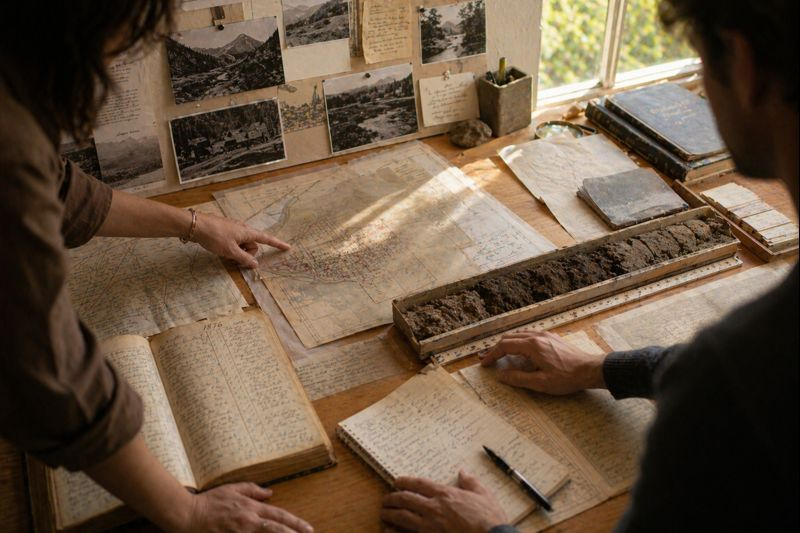
Social structures, technological shifts, and environmental pressures often advance together, producing transitions that resist tidy boundaries. When climatic events, resource shifts, or landscape changes combine with demographic and institutional developments, eras emerge as layered phenomena. Interpreting these overlaps requires attention to timing, scale, and the uneven experience of change among different communities. Recognizing environmental drivers alongside social dynamics reveals continuities that single-factor narratives miss.

Working with layered evidence encourages historians to avoid rigid start and end dates. That approach also supports narratives that account for persistence as well as transformation.

Choosing Criteria That Reflect Complexity

Selecting criteria for defining an era should balance material, institutional, and mental shifts rather than privileging only one axis. Useful markers include technological adoption, patterns of settlement and migration, institutional reorganizations, and sustained environmental change such as prolonged drought or landscape alteration. Historians should also test whether proposed boundaries capture long-term consequences rather than short-lived disruptions. Combining multiple criteria helps produce eras that are both explanatory and resilient under scrutiny.

  • Material markers: technologies, infrastructure, economic systems.
  • Institutional markers: governance, legal frameworks, large-scale organizations.
  • Environmental markers: climate trends, resource regimes, landscape change.

Using combined criteria makes periodization more defensible and adaptable. It also helps explain why different regions may share an era in one respect but not in others.

Practical Steps for Periodizing with Layers

Begin by mapping concurrent trends and identifying which changes had the most sustained effects on daily life and institutions. Test proposed boundaries against diverse sources and scales, including ecological records, material culture, and written testimony. Be explicit about the questions an era is meant to answer so that the chosen periodization remains purposeful rather than merely classificatory. Encourage dialogue across specialties to ensure that environmental and social evidence inform each other.

Iterative comparison of regions and sectors refines period boundaries over time. This practice produces eras that are both analytically sharp and sensitive to complexity.

Conclusion

Defining eras benefits from treating social and environmental threads as coequal factors.
Layered periodization captures continuity and change more faithfully than single-axis models.
Applied carefully, this approach yields richer, more usable stories of the past.


Previous Post

When Time Becomes a Narrative: Building Useful Eras

Next Post

Material Traces and the Formation of Regional Identity

Related Posts

Pax Mongolica: How Mongol Rule Rewired the Old World
Eras

Pax Mongolica: How Mongol Rule Rewired the Old World

September 15, 2026
Life Under the Tokugawa: How Edo Japan Rewrote Social Order
Eras

Life Under the Tokugawa: How Edo Japan Rewrote Social Order

September 15, 2026
When Empires Fell: The Late Bronze Age Collapse
Eras

When Empires Fell: The Late Bronze Age Collapse

September 15, 2026
1816: How a Volcano Turned Summer Into Crisis
Eras

1816: How a Volcano Turned Summer Into Crisis

September 15, 2026
Next Post
Material Traces and the Formation of Regional Identity

Material Traces and the Formation of Regional Identity

Search..

No Result
View All Result

Recent Articles

The Disguise That Broke Chains: Ellen and William Craft

The Disguise That Broke Chains: Ellen and William Craft

September 15, 2026
Bass Reeves: The Marshal Who Hunted Outlaws in Indian Territory

Bass Reeves: The Marshal Who Hunted Outlaws in Indian Territory

September 15, 2026
How the Crystal Palace Turned Glass and Iron into a Modern Stage

How the Crystal Palace Turned Glass and Iron into a Modern Stage

September 15, 2026
Anne Bonny: The Pirate Who Broke Rules and Expectations

Anne Bonny: The Pirate Who Broke Rules and Expectations

September 15, 2026
How Haiti Broke Its Chains: A 1791–1804 Timeline

How Haiti Broke Its Chains: A 1791–1804 Timeline

September 15, 2026

Subscribe Us

By clicking submit, I authorize History Ours and its affiliated companies to: (1) use, sell, and share my information for marketing purposes, including cross-context behavioral advertising, as described in our Terms of Service and Privacy Policy, (2) supplement the information that I provide with additional information lawfully obtained from other sources, like demographic data from public sources, interests inferred from web page views, or other data relevant to what might interest me, like past purchase or location data, (3) contact me or enable others to contact me by email with offers for goods and services from any category at the email address provided, and (4) retain my information while I am engaging with marketing messages that I receive and for a reasonable amount of time thereafter. I understand I can opt out at any time through an email that I receive, or by clicking here

Subscribe To Our Newsletter

By clicking submit, I authorize History Ours and its affiliated companies to: (1) use, sell, and share my information for marketing purposes, including cross-context behavioral advertising, as described in our Terms of Service and Privacy Policy, (2) supplement the information that I provide with additional information lawfully obtained from other sources, like demographic data from public sources, interests inferred from web page views, or other data relevant to what might interest me, like past purchase or location data, (3) contact me or enable others to contact me by email with offers for goods and services from any category at the email address provided, and (4) retain my information while I am engaging with marketing messages that I receive and for a reasonable amount of time thereafter. I understand I can opt out at any time through an email that I receive, or by clicking here.

© 2026 History Ours | All Rights Reserved

  • Contact Us
  • Privacy Policy
  • Terms of Service
  • Unsubscribe
  • Privacy Choices
  • Contact Us
  • Privacy Policy
  • Terms of Service
  • Unsubscribe
  • Privacy Choices

© 2026 History Ours | All Rights Reserved

No Result
View All Result
  • Home
  • History
  • Biographies
  • Eras
  • Regions
  • Timeline

© 2026 History Ours | All Rights Reserved

Skip to content
Open toolbar Accessibility Tools

Accessibility Tools

  • Increase TextIncrease Text
  • Decrease TextDecrease Text
  • GrayscaleGrayscale
  • High ContrastHigh Contrast
  • Negative ContrastNegative Contrast
  • Light BackgroundLight Background
  • Links UnderlineLinks Underline
  • Readable FontReadable Font
  • Reset Reset