

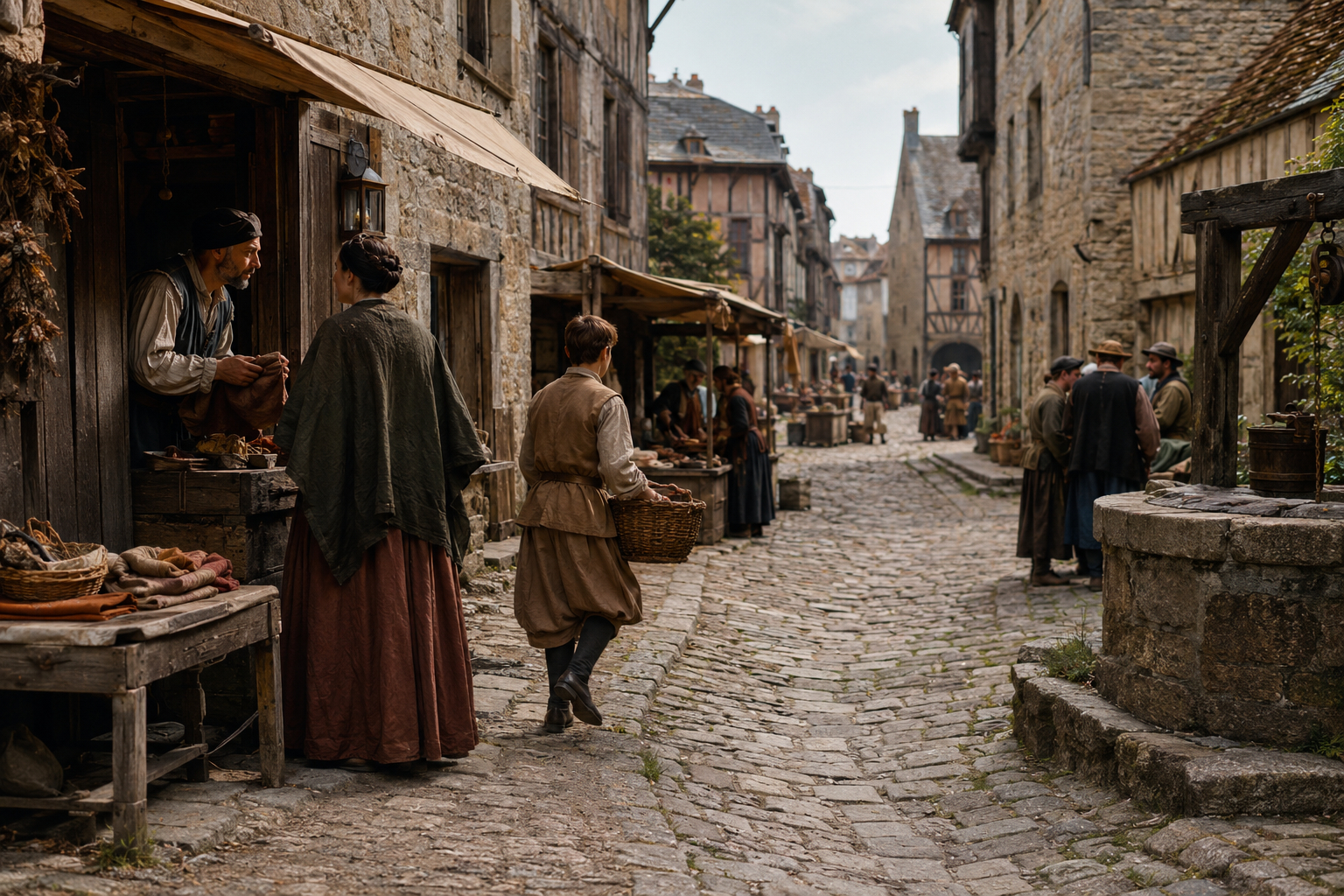
Town streets have long functioned as more than routes for movement; they were stages for daily encounters and the weaving of social ties. Markets, thresholds and public corners concentrated commerce, information and mutual aid in ways that shaped community cohesion. Observing how people used paved lanes, alleys and market squares reveals patterns of trust, negotiation and support across classes. This piece explores the material and social infrastructures that made streets central to historic town life.
Layout and Movement
The physical design of streets guided how people crossed paths and sustained routines. Narrow lanes funneled foot traffic past shopfronts and workshops, while broader thoroughfares hosted weekly markets and civic rituals. Proximity to wells, gates and bridges often determined who met whom and when, creating predictable meeting points. Over time, these pathways acquired layered meanings as residents marked them with stalls, signs and informal rendezvous spots.
These movement patterns reinforced social hierarchies as well as pockets of interaction. People adapted routes to avoid conflict or to seek companionship, shaping everyday visibility. The built environment thus acted as a social technology that structured encounters without explicit planning.
Trade, Talk and Informal Networks
Street life combined commercial exchange with gossip, news and practical cooperation. Vendors, apprentices and neighbors used transactions as opportunities for information flow, recruitment and the maintenance of reputations. Casual conversations at shop thresholds or while carrying goods knitted individuals into loose networks that could be mobilized in times of need. Such ties often crossed household boundaries, linking kinship with occupational and neighborhood relations.
These informal networks provided resilience when formal institutions were weak. Shared knowledge about suppliers, seasonal work and charitable arrangements circulated quickly along familiar routes.
Regulation, Ritual and Shared Norms
Municipal regulations and social expectations shaped acceptable conduct on town streets. Rules about noise, hawking and access reflected a balance between commerce and order, while community rituals—processions, public punishments, fairs—reinforced collective values. Enforcement could be formal through guilds and town officials or informal through public shaming and neighbor pressure. Overlapping authorities produced a negotiated public sphere where norms were practiced and contested daily.
Through these practices, streets became arenas where social boundaries were both asserted and crossed. Rituals and regulations together produced a stable yet flexible public life.
Conclusion
Historic streets were active social infrastructures that organized daily life and relationships.
Material features, informal exchanges and civic practices combined to sustain communities.
Studying these dynamics reveals how ordinary pathways shaped collective belonging and mutual support.