
Uncover History’s Secrets with Daily Updates!
Daily News Entertainment
  • Home
  • History
  • Biographies
  • Eras
  • Regions
  • Timeline
No Result
View All Result
History Ours
  • Home
  • History
  • Biographies
  • Eras
  • Regions
  • Timeline
No Result
View All Result
History Ours
No Result
View All Result
Home Timeline

A Practical Timeline Framework for Historical Storytelling

in Timeline
A Practical Timeline Framework for Historical Storytelling

Introduction

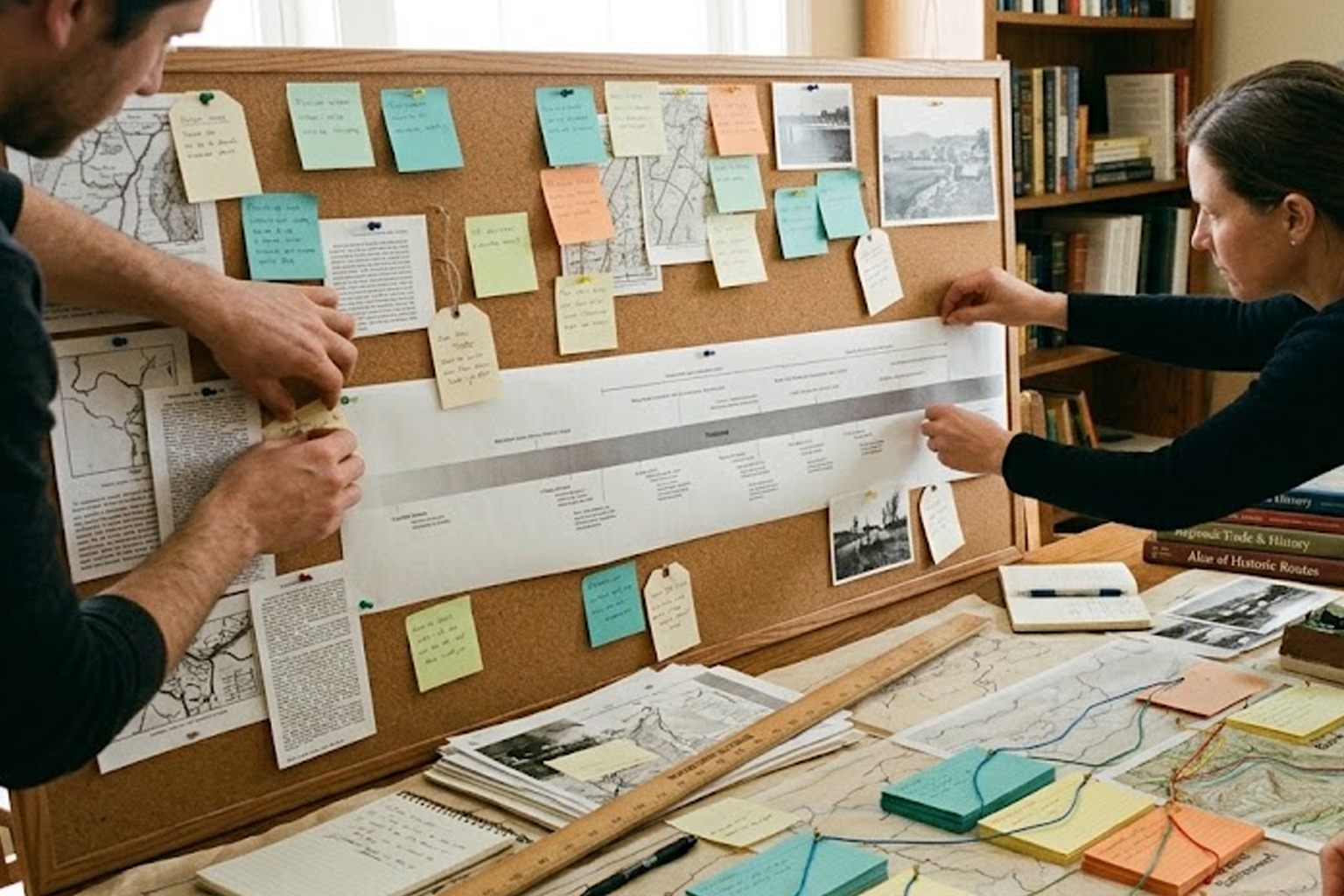
Timelines are powerful tools for presenting historical narratives in a concise, visual manner. They help readers grasp sequences, causality, and long-term patterns that prose alone can obscure. A well-constructed timeline balances scope and detail to guide interpretation rather than overwhelm. This article outlines a practical framework for creating timelines that inform and engage diverse audiences.

Why Timelines Matter

Timelines translate complex chronologies into readable progressions, making relationships between events easier to understand. They support comparative analysis across themes, regions, or technologies by aligning occurrences on a shared axis. For educators and content creators, timelines clarify turning points and continuities that shape broader stories. Their visual nature also aids memory retention and quick reference for researchers and casual readers alike.

When used thoughtfully, timelines move beyond lists to become analytical tools. They encourage readers to ask about causes, consequences, and connections.

Design Principles for Clarity

Clarity begins with selecting an appropriate temporal scale and limiting entries to those that support your central narrative. Use consistent labeling, readable fonts, and a clear hierarchy to separate major milestones from ancillary notes. Color, spacing, and symbols should reinforce meaning rather than distract; reserve strong visual cues for pivotal events. Accessibility considerations, such as sufficient contrast and alternative text for images, ensure broader usability.

Design choices should always serve comprehension and accessibility. Iterative review with target users reveals where adjustments are needed.

Tools and Techniques

Various digital and print techniques allow creators to build timelines that match their objectives, from interactive sliders to static infographics. Interactive timelines can layer context through tooltips, images, and linked sources, while static formats work well for printed guides and quick reference charts. Choosing a tool involves weighing ease of editing, sharing capabilities, and the expected lifespan of the timeline. Consider future updates and how data will be maintained over time.

  • Interactive platforms for layered context and multimedia.
  • Static templates for print and simplified distribution.

Select tools that fit your workflow and audience expectations. Practicality often outweighs feature-rich complexity when long-term maintenance is a concern.

Curating and Contextualizing Events

Strong timelines avoid exhaustive listings by curating events that illuminate a theme or argument. Provide concise context for each entry to explain significance and interrelation rather than leaving readers to infer connections. Where ambiguity exists, link to primary sources or further reading to support interpretation. Balance between local detail and overarching trends helps readers form a coherent understanding.

Effective curation requires editorial judgment and transparency about selection criteria. Annotations and source references build credibility and invite further exploration.

Conclusion

Timelines are versatile storytelling tools that synthesize chronology and analysis into a single view. By prioritizing clarity, appropriate tools, and careful curation, creators can produce timelines that educate and engage. Thoughtful design and sourcing make them lasting resources for readers and researchers.

Previous Post

How Historical Regions Shape Identity and Landscape

Next Post

Mapping the Arc of Civilizations Through Timelines

Related Posts

How Haiti Broke Its Chains: A 1791–1804 Timeline
Timeline

How Haiti Broke Its Chains: A 1791–1804 Timeline

September 15, 2026
From Horses to Wires: How the Pony Express Met the Telegraph
Timeline

From Horses to Wires: How the Pony Express Met the Telegraph

September 15, 2026
From Swamps to Shortcut: A Timeline of the Panama Canal
Timeline

From Swamps to Shortcut: A Timeline of the Panama Canal

September 15, 2026
1815–1818: The Tambora Eruption and the Year Without a Summer
Timeline

1815–1818: The Tambora Eruption and the Year Without a Summer

September 15, 2026
Next Post
Mapping the Arc of Civilizations Through Timelines

Mapping the Arc of Civilizations Through Timelines

Search..

No Result
View All Result

Recent Articles

The Disguise That Broke Chains: Ellen and William Craft

The Disguise That Broke Chains: Ellen and William Craft

September 15, 2026
Bass Reeves: The Marshal Who Hunted Outlaws in Indian Territory

Bass Reeves: The Marshal Who Hunted Outlaws in Indian Territory

September 15, 2026
How the Crystal Palace Turned Glass and Iron into a Modern Stage

How the Crystal Palace Turned Glass and Iron into a Modern Stage

September 15, 2026
Anne Bonny: The Pirate Who Broke Rules and Expectations

Anne Bonny: The Pirate Who Broke Rules and Expectations

September 15, 2026
How Haiti Broke Its Chains: A 1791–1804 Timeline

How Haiti Broke Its Chains: A 1791–1804 Timeline

September 15, 2026

Subscribe Us

By clicking submit, I authorize History Ours and its affiliated companies to: (1) use, sell, and share my information for marketing purposes, including cross-context behavioral advertising, as described in our Terms of Service and Privacy Policy, (2) supplement the information that I provide with additional information lawfully obtained from other sources, like demographic data from public sources, interests inferred from web page views, or other data relevant to what might interest me, like past purchase or location data, (3) contact me or enable others to contact me by email with offers for goods and services from any category at the email address provided, and (4) retain my information while I am engaging with marketing messages that I receive and for a reasonable amount of time thereafter. I understand I can opt out at any time through an email that I receive, or by clicking here

Subscribe To Our Newsletter

By clicking submit, I authorize History Ours and its affiliated companies to: (1) use, sell, and share my information for marketing purposes, including cross-context behavioral advertising, as described in our Terms of Service and Privacy Policy, (2) supplement the information that I provide with additional information lawfully obtained from other sources, like demographic data from public sources, interests inferred from web page views, or other data relevant to what might interest me, like past purchase or location data, (3) contact me or enable others to contact me by email with offers for goods and services from any category at the email address provided, and (4) retain my information while I am engaging with marketing messages that I receive and for a reasonable amount of time thereafter. I understand I can opt out at any time through an email that I receive, or by clicking here.

© 2026 History Ours | All Rights Reserved

  • Contact Us
  • Privacy Policy
  • Terms of Service
  • Unsubscribe
  • Privacy Choices
  • Contact Us
  • Privacy Policy
  • Terms of Service
  • Unsubscribe
  • Privacy Choices

© 2026 History Ours | All Rights Reserved

No Result
View All Result
  • Home
  • History
  • Biographies
  • Eras
  • Regions
  • Timeline

© 2026 History Ours | All Rights Reserved

Skip to content
Open toolbar Accessibility Tools

Accessibility Tools

  • Increase TextIncrease Text
  • Decrease TextDecrease Text
  • GrayscaleGrayscale
  • High ContrastHigh Contrast
  • Negative ContrastNegative Contrast
  • Light BackgroundLight Background
  • Links UnderlineLinks Underline
  • Readable FontReadable Font
  • Reset Reset