

Uncover History’s Secrets with Daily Updates!
Daily News Entertainment
  • Home
  • History
  • Biographies
  • Eras
  • Regions
  • Timeline
No Result
View All Result
History Ours
  • Home
  • History
  • Biographies
  • Eras
  • Regions
  • Timeline
No Result
View All Result
History Ours
No Result
View All Result
Home History

Daily Networks: Social Fabric of Historic Market Communities

in History
Daily Networks: Social Fabric of Historic Market Communities

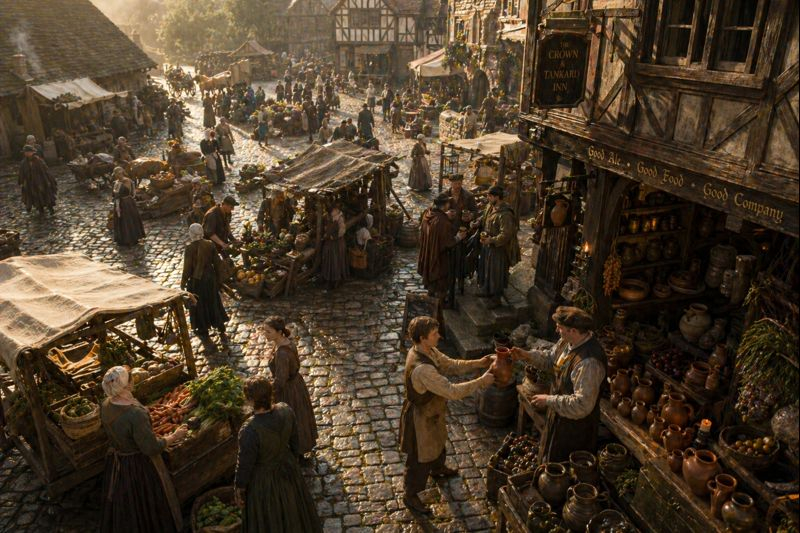
Market towns were more than trading hubs; they were woven social landscapes where routines, relationships, and economic activity converged. Daily rhythms shaped who met whom, when, and why, producing networks that sustained households and enterprises. Street vendors, apprentices, and parishioners shared space and information in patterns repeated across weeks and seasons. Understanding these everyday ties helps explain how communities endured change and adapted to new pressures.

Marketplaces as Meeting Places

Market squares functioned as open forums where economic exchange and social interaction overlapped. Buyers negotiated prices, but they also collected news, solicited favors, and reaffirmed obligations that bound people across neighborhoods. The spatial arrangement of stalls, inns, and civic buildings encouraged repeated encounters that reinforced reputation and trust. In many towns, a simple path through the market recorded more social ties than any formal institution could.

These meeting places made ephemeral connections durable by introducing people to recurring partners. Over time, patterns of attendance created predictable networks that merchants and artisans relied upon.

Work, Domestic Space, and Movement

Work and home life often existed in the same physical footprint, blurring lines between public trade and private care. Small-scale producers combined household tasks with commercial labor, turning shops into sites of social exchange. Movement through alleys, inns, and river crossings mapped labor patterns and linked distant kin and clients. The mobility of goods and people created layered routines that structured belonging and obligation.

As a result, daily movement was not random but organized around known pathways and relationships. These patterns helped towns absorb newcomers and circulate resources efficiently.

Rituals, Calendars, and Social Timing

Festivals, market days, and religious observances punctuated the working year and synchronized social life. Such events reinforced communal norms and provided opportunities for commercial activity beyond routine exchange. Seasonal fairs attracted traveling traders and widened local networks, while regular markets maintained steady contact among residents. Timing shaped expectation: knowing when people gathered was as important as knowing whom to approach.

Consequently, calendars were social tools that coordinated cooperation and competition. They translated disparate activities into a shared temporal order that sustained town life.

Conclusion

Historic market communities depended on repeated encounters, shared spaces, and coordinated time.
Their resilience grew from networks forged in daily routines and public gatherings.
Studying these patterns reveals how ordinary interactions built enduring social fabrics.

Previous Post

Apprenticeship, Play, and Youth Life in Market Towns

Next Post

Writing Focused Biographies: Techniques for Sympathetic Precision

Related Posts

Anne Bonny: The Pirate Who Broke Rules and Expectations
History

Anne Bonny: The Pirate Who Broke Rules and Expectations

September 15, 2026
How the Crystal Palace Turned Glass and Iron into a Modern Stage
History

How the Crystal Palace Turned Glass and Iron into a Modern Stage

September 15, 2026
Mary Anning and the Coast That Revealed Lost Worlds
History

Mary Anning and the Coast That Revealed Lost Worlds

September 15, 2026
When Mount Pelée Erased Saint-Pierre, 1902
History

When Mount Pelée Erased Saint-Pierre, 1902

September 15, 2026
Next Post
Writing Focused Biographies: Techniques for Sympathetic Precision

Writing Focused Biographies: Techniques for Sympathetic Precision

Search..

No Result
View All Result

Recent Articles

Edo: Japan’s Urban Revolution of Lanterns and Printshops

Edo: Japan’s Urban Revolution of Lanterns and Printshops

September 16, 2026
How the Little Ice Age Changed Everyday Life in Europe

How the Little Ice Age Changed Everyday Life in Europe

September 16, 2026
The Disguise That Broke Chains: Ellen and William Craft

The Disguise That Broke Chains: Ellen and William Craft

September 15, 2026
Bass Reeves: The Marshal Who Hunted Outlaws in Indian Territory

Bass Reeves: The Marshal Who Hunted Outlaws in Indian Territory

September 15, 2026
How the Crystal Palace Turned Glass and Iron into a Modern Stage

How the Crystal Palace Turned Glass and Iron into a Modern Stage

September 15, 2026

Subscribe Us

By clicking submit, I authorize History Ours and its affiliated companies to: (1) use, sell, and share my information for marketing purposes, including cross-context behavioral advertising, as described in our Terms of Service and Privacy Policy, (2) supplement the information that I provide with additional information lawfully obtained from other sources, like demographic data from public sources, interests inferred from web page views, or other data relevant to what might interest me, like past purchase or location data, (3) contact me or enable others to contact me by email with offers for goods and services from any category at the email address provided, and (4) retain my information while I am engaging with marketing messages that I receive and for a reasonable amount of time thereafter. I understand I can opt out at any time through an email that I receive, or by clicking here

Subscribe To Our Newsletter

By clicking submit, I authorize History Ours and its affiliated companies to: (1) use, sell, and share my information for marketing purposes, including cross-context behavioral advertising, as described in our Terms of Service and Privacy Policy, (2) supplement the information that I provide with additional information lawfully obtained from other sources, like demographic data from public sources, interests inferred from web page views, or other data relevant to what might interest me, like past purchase or location data, (3) contact me or enable others to contact me by email with offers for goods and services from any category at the email address provided, and (4) retain my information while I am engaging with marketing messages that I receive and for a reasonable amount of time thereafter. I understand I can opt out at any time through an email that I receive, or by clicking here.

© 2026 History Ours | All Rights Reserved

  • Contact Us
  • Privacy Policy
  • Terms of Service
  • Unsubscribe
  • Privacy Choices
  • Contact Us
  • Privacy Policy
  • Terms of Service
  • Unsubscribe
  • Privacy Choices

© 2026 History Ours | All Rights Reserved

No Result
View All Result
  • Home
  • History
  • Biographies
  • Eras
  • Regions
  • Timeline

© 2026 History Ours | All Rights Reserved

Skip to content
Open toolbar Accessibility Tools

Accessibility Tools

  • Increase TextIncrease Text
  • Decrease TextDecrease Text
  • GrayscaleGrayscale
  • High ContrastHigh Contrast
  • Negative ContrastNegative Contrast
  • Light BackgroundLight Background
  • Links UnderlineLinks Underline
  • Readable FontReadable Font
  • Reset Reset