Uncover History’s Secrets with Daily Updates!
Daily News Entertainment
  • Home
  • History
  • Biographies
  • Eras
  • Regions
  • Timeline
No Result
View All Result
History Ours
  • Home
  • History
  • Biographies
  • Eras
  • Regions
  • Timeline
No Result
View All Result
History Ours
No Result
View All Result
Home History

How Port Cities Shaped Early Trade and Society

in History
How Port Cities Shaped Early Trade and Society

Port cities were engines of exchange, innovation and conflict.
Their waterfronts linked inland communities with distant markets through ships, commodities and ideas.
Over centuries these hubs fostered specialized industries, legal practices and cultural mixing that altered everyday life.
Understanding their development reveals how local institutions adapted to global pressures.

Origins and maritime networks
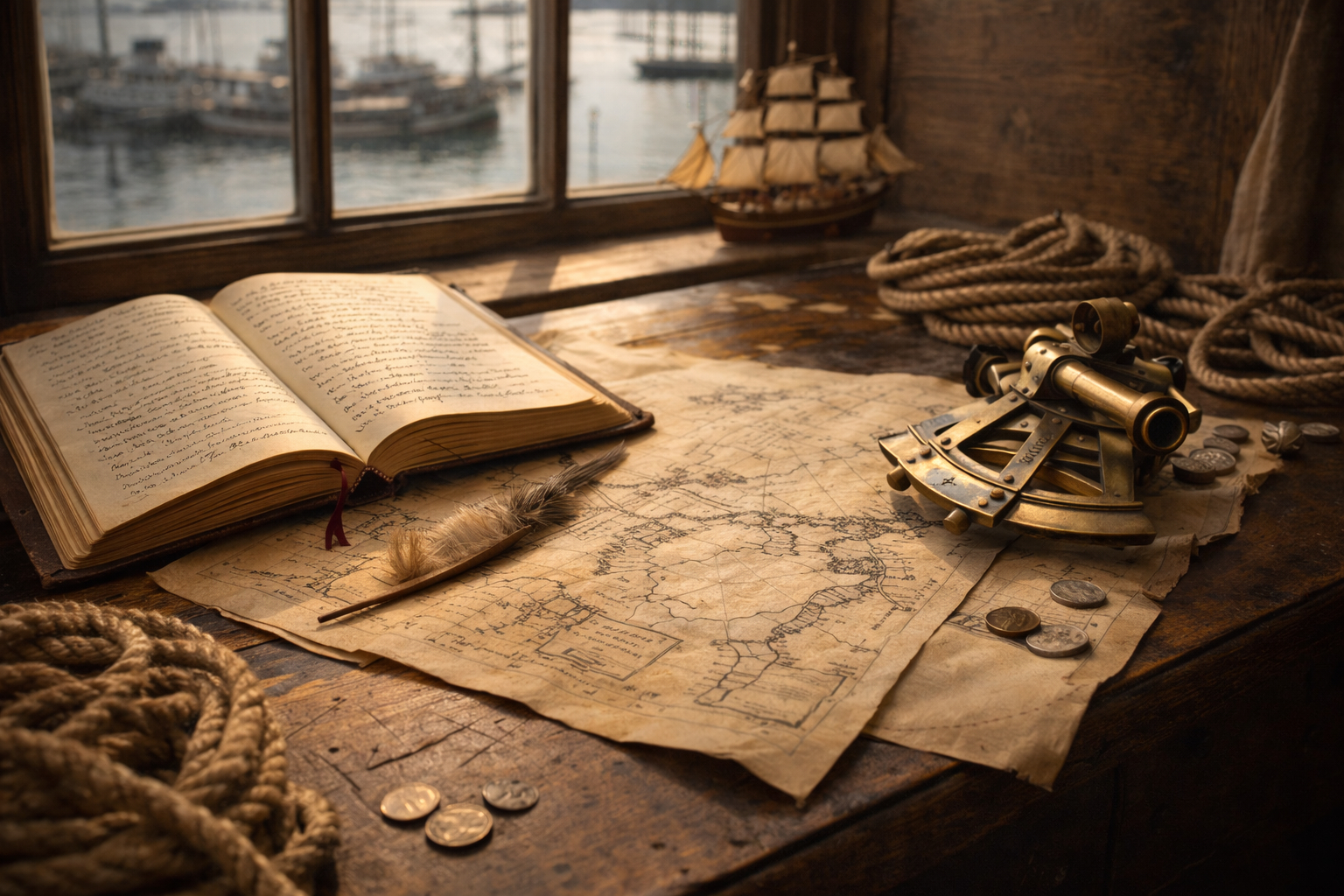
Early port settlements grew where rivers met the sea and where natural harbors eased access for vessels. Merchants, sailors and local producers established regular routes that transformed episodic contact into predictable exchange. These maritime networks connected raw-material producers with urban artisans and distant consumers, creating feedback loops that influenced production choices and settlement patterns.

Economic innovations and markets
Port cities were laboratories for commercial practice. They developed markets, standardized weights and measures, and incubated new forms of credit and risk sharing that reduced transaction costs. Warehouse systems, bonded storage and early insurance mechanisms emerged to protect cargo and stabilize supply, enabling larger and longer-distance ventures than previously possible.

Cultural exchange and urban life
The constant movement of people and goods produced vibrant, heterogeneous urban societies. Linguistic borrowing, hybrid cuisines, and shared artistic motifs are evidence of continuous interaction on quays and in market squares. Religious and intellectual institutions adapted to diversity, and guilds often regulated both craft knowledge and social integration, balancing cooperative ties with competitive interests.

Conflict, regulation, and infrastructure
Ports were strategic assets and therefore frequent sites of contestation. Control over customs, tariffs and pilotage generated revenue and political power, prompting investment in fortifications, lighthouses and dredging works. Urban authorities negotiated with merchant communities to create regulations that aimed to facilitate trade while asserting civic order, a balance that shaped long-term urban governance.

Environmental and technological impacts
Harbor engineering, ship design and navigational knowledge evolved in tandem with commercial needs. Investment in quays, docks and canals reshaped shorelines and altered local ecologies, often increasing the capacity for larger fleets. Over time, technological advances redistributed trade flows, giving rise to new centers and prompting older ports to adapt or decline.

Conclusion
Port cities were more than points on a map; they were dynamic systems where economy, culture and governance intersected.
Their innovations in commerce, infrastructure and social organization had ripple effects across regions and eras.
Studying these urban hubs offers insight into how human societies respond to connectivity and change.

Previous Post

Beasts of Burden: How Pack Animals Shaped Trade and Travel

Next Post

Environmental Clues and the Geography of Historical Regions

Related Posts

How the Crystal Palace Turned Glass and Iron into a Modern Stage
History

How the Crystal Palace Turned Glass and Iron into a Modern Stage

September 15, 2026
Anne Bonny: The Pirate Who Broke Rules and Expectations
History

Anne Bonny: The Pirate Who Broke Rules and Expectations

September 15, 2026
Mary Anning and the Coast That Revealed Lost Worlds
History

Mary Anning and the Coast That Revealed Lost Worlds

September 15, 2026
When Mount Pelée Erased Saint-Pierre, 1902
History

When Mount Pelée Erased Saint-Pierre, 1902

September 15, 2026
Next Post
Environmental Clues and the Geography of Historical Regions

Environmental Clues and the Geography of Historical Regions

Search..

No Result
View All Result

Recent Articles

The Disguise That Broke Chains: Ellen and William Craft

The Disguise That Broke Chains: Ellen and William Craft

September 15, 2026
Bass Reeves: The Marshal Who Hunted Outlaws in Indian Territory

Bass Reeves: The Marshal Who Hunted Outlaws in Indian Territory

September 15, 2026
How the Crystal Palace Turned Glass and Iron into a Modern Stage

How the Crystal Palace Turned Glass and Iron into a Modern Stage

September 15, 2026
Anne Bonny: The Pirate Who Broke Rules and Expectations

Anne Bonny: The Pirate Who Broke Rules and Expectations

September 15, 2026
How Haiti Broke Its Chains: A 1791–1804 Timeline

How Haiti Broke Its Chains: A 1791–1804 Timeline

September 15, 2026

Subscribe Us

By clicking submit, I authorize History Ours and its affiliated companies to: (1) use, sell, and share my information for marketing purposes, including cross-context behavioral advertising, as described in our Terms of Service and Privacy Policy, (2) supplement the information that I provide with additional information lawfully obtained from other sources, like demographic data from public sources, interests inferred from web page views, or other data relevant to what might interest me, like past purchase or location data, (3) contact me or enable others to contact me by email with offers for goods and services from any category at the email address provided, and (4) retain my information while I am engaging with marketing messages that I receive and for a reasonable amount of time thereafter. I understand I can opt out at any time through an email that I receive, or by clicking here

Subscribe To Our Newsletter

By clicking submit, I authorize History Ours and its affiliated companies to: (1) use, sell, and share my information for marketing purposes, including cross-context behavioral advertising, as described in our Terms of Service and Privacy Policy, (2) supplement the information that I provide with additional information lawfully obtained from other sources, like demographic data from public sources, interests inferred from web page views, or other data relevant to what might interest me, like past purchase or location data, (3) contact me or enable others to contact me by email with offers for goods and services from any category at the email address provided, and (4) retain my information while I am engaging with marketing messages that I receive and for a reasonable amount of time thereafter. I understand I can opt out at any time through an email that I receive, or by clicking here.

© 2026 History Ours | All Rights Reserved

  • Contact Us
  • Privacy Policy
  • Terms of Service
  • Unsubscribe
  • Privacy Choices
  • Contact Us
  • Privacy Policy
  • Terms of Service
  • Unsubscribe
  • Privacy Choices

© 2026 History Ours | All Rights Reserved

No Result
View All Result
  • Home
  • History
  • Biographies
  • Eras
  • Regions
  • Timeline

© 2026 History Ours | All Rights Reserved

Skip to content
Open toolbar Accessibility Tools

Accessibility Tools

  • Increase TextIncrease Text
  • Decrease TextDecrease Text
  • GrayscaleGrayscale
  • High ContrastHigh Contrast
  • Negative ContrastNegative Contrast
  • Light BackgroundLight Background
  • Links UnderlineLinks Underline
  • Readable FontReadable Font
  • Reset Reset