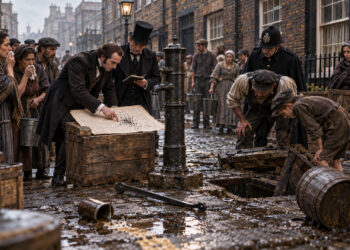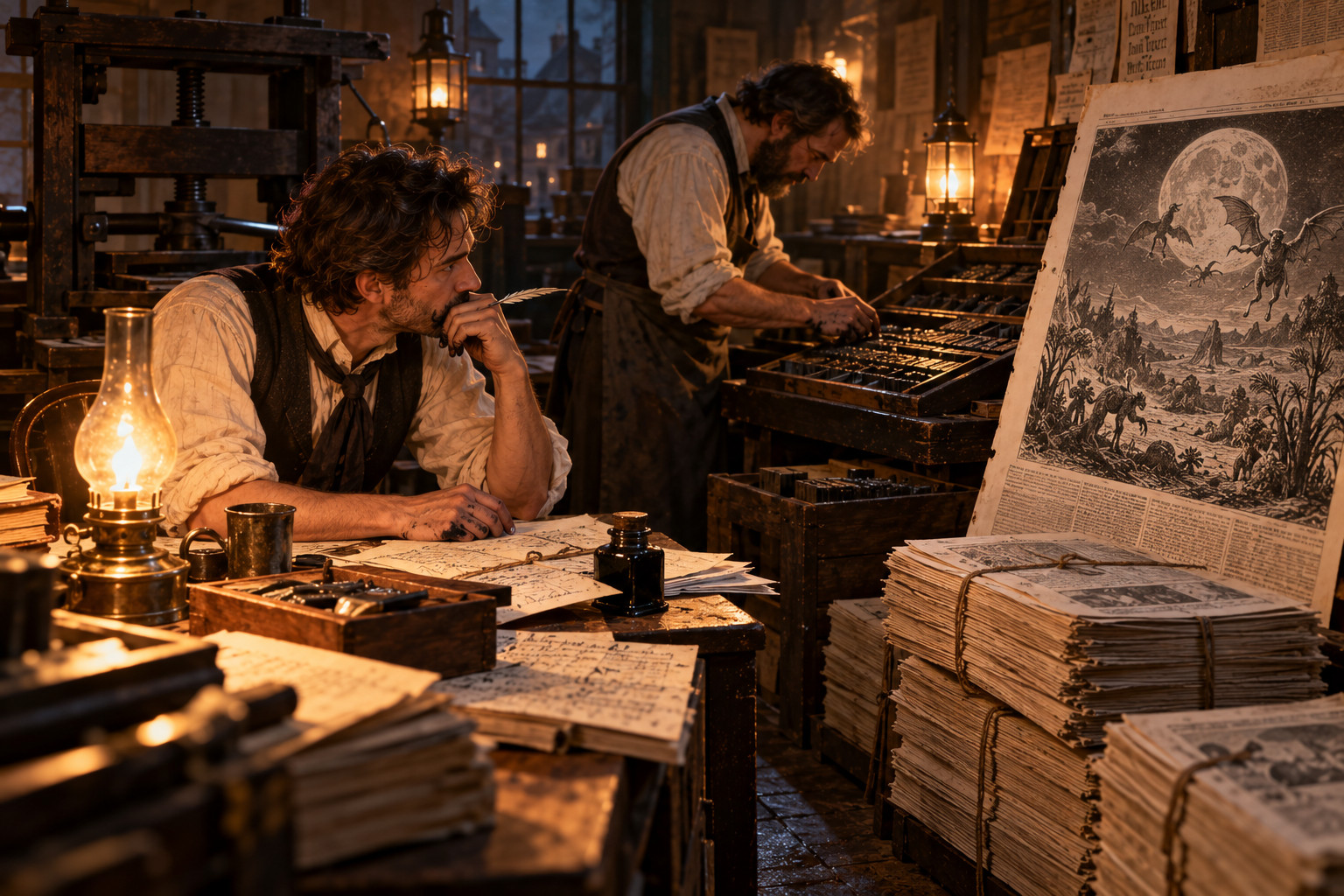
In August 1835 the New York Sun ran a series of six articles that read like science fiction masquerading as press dispatches. They claimed the celebrated British astronomer Sir John Herschel had used an enormous telescope at the Cape of Good Hope to make astonishing lunar discoveries: mountains, forests, and living creatures. The pieces were vivid and specific enough to sound plausible to a city still learning how to read and trust a daily paper.
Odd creatures, a clever author, and soaring sales
The accounts described creatures so strange they doubled as spectacles and satire. Among them were winged, bat-like humanoids—referred to in the pages as Vespertilio-homo—herds of hairy quadrupeds, and fields of plants adapted to the moon’s light. The articles were penned by Richard Adams Locke, a reporter for the Sun, though they were presented as summaries of Sir John Herschel’s own findings. Whether Locke intended full-on fraud or mischievous parody, the effect was immediate: the Sun’s circulation jumped, rival papers fumed, and readers debated at coffeehouses and on the wharves.
Why so many believed—briefly
Three things made the hoax land. First, Herschel was a respected figure; invoking his name lent scientific authority. Second, the 1830s were an era of genuine astronomical excitement—new telescopes, new star charts—and readers were primed to accept extraordinary cosmic news. Third, newspapers were still establishing standards of verification; readers had fewer ways to check claims quickly. The Sun mixed believable technical detail with flamboyant invention, and that blend proved persuasive.
Aftermath and a lesson about news
When critics and other papers began to pick apart the accounts, the Sun never issued an outright retraction that year; the tale quietly faded as readers moved on. Locke later acknowledged authorship, and historians treat the episode as early sensational journalism—part prank, part publicity stunt. The Great Moon Hoax did more than embarrass a paper: it exposed how eagerly audiences would accept authority mixed with spectacle, and how newspapers could trade credibility for attention.
Conclusion
Nearly two centuries later the Great Moon Hoax still feels familiar. Swap the telescope for an algorithm and the Cape of Good Hope for a website, and you recognize the same mixture of curiosity, authority, and appetite for the marvelous. The 1835 affair is a reminder that technology changes faster than people’s willingness to believe astonishing news—and that good journalism depends on the harder work of checking before amplifying what delights us.