Uncover History’s Secrets with Daily Updates!
Daily News Entertainment
  • Home
  • History
  • Biographies
  • Eras
  • Regions
  • Timeline
No Result
View All Result
History Ours
  • Home
  • History
  • Biographies
  • Eras
  • Regions
  • Timeline
No Result
View All Result
History Ours
No Result
View All Result
Home Timeline

Creating Timeline Pathways That Encourage Meaningful Exploration

in Timeline
Creating Timeline Pathways That Encourage Meaningful Exploration

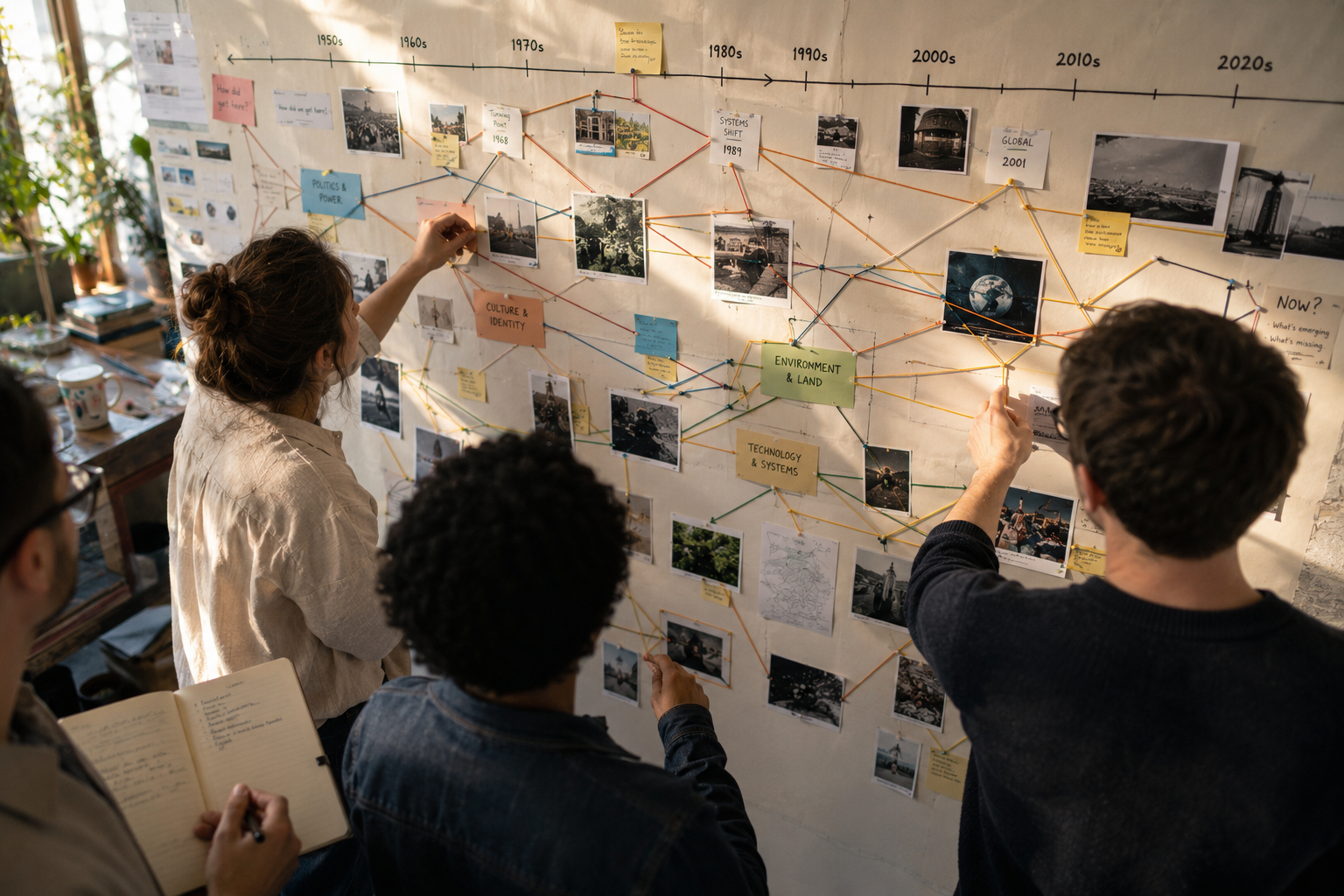
Well-constructed timelines do more than list dates; they invite exploration and reveal relationships across periods. When designers think in terms of pathways, they create routes that help visitors follow themes, see causation, and return to points of interest. This approach balances chronology with narrative choice so audiences can pursue different levels of detail. A pathway-oriented timeline supports both quick overviews and deeper inquiry without overwhelming users.

Pathways are useful for museums, educational sites, and community history projects that want to make time feel navigable. They encourage repeated visits and sustained engagement.

Principles of Pathway Design

Start by defining clear entry points that match common audience goals: orienting context, thematic threads, or key events. Use hierarchy to differentiate primary milestones from supporting details so users can scan quickly and drill down as desired. Maintain consistent visual cues and temporal scaling so the same patterns signal the same kinds of relationships throughout the timeline. Prioritize context by linking events to causes, consequences, and contemporary conditions.

  • Establish thematic lanes to allow parallel narratives without clutter.
  • Anchor long spans with representative events to prevent sense of drift.
  • Offer varied granularities: decade, year, and event levels.

These principles keep pathways legible across formats and audiences. Thoughtful consistency reduces cognitive load and improves retention.

Designing for Different Audiences

Different users come with different intentions: casual browsers want compelling signposts while researchers need precise sourcing and chronology. Create layered content so the same timeline supports both quick reads and detailed review without duplicating material. Use plain language summaries for general readers alongside expandable annotations and citations for specialist visitors. Consider accessibility needs by providing alternative text, keyboard navigation, and clear color contrast.

Mapping personas and testing prototypes with representative users reveals common breakpoints. Iteration based on feedback ensures pathways remain intuitive and relevant.

Tools, Scale, and Interactivity

Choose tools that match the scale of your dataset and the level of interactivity you want to support. Lightweight static timelines work well for limited collections, while database-driven tools handle large, evolving corpora and filtering needs. Interactivity such as filtering, search, and linked primary sources turns a passive display into an exploratory environment. Plan performance and responsive behavior early so pathways function smoothly on different devices.

  • Implement progressive disclosure to reveal detail on demand.
  • Provide export or print-friendly views for educators and researchers.

Well-chosen tools amplify design choices and help sustain timelines over time. Aim for maintainability as much as initial polish.

Conclusion

Designing timeline pathways centers the visitor experience and transforms chronology into a navigable narrative. Focusing on entry points, hierarchy, and interactivity helps audiences find meaning at their own pace. Regular testing and clear maintenance plans keep timelines useful and engaging over time.


Previous Post

Layering Time: Practical Approaches to Timeline Narratives

Next Post

Urban Commons and Social Life in Market Towns

Related Posts

How Haiti Broke Its Chains: A 1791–1804 Timeline
Timeline

How Haiti Broke Its Chains: A 1791–1804 Timeline

September 15, 2026
From Horses to Wires: How the Pony Express Met the Telegraph
Timeline

From Horses to Wires: How the Pony Express Met the Telegraph

September 15, 2026
From Swamps to Shortcut: A Timeline of the Panama Canal
Timeline

From Swamps to Shortcut: A Timeline of the Panama Canal

September 15, 2026
1815–1818: The Tambora Eruption and the Year Without a Summer
Timeline

1815–1818: The Tambora Eruption and the Year Without a Summer

September 15, 2026
Next Post
Urban Commons and Social Life in Market Towns

Urban Commons and Social Life in Market Towns

Search..

No Result
View All Result

Recent Articles

Edo: Japan’s Urban Revolution of Lanterns and Printshops

Edo: Japan’s Urban Revolution of Lanterns and Printshops

September 16, 2026
How the Little Ice Age Changed Everyday Life in Europe

How the Little Ice Age Changed Everyday Life in Europe

September 16, 2026
The Disguise That Broke Chains: Ellen and William Craft

The Disguise That Broke Chains: Ellen and William Craft

September 15, 2026
Bass Reeves: The Marshal Who Hunted Outlaws in Indian Territory

Bass Reeves: The Marshal Who Hunted Outlaws in Indian Territory

September 15, 2026
How the Crystal Palace Turned Glass and Iron into a Modern Stage

How the Crystal Palace Turned Glass and Iron into a Modern Stage

September 15, 2026

Subscribe Us

By clicking submit, I authorize History Ours and its affiliated companies to: (1) use, sell, and share my information for marketing purposes, including cross-context behavioral advertising, as described in our Terms of Service and Privacy Policy, (2) supplement the information that I provide with additional information lawfully obtained from other sources, like demographic data from public sources, interests inferred from web page views, or other data relevant to what might interest me, like past purchase or location data, (3) contact me or enable others to contact me by email with offers for goods and services from any category at the email address provided, and (4) retain my information while I am engaging with marketing messages that I receive and for a reasonable amount of time thereafter. I understand I can opt out at any time through an email that I receive, or by clicking here

Subscribe To Our Newsletter

By clicking submit, I authorize History Ours and its affiliated companies to: (1) use, sell, and share my information for marketing purposes, including cross-context behavioral advertising, as described in our Terms of Service and Privacy Policy, (2) supplement the information that I provide with additional information lawfully obtained from other sources, like demographic data from public sources, interests inferred from web page views, or other data relevant to what might interest me, like past purchase or location data, (3) contact me or enable others to contact me by email with offers for goods and services from any category at the email address provided, and (4) retain my information while I am engaging with marketing messages that I receive and for a reasonable amount of time thereafter. I understand I can opt out at any time through an email that I receive, or by clicking here.

© 2026 History Ours | All Rights Reserved

  • Contact Us
  • Privacy Policy
  • Terms of Service
  • Unsubscribe
  • Privacy Choices
  • Contact Us
  • Privacy Policy
  • Terms of Service
  • Unsubscribe
  • Privacy Choices

© 2026 History Ours | All Rights Reserved

No Result
View All Result
  • Home
  • History
  • Biographies
  • Eras
  • Regions
  • Timeline

© 2026 History Ours | All Rights Reserved

Skip to content
Open toolbar Accessibility Tools

Accessibility Tools

  • Increase TextIncrease Text
  • Decrease TextDecrease Text
  • GrayscaleGrayscale
  • High ContrastHigh Contrast
  • Negative ContrastNegative Contrast
  • Light BackgroundLight Background
  • Links UnderlineLinks Underline
  • Readable FontReadable Font
  • Reset Reset