
Uncover History’s Secrets with Daily Updates!
Daily News Entertainment
  • Home
  • History
  • Biographies
  • Eras
  • Regions
  • Timeline
No Result
View All Result
History Ours
  • Home
  • History
  • Biographies
  • Eras
  • Regions
  • Timeline
No Result
View All Result
History Ours
No Result
View All Result
Home Regions

How Landscape Patterns Reveal Historical Human Networks

in Regions
How Landscape Patterns Reveal Historical Human Networks

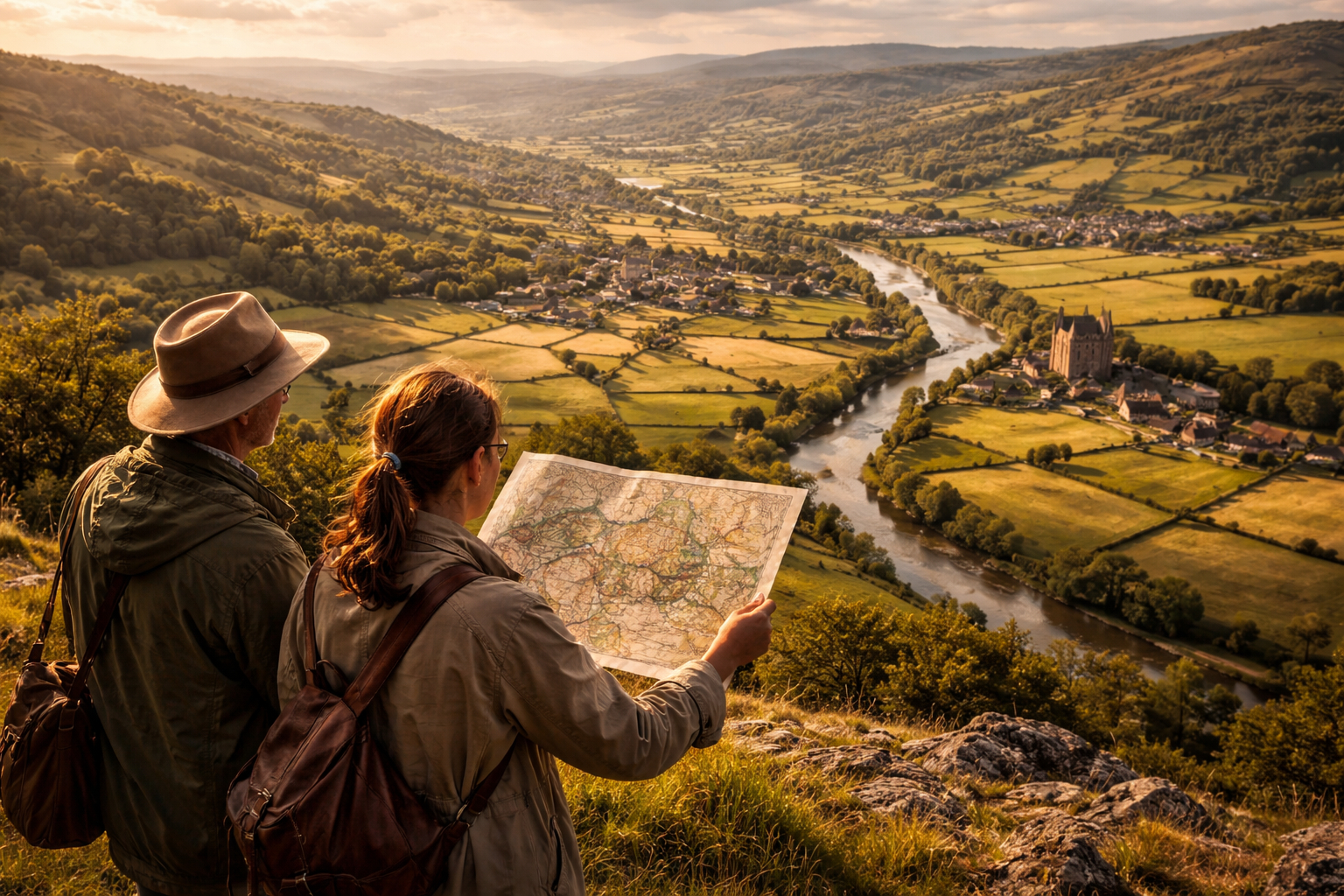
Landscapes carry the imprint of human decisions, movements and interactions across time.
Fields, transport corridors, settlement clusters and waterways form spatial patterns that act as a distributed archive.
Studying those arrangements at regional scale helps reconstruct networks of trade, kinship and governance previously invisible in texts.
This introduction frames methods and interpretive steps for reading landscapes as evidence of past human networks.

Landscape as Archive
Landscapes accumulate evidence: terraces, road alignments, property boundaries and ruin scatter all encode activity sequences and social choices. Researchers use aerial imagery, historical maps and field survey to identify persistent features that indicate long-term connectivity and land use. These visible patterns often complement documentary sources, filling gaps where written records are absent or biased. Reading a landscape as archive means treating space itself as a primary source demanding contextual interpretation.

Interpreting these features requires attention to scale and sequence, distinguishing short-lived traces from structural reorganization. Combining material and textual evidence strengthens hypotheses about how and why networks formed in particular places.

Traces of Mobility and Exchange
Paths, bridges and market sites are the physical skeleton of historical exchange, while resource extraction and craft loci reveal economic linkages across regions. Spatial clustering of production sites alongside transport corridors often signals exchange systems that linked producers, intermediaries and consumers. GIS analysis and spatial statistics help quantify relationships between nodes and corridors, revealing hierarchies and flows that shape regional dynamics. Ethnographic analogies and experimental archaeology can further test functional interpretations of features.

Recognizing the signatures of mobility highlights how everyday travel and long-distance connections coexisted and reinforced each other. Attention to seasonal and temporal variability uncovers shifting routes and the resilience or fragility of networks.

Conservation, Interpretation and Public Engagement
Understanding landscape networks has practical implications for heritage management and planning, as protection priorities can shift when connectivity is valued alongside monumental sites. Interpreting networks for the public benefits from visual tools such as mapped storylines, time-sliced reconstructions and immersive media that emphasize relationships rather than isolated places. Collaboration with local stakeholders ensures that contemporary values and uses inform conservation strategies, balancing access, preservation and landscape functionality. Outputs that connect present communities to past networks help sustain both knowledge and stewardship.

Aligning research with management priorities creates durable outcomes for heritage that respect living landscapes and their histories.

Conclusion
Landscape patterns offer a powerful lens for uncovering past human networks across regions. Careful, scale-aware analysis integrates material traces with spatial analysis and community knowledge. This approach enriches historical narratives and supports informed conservation and interpretation strategies.
Previous Post

Cultural Currents Through Major Historical Eras

Next Post

Exploring Regional Identities Through Historical Geography

Related Posts

Trieste: A Port at the Edge of Empires
Regions

Trieste: A Port at the Edge of Empires

September 15, 2026
Svalbard: How a Frozen Archipelago Became an International Outpost
Regions

Svalbard: How a Frozen Archipelago Became an International Outpost

September 15, 2026
Orkney: Where Norse Law and Scottish Life Intertwined
Regions

Orkney: Where Norse Law and Scottish Life Intertwined

September 15, 2026
Inside the Covered Streets: The Grand Bazaar and Istanbul’s Life
Regions

Inside the Covered Streets: The Grand Bazaar and Istanbul’s Life

September 15, 2026
Next Post
Exploring Regional Identities Through Historical Geography

Exploring Regional Identities Through Historical Geography

Search..

No Result
View All Result

Recent Articles

Edo: Japan’s Urban Revolution of Lanterns and Printshops

Edo: Japan’s Urban Revolution of Lanterns and Printshops

September 16, 2026
How the Little Ice Age Changed Everyday Life in Europe

How the Little Ice Age Changed Everyday Life in Europe

September 16, 2026
The Disguise That Broke Chains: Ellen and William Craft

The Disguise That Broke Chains: Ellen and William Craft

September 15, 2026
Bass Reeves: The Marshal Who Hunted Outlaws in Indian Territory

Bass Reeves: The Marshal Who Hunted Outlaws in Indian Territory

September 15, 2026
How the Crystal Palace Turned Glass and Iron into a Modern Stage

How the Crystal Palace Turned Glass and Iron into a Modern Stage

September 15, 2026

Subscribe Us

By clicking submit, I authorize History Ours and its affiliated companies to: (1) use, sell, and share my information for marketing purposes, including cross-context behavioral advertising, as described in our Terms of Service and Privacy Policy, (2) supplement the information that I provide with additional information lawfully obtained from other sources, like demographic data from public sources, interests inferred from web page views, or other data relevant to what might interest me, like past purchase or location data, (3) contact me or enable others to contact me by email with offers for goods and services from any category at the email address provided, and (4) retain my information while I am engaging with marketing messages that I receive and for a reasonable amount of time thereafter. I understand I can opt out at any time through an email that I receive, or by clicking here

Subscribe To Our Newsletter

By clicking submit, I authorize History Ours and its affiliated companies to: (1) use, sell, and share my information for marketing purposes, including cross-context behavioral advertising, as described in our Terms of Service and Privacy Policy, (2) supplement the information that I provide with additional information lawfully obtained from other sources, like demographic data from public sources, interests inferred from web page views, or other data relevant to what might interest me, like past purchase or location data, (3) contact me or enable others to contact me by email with offers for goods and services from any category at the email address provided, and (4) retain my information while I am engaging with marketing messages that I receive and for a reasonable amount of time thereafter. I understand I can opt out at any time through an email that I receive, or by clicking here.

© 2026 History Ours | All Rights Reserved

  • Contact Us
  • Privacy Policy
  • Terms of Service
  • Unsubscribe
  • Privacy Choices
  • Contact Us
  • Privacy Policy
  • Terms of Service
  • Unsubscribe
  • Privacy Choices

© 2026 History Ours | All Rights Reserved

No Result
View All Result
  • Home
  • History
  • Biographies
  • Eras
  • Regions
  • Timeline

© 2026 History Ours | All Rights Reserved

Skip to content
Open toolbar Accessibility Tools

Accessibility Tools

  • Increase TextIncrease Text
  • Decrease TextDecrease Text
  • GrayscaleGrayscale
  • High ContrastHigh Contrast
  • Negative ContrastNegative Contrast
  • Light BackgroundLight Background
  • Links UnderlineLinks Underline
  • Readable FontReadable Font
  • Reset Reset