Uncover History’s Secrets with Daily Updates!
Daily News Entertainment
  • Home
  • History
  • Biographies
  • Eras
  • Regions
  • Timeline
No Result
View All Result
History Ours
  • Home
  • History
  • Biographies
  • Eras
  • Regions
  • Timeline
No Result
View All Result
History Ours
No Result
View All Result
Home Regions

Railways, Routes, and the Making of Regional Identity

in Regions
Railways, Routes, and the Making of Regional Identity

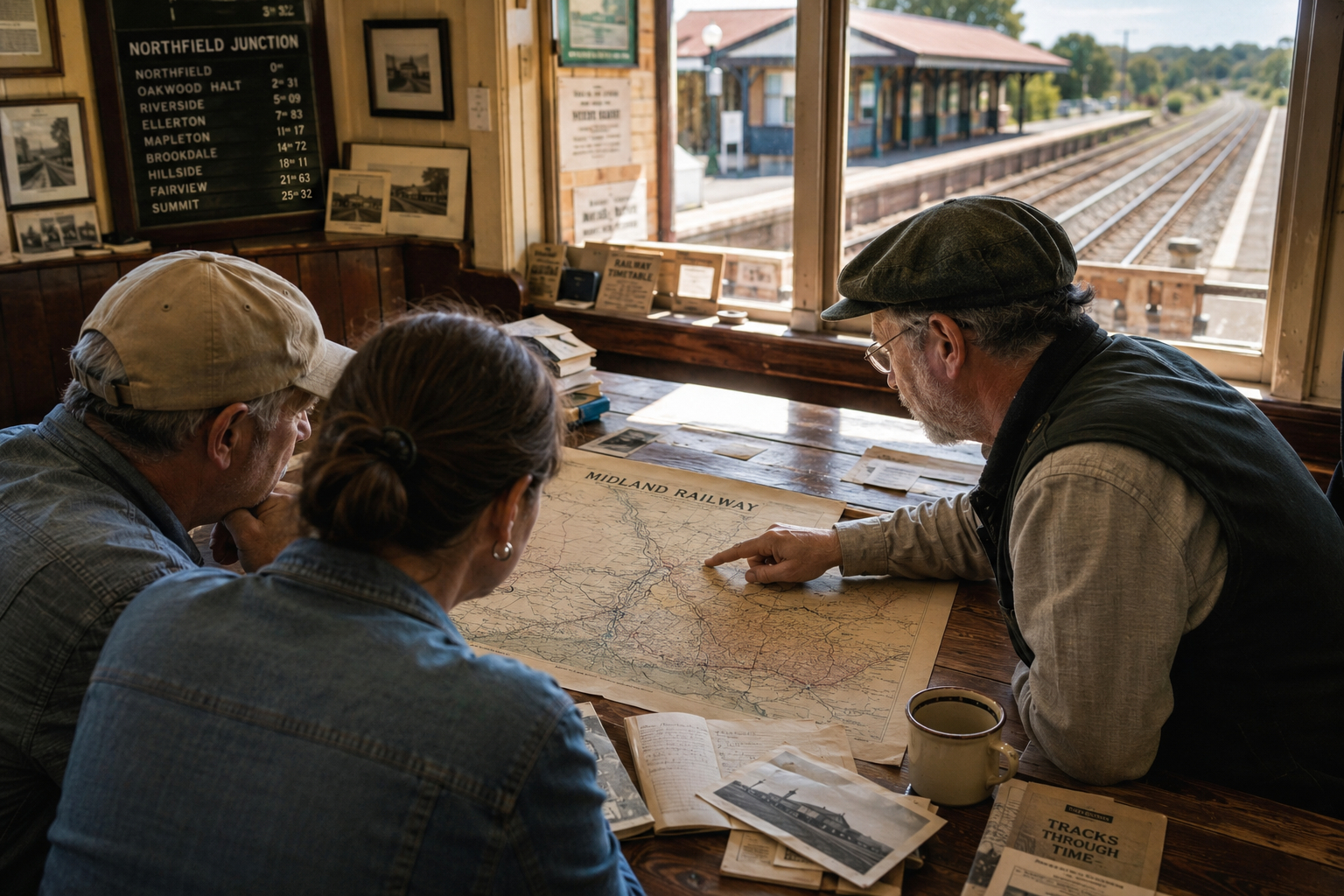
Railways have long been more than transport corridors; they shape how regions imagine themselves and each other. Tracks and timetables reorganize movement, commerce, and patterns of daily life in ways that endure beyond schedules. Studying rail lines offers a clear lens on how material infrastructures make and unmake local identities across time. This piece explores how routes, stations, and associated practices contribute to regional memory and belonging.

Rail corridors as social and economic arteries

Rail corridors connected towns, enabled markets to grow, and shifted the geography of work and migration. Freight and passenger services altered where goods were produced and consumed, knitting distant places into new regional economies. The physical presence of embankments, bridges, and cuts also left visible markers that influenced settlement patterns and local narratives. Over time, these infrastructures became part of everyday reference points for communities, shaping stories told in households and civic forums.

Understanding corridors requires attention to both their technical form and the everyday routines they supported. Those routines—commuting habits, market days, seasonal migrations—helped fix ideas about where a region began and ended.

Stations as anchors of community life

Stations functioned as much more than timetables; they were meeting places, postal hubs, and sites of formal and informal exchange. Their architecture and location signaled civic ambitions and could elevate a town’s status within a wider region. Oral histories and photographs frequently center stations as settings for departures, arrivals, and rituals that frame local memory. As services changed, the decline, adaptation, or conservation of stations reshaped how communities perceived continuity and loss.

Paying attention to stations reveals how built spaces mediate emotional and economic ties across a region. Adaptive reuses and commemorative practices keep these meanings active in contemporary regional identity.

Routes, archives, and the politics of remembering

Railway records, maps, and company correspondence are rich archival sources that reveal decision-making around routing and investment. Yet archives are selective, often privileging official visions over the experiences of workers, passengers, and small traders. Community archives, oral testimony, and material culture can correct and complicate official narratives, bringing to light local strategies of adaptation. Debates over preservation, reuse, or removal of rail infrastructure also reflect competing ideas about what aspects of the past a region chooses to honor. Engaging multiple sources helps historians and community practitioners reconstruct more inclusive regional stories.

The politics of remembering railways thus shape contemporary debates over place, heritage, and development. Recognizing layered experiences allows regions to negotiate pasts and futures with greater nuance.

Conclusion

Railways have helped configure the economic, social, and mnemonic landscapes of regions in durable ways. By studying corridors, stations, and archives together we gain richer insight into how places become meaningful over time. Such understanding supports more thoughtful conversation about heritage, planning, and regional identity.
Previous Post

Making Time Explain: Strategies for Defining Historical Eras

Next Post

Roots of Region: Everyday Places Shaping Collective Memory

Related Posts

Orkney: Where Norse Law and Scottish Life Intertwined
Regions

Orkney: Where Norse Law and Scottish Life Intertwined

September 15, 2026
Inside the Covered Streets: The Grand Bazaar and Istanbul’s Life
Regions

Inside the Covered Streets: The Grand Bazaar and Istanbul’s Life

September 15, 2026
The Marsh Arabs: How Iraq’s Wetlands Shaped a People
Regions

The Marsh Arabs: How Iraq’s Wetlands Shaped a People

September 2, 2026
How the English Fens Were Turned into Farmland and Memory
Regions

How the English Fens Were Turned into Farmland and Memory

September 2, 2026
Next Post
Roots of Region: Everyday Places Shaping Collective Memory

Roots of Region: Everyday Places Shaping Collective Memory

Search..

No Result
View All Result

Recent Articles

1815–1818: The Tambora Eruption and the Year Without a Summer

1815–1818: The Tambora Eruption and the Year Without a Summer

September 15, 2026
Orkney: Where Norse Law and Scottish Life Intertwined

Orkney: Where Norse Law and Scottish Life Intertwined

September 15, 2026
Inside the Covered Streets: The Grand Bazaar and Istanbul’s Life

Inside the Covered Streets: The Grand Bazaar and Istanbul’s Life

September 15, 2026
When Empires Fell: The Late Bronze Age Collapse

When Empires Fell: The Late Bronze Age Collapse

September 15, 2026
1816: How a Volcano Turned Summer Into Crisis

1816: How a Volcano Turned Summer Into Crisis

September 15, 2026

Subscribe Us

By clicking submit, I authorize History Ours and its affiliated companies to: (1) use, sell, and share my information for marketing purposes, including cross-context behavioral advertising, as described in our Terms of Service and Privacy Policy, (2) supplement the information that I provide with additional information lawfully obtained from other sources, like demographic data from public sources, interests inferred from web page views, or other data relevant to what might interest me, like past purchase or location data, (3) contact me or enable others to contact me by email with offers for goods and services from any category at the email address provided, and (4) retain my information while I am engaging with marketing messages that I receive and for a reasonable amount of time thereafter. I understand I can opt out at any time through an email that I receive, or by clicking here

Subscribe To Our Newsletter

By clicking submit, I authorize History Ours and its affiliated companies to: (1) use, sell, and share my information for marketing purposes, including cross-context behavioral advertising, as described in our Terms of Service and Privacy Policy, (2) supplement the information that I provide with additional information lawfully obtained from other sources, like demographic data from public sources, interests inferred from web page views, or other data relevant to what might interest me, like past purchase or location data, (3) contact me or enable others to contact me by email with offers for goods and services from any category at the email address provided, and (4) retain my information while I am engaging with marketing messages that I receive and for a reasonable amount of time thereafter. I understand I can opt out at any time through an email that I receive, or by clicking here.

© 2026 History Ours | All Rights Reserved

  • Contact Us
  • Privacy Policy
  • Terms of Service
  • Unsubscribe
  • Privacy Choices
  • Contact Us
  • Privacy Policy
  • Terms of Service
  • Unsubscribe
  • Privacy Choices

© 2026 History Ours | All Rights Reserved

No Result
View All Result
  • Home
  • History
  • Biographies
  • Eras
  • Regions
  • Timeline

© 2026 History Ours | All Rights Reserved

Skip to content
Open toolbar Accessibility Tools

Accessibility Tools

  • Increase TextIncrease Text
  • Decrease TextDecrease Text
  • GrayscaleGrayscale
  • High ContrastHigh Contrast
  • Negative ContrastNegative Contrast
  • Light BackgroundLight Background
  • Links UnderlineLinks Underline
  • Readable FontReadable Font
  • Reset Reset