Uncover History’s Secrets with Daily Updates!
Daily News Entertainment
  • Home
  • History
  • Biographies
  • Eras
  • Regions
  • Timeline
No Result
View All Result
History Ours
  • Home
  • History
  • Biographies
  • Eras
  • Regions
  • Timeline
No Result
View All Result
History Ours
No Result
View All Result
Home Regions

Streets, Fields, and the Slow Work of Regional Memory

in Regions
Streets, Fields, and the Slow Work of Regional Memory

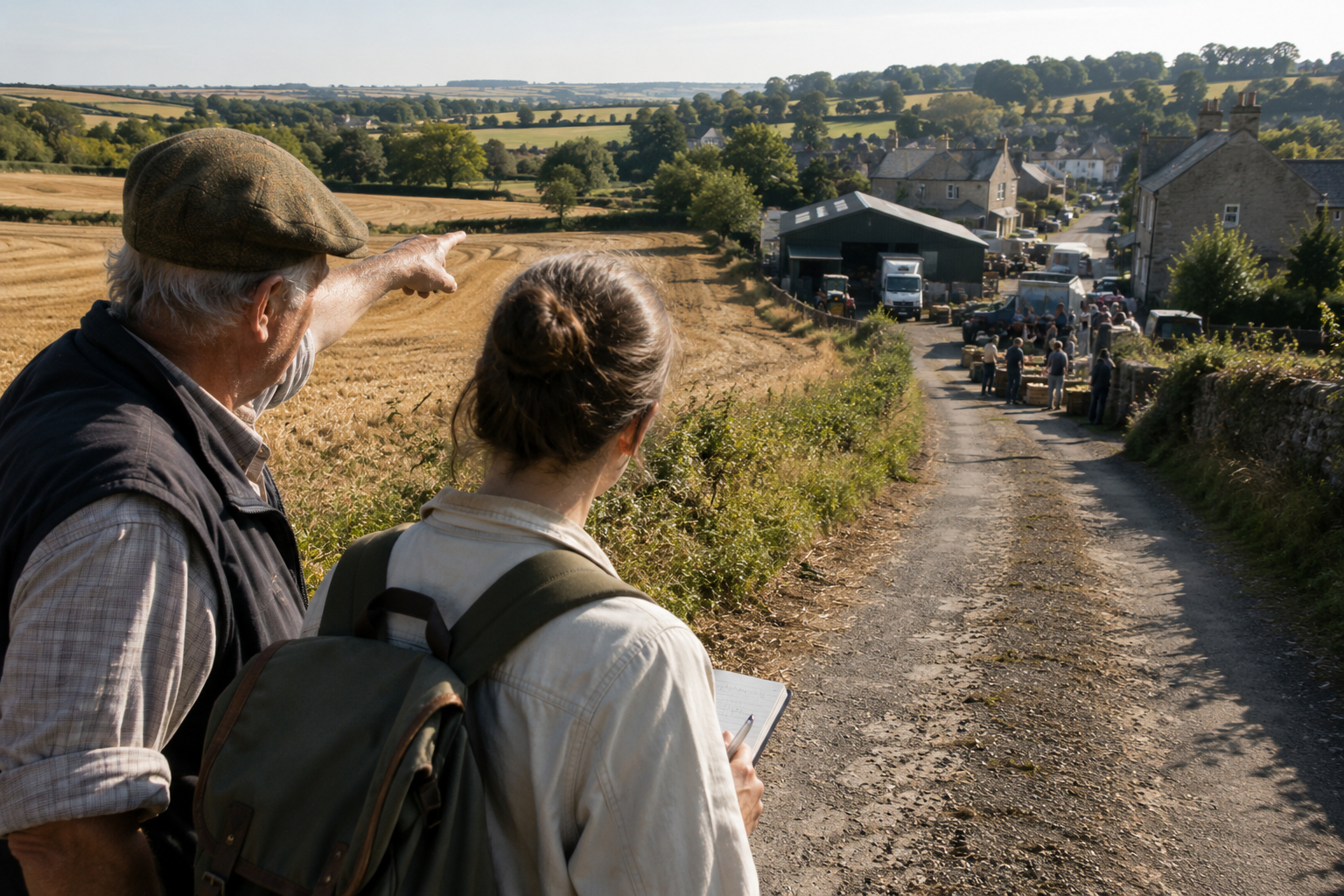
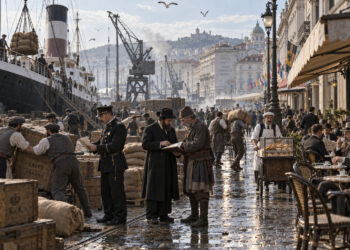
Every region is made as much by routine movement as by formal politics. Streets, lanes, and footpaths channel daily life and carry stories across generations. Fields and work rhythms embed seasonal knowledge in local calendars and community practices. Over time these mundane infrastructures build a shared sense of place and continuity.

Paths and Everyday Movement

Routes that traders, workers, and neighbors follow shape how relationships form across a landscape. A recurring path can become a boundary, a meeting place, or an axis for markets and gatherings. The material presence of a road or trail also influences which villages remain connected and which fall into isolation. As people move, they exchange goods, stories, and rituals that knit disparate sites into a coherent regional fabric.

Those patterns are durable: they survive political changes and sometimes outlast official maps. Observing movement reveals informal networks that formal histories often miss.

Work Rhythms and Seasonal Practices

Fields, orchards, and seasonal labor create temporal structures that organize community life. Harvests, transhumance, and craft cycles generate festivals, obligations, and shared knowledge about the land. These routines produce a vocabulary of care for particular places, from watering points to storage houses. Over generations, such practices become repositories of identity and tacit expertise.

  • Key nodes: markets, mills, packing grounds, and temporary camps.
  • Seasonal anchors: planting dates, harvest feasts, repair seasons.

By tracing these cycles researchers can map how memory and belonging attach to specific sites. Everyday work thus acts as a slow mechanism of cultural transmission.

Small Institutions and Ordinary Sites

Packing sheds, parish halls, taverns, and schools often carry disproportionate weight in regional memory. These are places where rules are learned, disputes settled, and communal archives assembled in the form of records, photographs, and oral testimony. Their modest architecture belies an important role: stabilizing social practices and signaling continuity amid change. Local institutions also mediate external influences and help communities adapt without losing coherent identity.

Documenting such sites reveals how collective histories are produced at ground level. Conservation and interpretation that focus only on grand monuments miss this everyday infrastructure of memory.

Conclusion

Understanding regions requires attention to the routines that shape everyday space. Streets, fields, and small institutions silently accumulate meaning over time. Their slow work is essential to how people remember and belong.
Previous Post

Collective Routes: Mobility, Memory, and Regional Making

Next Post

Organizing Temporal Layers to Reveal Historical Patterns

Related Posts

Trieste: A Port at the Edge of Empires
Regions

Trieste: A Port at the Edge of Empires

September 15, 2026
Svalbard: How a Frozen Archipelago Became an International Outpost
Regions

Svalbard: How a Frozen Archipelago Became an International Outpost

September 15, 2026
Orkney: Where Norse Law and Scottish Life Intertwined
Regions

Orkney: Where Norse Law and Scottish Life Intertwined

September 15, 2026
Inside the Covered Streets: The Grand Bazaar and Istanbul’s Life
Regions

Inside the Covered Streets: The Grand Bazaar and Istanbul’s Life

September 15, 2026
Next Post
Organizing Temporal Layers to Reveal Historical Patterns

Organizing Temporal Layers to Reveal Historical Patterns

Search..

No Result
View All Result

Recent Articles

The Disguise That Broke Chains: Ellen and William Craft

The Disguise That Broke Chains: Ellen and William Craft

September 15, 2026
Bass Reeves: The Marshal Who Hunted Outlaws in Indian Territory

Bass Reeves: The Marshal Who Hunted Outlaws in Indian Territory

September 15, 2026
How the Crystal Palace Turned Glass and Iron into a Modern Stage

How the Crystal Palace Turned Glass and Iron into a Modern Stage

September 15, 2026
Anne Bonny: The Pirate Who Broke Rules and Expectations

Anne Bonny: The Pirate Who Broke Rules and Expectations

September 15, 2026
How Haiti Broke Its Chains: A 1791–1804 Timeline

How Haiti Broke Its Chains: A 1791–1804 Timeline

September 15, 2026

Subscribe Us

By clicking submit, I authorize History Ours and its affiliated companies to: (1) use, sell, and share my information for marketing purposes, including cross-context behavioral advertising, as described in our Terms of Service and Privacy Policy, (2) supplement the information that I provide with additional information lawfully obtained from other sources, like demographic data from public sources, interests inferred from web page views, or other data relevant to what might interest me, like past purchase or location data, (3) contact me or enable others to contact me by email with offers for goods and services from any category at the email address provided, and (4) retain my information while I am engaging with marketing messages that I receive and for a reasonable amount of time thereafter. I understand I can opt out at any time through an email that I receive, or by clicking here

Subscribe To Our Newsletter

By clicking submit, I authorize History Ours and its affiliated companies to: (1) use, sell, and share my information for marketing purposes, including cross-context behavioral advertising, as described in our Terms of Service and Privacy Policy, (2) supplement the information that I provide with additional information lawfully obtained from other sources, like demographic data from public sources, interests inferred from web page views, or other data relevant to what might interest me, like past purchase or location data, (3) contact me or enable others to contact me by email with offers for goods and services from any category at the email address provided, and (4) retain my information while I am engaging with marketing messages that I receive and for a reasonable amount of time thereafter. I understand I can opt out at any time through an email that I receive, or by clicking here.

© 2026 History Ours | All Rights Reserved

  • Contact Us
  • Privacy Policy
  • Terms of Service
  • Unsubscribe
  • Privacy Choices
  • Contact Us
  • Privacy Policy
  • Terms of Service
  • Unsubscribe
  • Privacy Choices

© 2026 History Ours | All Rights Reserved

No Result
View All Result
  • Home
  • History
  • Biographies
  • Eras
  • Regions
  • Timeline

© 2026 History Ours | All Rights Reserved

Skip to content
Open toolbar Accessibility Tools

Accessibility Tools

  • Increase TextIncrease Text
  • Decrease TextDecrease Text
  • GrayscaleGrayscale
  • High ContrastHigh Contrast
  • Negative ContrastNegative Contrast
  • Light BackgroundLight Background
  • Links UnderlineLinks Underline
  • Readable FontReadable Font
  • Reset Reset