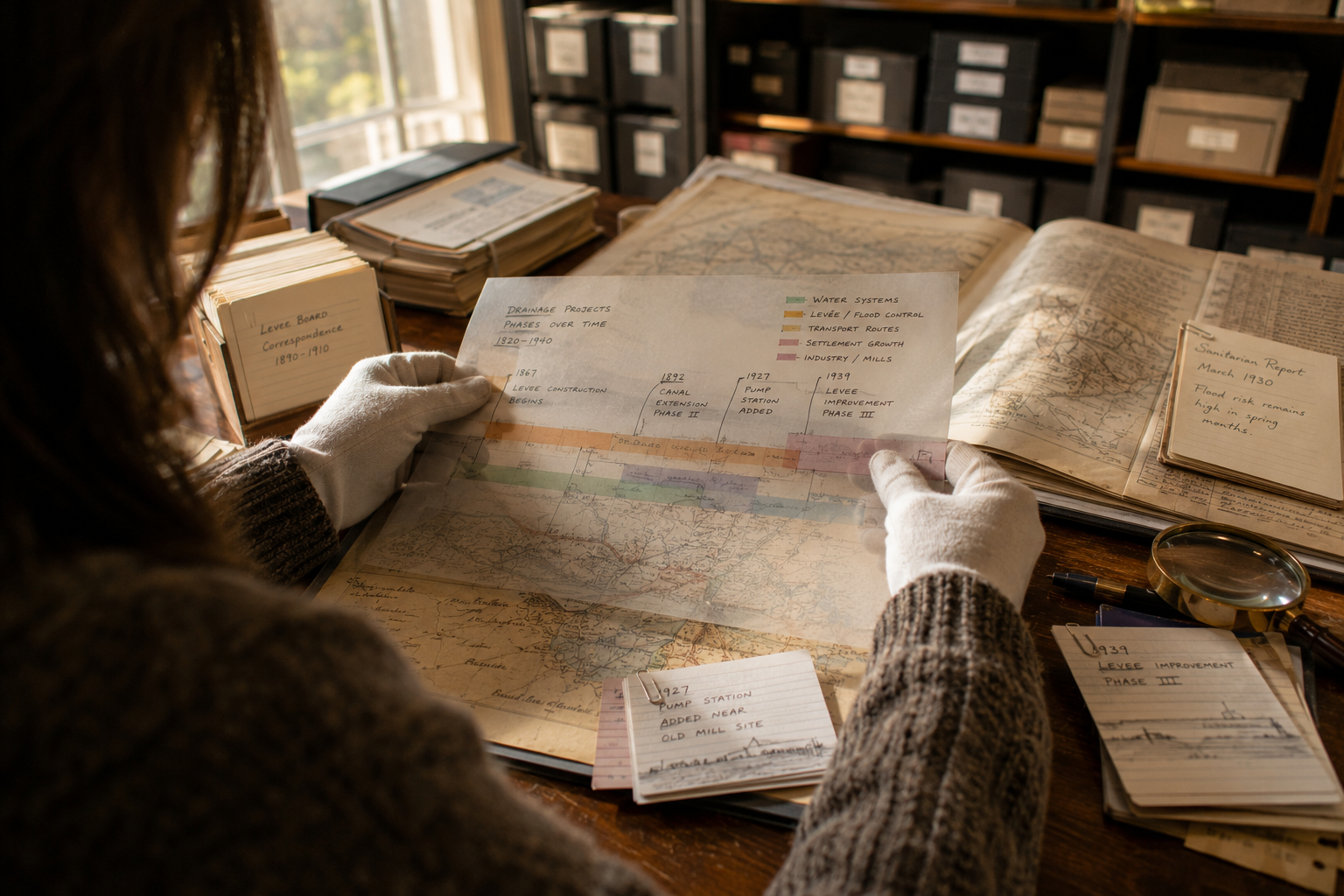
Timelines can do more than list dates; they reveal relationships, rhythms and turning points when designed with intent. Successful public timelines balance scale and focus so audiences can see continuity without losing critical detail. This article outlines practical steps to organize temporal layers that support interpretation and engagement. The approach emphasizes choices about scope, hierarchy, sources and user testing.
Clarify Scope, Scale and Themes
Begin by defining the span and thematic frame of the timeline so every element serves a clear purpose. Choose boundaries that reflect meaningful transitions rather than arbitrary ranges, and determine the level of granularity required for the audience. Identifying 3–5 central themes helps filter events and avoid overwhelming detail. This clarity makes it easier to assign prominence to pivotal moments and supporting context.
Be explicit about exclusions and why certain events are grouped or omitted. Documentation of scope decisions supports transparency and future updates.
Establish Visual Hierarchy and Narrative Flow
Design a hierarchy that guides viewers through the main story before inviting deeper exploration of side threads. Use consistent visual cues—size, color, and placement—to indicate significance, periodization and causal links. Provide anchors such as headline events, descriptive labels and short interpretive captions that orient readers rapidly. Maintain a flow that balances chronological progression with thematic connections to encourage pattern recognition.
Clear sequencing reduces cognitive load and helps audiences move from surface reading to richer interpretation. Visual order should mirror the narrative priorities you set in the planning stage.
Layer Context and Primary Sources Strategically
Introduce layers that offer context without crowding the main timeline: background timelines for social or economic indicators, inset panels for biographies, and linked artifacts or quotes. Prioritize primary sources that illuminate decisions or lived experience and place them near relevant events to strengthen causal understanding. Avoid equal-weight presentation of all materials; offer pathways to deeper content through progressive disclosure. Thoughtful layering preserves readability while enriching interpretation.
Provide source citations and short notes to maintain credibility and allow curious viewers to pursue further reading. Layering should support, not obscure, the central narrative.
Iterate with Users and Document Decisions
Conduct quick usability tests with typical audiences to observe where attention stalls and which connections are missed. Use feedback to simplify labels, adjust pacing and reassign emphasis to more salient points. Keep version notes that record editorial choices, source selections and design constraints so future revisions remain consistent. Iteration turns assumptions into tested decisions and improves accessibility for diverse audiences.
Regular review ensures the timeline stays accurate and relevant as new research emerges. Engagement-driven changes enhance public trust and comprehension.
Conclusion
Organizing temporal layers is a deliberate act of selection that balances clarity and complexity. Prioritize scope, hierarchy, source placement and user testing to reveal patterns rather than merely listing events. Thoughtful layering creates timelines that invite understanding, curiosity and further inquiry.