
Uncover History’s Secrets with Daily Updates!
Daily News Entertainment
  • Home
  • History
  • Biographies
  • Eras
  • Regions
  • Timeline
No Result
View All Result
History Ours
  • Home
  • History
  • Biographies
  • Eras
  • Regions
  • Timeline
No Result
View All Result
History Ours
No Result
View All Result
Home Regions

The Cultural Harmony of the Mediterranean Basin

in Regions
The Cultural Harmony of the Mediterranean Basin

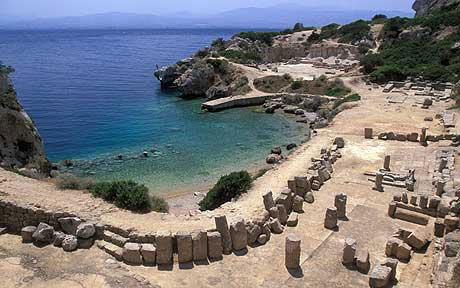
The Mediterranean Basin has long been a crossroads of civilizations, where cultures met, traded, and blended across centuries. Surrounded by three continents, this region became a living mosaic shaped by shared seas rather than rigid borders. Ideas, languages, foods, and beliefs flowed freely along its coasts, creating a unique sense of cultural harmony. Despite differences in religion, governance, and traditions, Mediterranean societies developed deep connections that continue to influence the modern world. The basin’s history shows how proximity and exchange can foster unity without erasing identity.

A Shared Sea That Connected Civilizations

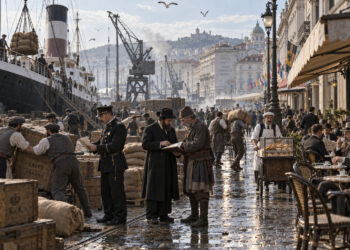
The Mediterranean Sea acted as a natural highway linking ancient societies such as the Greeks, Phoenicians, Egyptians, Romans, and later Islamic empires. Trade routes enabled the movement of goods like olive oil, wine, spices, and textiles, but they also carried philosophies, technologies, and artistic styles. Ports became melting pots where merchants, scholars, and travelers exchanged more than commodities. This constant interaction created cultural overlap, making the sea a unifying force rather than a dividing one.

Blending of Traditions and Beliefs

Religious and philosophical ideas spread widely across the Mediterranean Basin, often adapting to local customs. Ancient mythologies influenced one another, while later monotheistic traditions developed side by side, shaping shared moral and social frameworks. Architecture, art, and public spaces reflected this blending—temples, mosques, theaters, and forums borrowed elements across cultures. Rather than existing in isolation, traditions evolved through dialogue and adaptation.

Cuisine as a Cultural Bridge

Mediterranean cuisine is one of the clearest examples of cultural harmony in daily life. Common ingredients such as olive oil, grains, seafood, herbs, and fruits appear across the region with local variations. Meals emphasize sharing, seasonality, and simplicity, reinforcing social bonds. While flavors differ from coast to coast, the underlying philosophy of food as a communal experience remains remarkably consistent, highlighting shared values rooted in the region’s environment and history.

Language, Art, and Everyday Life

Languages in the Mediterranean Basin influenced one another through trade, conquest, and coexistence, leaving shared vocabulary and expressions. Music, storytelling, and visual art followed similar patterns, blending rhythms, motifs, and techniques. Everyday customs—from marketplaces to festivals—reflect a balance between local identity and collective heritage. This cultural layering created societies that valued both tradition and exchange.

Conclusion

The Mediterranean Basin demonstrates how cultural harmony can emerge through interaction rather than uniformity. Its shared sea fostered cooperation, creativity, and mutual influence across centuries. The region’s legacy reminds us that diversity and connection can thrive together, shaping civilizations that endure far beyond their origins.
Previous Post

The Prehistoric Era: Life Before Civilization

Next Post

Ancient Mesopotamia: The First Urban Revolution

Related Posts

Trieste: A Port at the Edge of Empires
Regions

Trieste: A Port at the Edge of Empires

September 15, 2026
Svalbard: How a Frozen Archipelago Became an International Outpost
Regions

Svalbard: How a Frozen Archipelago Became an International Outpost

September 15, 2026
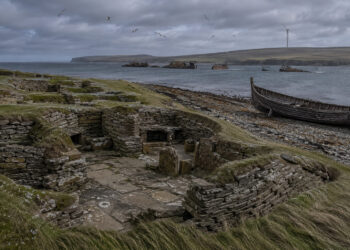
Orkney: Where Norse Law and Scottish Life Intertwined
Regions

Orkney: Where Norse Law and Scottish Life Intertwined

September 15, 2026
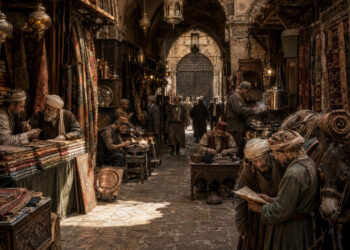
Inside the Covered Streets: The Grand Bazaar and Istanbul’s Life
Regions

Inside the Covered Streets: The Grand Bazaar and Istanbul’s Life

September 15, 2026
Next Post
Ancient Mesopotamia: The First Urban Revolution

Ancient Mesopotamia: The First Urban Revolution

Search..

No Result
View All Result

Recent Articles

The Disguise That Broke Chains: Ellen and William Craft

The Disguise That Broke Chains: Ellen and William Craft

September 15, 2026
Bass Reeves: The Marshal Who Hunted Outlaws in Indian Territory

Bass Reeves: The Marshal Who Hunted Outlaws in Indian Territory

September 15, 2026
How the Crystal Palace Turned Glass and Iron into a Modern Stage

How the Crystal Palace Turned Glass and Iron into a Modern Stage

September 15, 2026
Anne Bonny: The Pirate Who Broke Rules and Expectations

Anne Bonny: The Pirate Who Broke Rules and Expectations

September 15, 2026
How Haiti Broke Its Chains: A 1791–1804 Timeline

How Haiti Broke Its Chains: A 1791–1804 Timeline

September 15, 2026

Subscribe Us

By clicking submit, I authorize History Ours and its affiliated companies to: (1) use, sell, and share my information for marketing purposes, including cross-context behavioral advertising, as described in our Terms of Service and Privacy Policy, (2) supplement the information that I provide with additional information lawfully obtained from other sources, like demographic data from public sources, interests inferred from web page views, or other data relevant to what might interest me, like past purchase or location data, (3) contact me or enable others to contact me by email with offers for goods and services from any category at the email address provided, and (4) retain my information while I am engaging with marketing messages that I receive and for a reasonable amount of time thereafter. I understand I can opt out at any time through an email that I receive, or by clicking here

Subscribe To Our Newsletter

By clicking submit, I authorize History Ours and its affiliated companies to: (1) use, sell, and share my information for marketing purposes, including cross-context behavioral advertising, as described in our Terms of Service and Privacy Policy, (2) supplement the information that I provide with additional information lawfully obtained from other sources, like demographic data from public sources, interests inferred from web page views, or other data relevant to what might interest me, like past purchase or location data, (3) contact me or enable others to contact me by email with offers for goods and services from any category at the email address provided, and (4) retain my information while I am engaging with marketing messages that I receive and for a reasonable amount of time thereafter. I understand I can opt out at any time through an email that I receive, or by clicking here.

© 2026 History Ours | All Rights Reserved

  • Contact Us
  • Privacy Policy
  • Terms of Service
  • Unsubscribe
  • Privacy Choices
  • Contact Us
  • Privacy Policy
  • Terms of Service
  • Unsubscribe
  • Privacy Choices

© 2026 History Ours | All Rights Reserved

No Result
View All Result
  • Home
  • History
  • Biographies
  • Eras
  • Regions
  • Timeline

© 2026 History Ours | All Rights Reserved

Skip to content
Open toolbar Accessibility Tools

Accessibility Tools

  • Increase TextIncrease Text
  • Decrease TextDecrease Text
  • GrayscaleGrayscale
  • High ContrastHigh Contrast
  • Negative ContrastNegative Contrast
  • Light BackgroundLight Background
  • Links UnderlineLinks Underline
  • Readable FontReadable Font
  • Reset Reset