Uncover History’s Secrets with Daily Updates!
Daily News Entertainment
  • Home
  • History
  • Biographies
  • Eras
  • Regions
  • Timeline
No Result
View All Result
History Ours
  • Home
  • History
  • Biographies
  • Eras
  • Regions
  • Timeline
No Result
View All Result
History Ours
No Result
View All Result
Home Eras

The Prehistoric Era: Life Before Civilization

in Eras
The Prehistoric Era: Life Before Civilization

Long before cities, written language, or formal governance, human life unfolded in what we now call the prehistoric era. This vast stretch of time, spanning millions of years, represents humanity’s earliest attempts to survive, adapt, and understand the natural world. Life before civilization was shaped by direct dependence on nature, where survival required ingenuity, cooperation, and constant movement. Though simple in structure, prehistoric life laid the foundations for everything that followed.

Survival Through Hunting and Gathering

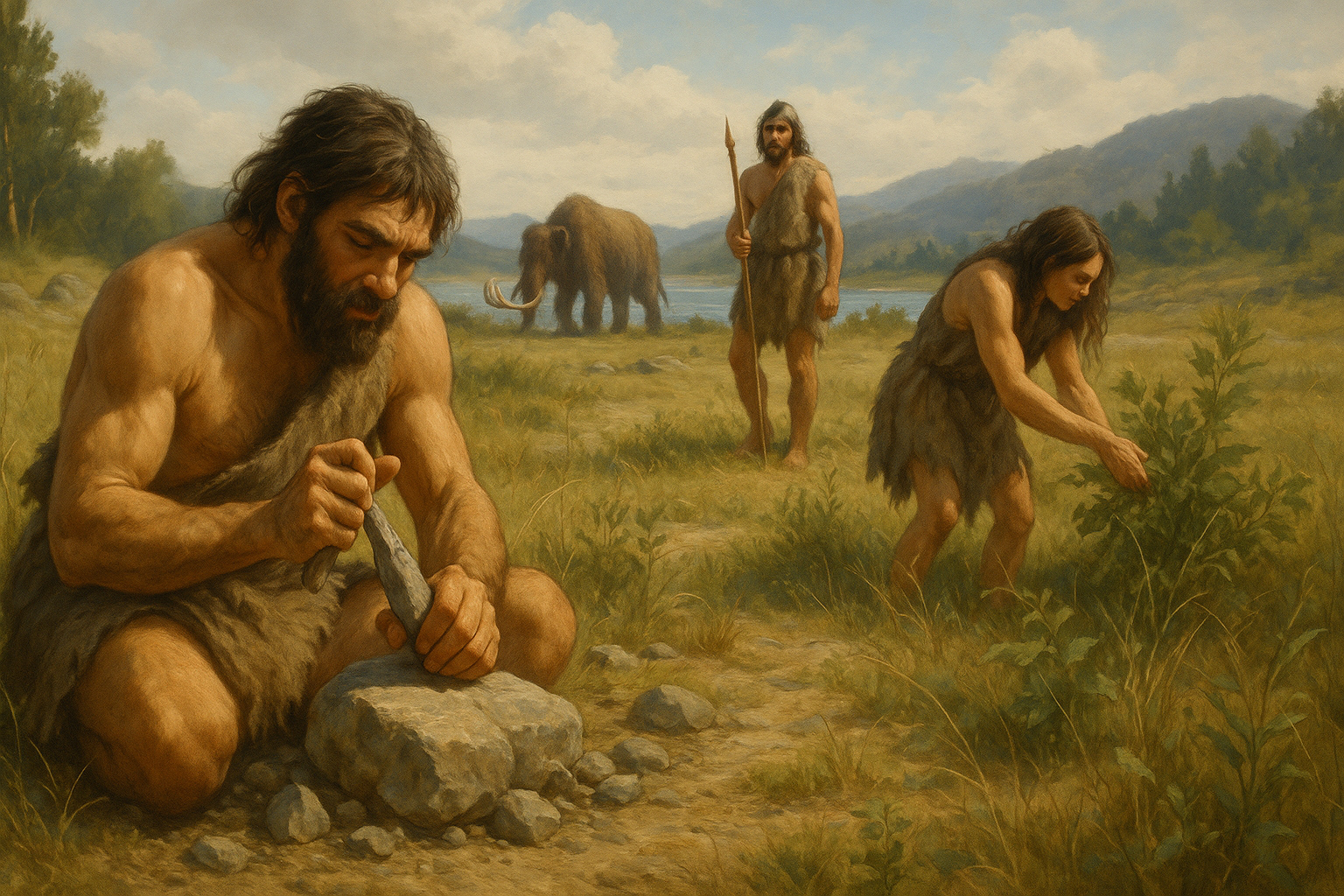
Prehistoric humans relied primarily on hunting animals and gathering plants, fruits, and roots for sustenance. This lifestyle required deep knowledge of the environment—seasonal patterns, animal behavior, and edible vegetation. Communities remained small and mobile, moving as resources shifted. Cooperation was essential, as group hunting and shared food ensured survival during harsh conditions. These early survival strategies strengthened social bonds and collective responsibility.

Tools as the First Technological Leap

One of the most defining features of the prehistoric era was the development of tools. Early humans crafted stone tools for cutting, scraping, hunting, and protection. Over time, these tools became more refined, signaling the growth of problem-solving skills and abstract thinking. Fire, another critical discovery, transformed daily life by providing warmth, protection, and the ability to cook food—improving nutrition and safety.

Social Life and Early Communication

Although prehistoric societies lacked written language, communication flourished through gestures, sounds, and eventually spoken language. These early forms of expression enabled cooperation, teaching, and cultural continuity. Social structures were based on kinship and shared responsibility rather than hierarchy. Storytelling, ritual behavior, and symbolic expression began to emerge, offering early insight into human creativity and belief systems.

Art, Rituals, and Early Belief Systems

Cave paintings, carvings, and burial practices suggest that prehistoric humans possessed a rich inner world. Art often depicted animals, hunting scenes, or abstract symbols, possibly serving spiritual or communal purposes. Burial rituals indicate early beliefs about life, death, and connection beyond the physical world. These expressions reveal that meaning and identity mattered even in humanity’s earliest stages.

Conclusion

The prehistoric era was not merely a time of survival—it was a period of innovation, adaptation, and cultural awakening. Life before civilization shaped human intelligence, cooperation, and creativity in profound ways. By understanding this era, we gain deeper appreciation for how humanity evolved from simple survival to complex societies built on shared knowledge and collective growth.


Previous Post

The Digital Revolution: How Technology Transformed Humanity

Next Post

The Cultural Harmony of the Mediterranean Basin

Related Posts

Pax Mongolica: How Mongol Rule Rewired the Old World
Eras

Pax Mongolica: How Mongol Rule Rewired the Old World

September 15, 2026
Life Under the Tokugawa: How Edo Japan Rewrote Social Order
Eras

Life Under the Tokugawa: How Edo Japan Rewrote Social Order

September 15, 2026
When Empires Fell: The Late Bronze Age Collapse
Eras

When Empires Fell: The Late Bronze Age Collapse

September 15, 2026
1816: How a Volcano Turned Summer Into Crisis
Eras

1816: How a Volcano Turned Summer Into Crisis

September 15, 2026
Next Post
The Cultural Harmony of the Mediterranean Basin

The Cultural Harmony of the Mediterranean Basin

Search..

No Result
View All Result

Recent Articles

The Disguise That Broke Chains: Ellen and William Craft

The Disguise That Broke Chains: Ellen and William Craft

September 15, 2026
Bass Reeves: The Marshal Who Hunted Outlaws in Indian Territory

Bass Reeves: The Marshal Who Hunted Outlaws in Indian Territory

September 15, 2026
How the Crystal Palace Turned Glass and Iron into a Modern Stage

How the Crystal Palace Turned Glass and Iron into a Modern Stage

September 15, 2026
Anne Bonny: The Pirate Who Broke Rules and Expectations

Anne Bonny: The Pirate Who Broke Rules and Expectations

September 15, 2026
How Haiti Broke Its Chains: A 1791–1804 Timeline

How Haiti Broke Its Chains: A 1791–1804 Timeline

September 15, 2026

Subscribe Us

By clicking submit, I authorize History Ours and its affiliated companies to: (1) use, sell, and share my information for marketing purposes, including cross-context behavioral advertising, as described in our Terms of Service and Privacy Policy, (2) supplement the information that I provide with additional information lawfully obtained from other sources, like demographic data from public sources, interests inferred from web page views, or other data relevant to what might interest me, like past purchase or location data, (3) contact me or enable others to contact me by email with offers for goods and services from any category at the email address provided, and (4) retain my information while I am engaging with marketing messages that I receive and for a reasonable amount of time thereafter. I understand I can opt out at any time through an email that I receive, or by clicking here

Subscribe To Our Newsletter

By clicking submit, I authorize History Ours and its affiliated companies to: (1) use, sell, and share my information for marketing purposes, including cross-context behavioral advertising, as described in our Terms of Service and Privacy Policy, (2) supplement the information that I provide with additional information lawfully obtained from other sources, like demographic data from public sources, interests inferred from web page views, or other data relevant to what might interest me, like past purchase or location data, (3) contact me or enable others to contact me by email with offers for goods and services from any category at the email address provided, and (4) retain my information while I am engaging with marketing messages that I receive and for a reasonable amount of time thereafter. I understand I can opt out at any time through an email that I receive, or by clicking here.

© 2026 History Ours | All Rights Reserved

  • Contact Us
  • Privacy Policy
  • Terms of Service
  • Unsubscribe
  • Privacy Choices
  • Contact Us
  • Privacy Policy
  • Terms of Service
  • Unsubscribe
  • Privacy Choices

© 2026 History Ours | All Rights Reserved

No Result
View All Result
  • Home
  • History
  • Biographies
  • Eras
  • Regions
  • Timeline

© 2026 History Ours | All Rights Reserved

Skip to content
Open toolbar Accessibility Tools

Accessibility Tools

  • Increase TextIncrease Text
  • Decrease TextDecrease Text
  • GrayscaleGrayscale
  • High ContrastHigh Contrast
  • Negative ContrastNegative Contrast
  • Light BackgroundLight Background
  • Links UnderlineLinks Underline
  • Readable FontReadable Font
  • Reset Reset