Uncover History’s Secrets with Daily Updates!
Daily News Entertainment
  • Home
  • History
  • Biographies
  • Eras
  • Regions
  • Timeline
No Result
View All Result
History Ours
  • Home
  • History
  • Biographies
  • Eras
  • Regions
  • Timeline
No Result
View All Result
History Ours
No Result
View All Result
Home Regions

The Majesty of the Ottoman Empire

in Regions
The Majesty of the Ottoman Empire

The Ottoman Empire stands as one of history’s most powerful and enduring civilizations, spanning over six centuries and bridging the continents of Europe, Asia, and Africa. From its rise in the 13th century to its eventual decline in the early 20th, the empire shaped global politics, trade, and culture in profound ways. Known for its architectural splendor, military prowess, and cultural sophistication, the Ottoman legacy continues to influence the modern world.

The Rise of a Great Empire

The Ottoman story began around 1299 under the leadership of Osman I; a small Anatolian chieftain whose name gave rise to the empire itself. Through strategic alliances, military innovation, and political acumen, the Ottomans rapidly expanded their territory. The conquest of Constantinople in 1453 by Sultan Mehmed II (Mehmed the Conqueror) marked a defining moment in history, transforming the Byzantine capital into Istanbul — the heart of a thriving, cosmopolitan empire.

Golden Age of Power and Prosperity

The empire reached its zenith during the reign of Suleiman the Magnificent (1520–1566). His rule brought unmatched prosperity, legal reforms, and artistic achievement. The Ottomans became renowned for their architectural feats, including the stunning Suleymaniye Mosque and Topkapi Palace, which symbolized imperial power and religious devotion.
Trade flourished as the empire controlled key routes between East and West, facilitating the exchange of goods, ideas, and cultures. The Ottoman military, built upon the elite Janissary corps, became a formidable force feared across continents.

Art, Culture, and Innovation

The Ottoman Empire was not only a military power but also a cultural beacon. It nurtured poetry, calligraphy, textile art, and intricate tile work that blended influences from Persia, Arabia, and Byzantium. Istanbul became a melting pot of languages, religions, and traditions, where scholars, merchants, and artists converged to create a vibrant, diverse society.
Coffeehouses, miniature painting, and music thrived as centers of intellectual and social exchange. The empire’s architectural style, marked by majestic domes and minarets, still inspires modern design and remains one of its most visible legacies.

Decline and Legacy

By the 18th and 19th centuries, the empire faced internal challenges and external pressures from rising European powers. Economic stagnation, political corruption, and nationalist movements gradually weakened Ottoman control. The empire officially came to an end after World War I, giving rise to the modern Republic of Turkey in 1923 under Mustafa Kemal Atatürk.
Despite its fall, the Ottoman Empire left an indelible mark on global history — influencing cuisine, architecture, law, and culture across Southeast Europe, North Africa, and the Middle East.

Conclusion

The Majesty of the Ottoman Empire lies not only in its vast conquests and grandeur but in its enduring contributions to art, science, and human civilization. It remains a symbol of unity in diversity — a bridge between East and West, past and present, reminding us of the cultural richness born from centuries of empire-building and exchange.
Previous Post

The Cold War Era: Tension, Technology, and Triumph

Next Post

The Dynasties of China: From Qin to Qing

Related Posts

How Carrara’s Marble Carved a Peculiar Mountain Region
Regions

How Carrara’s Marble Carved a Peculiar Mountain Region

November 1, 2026
The Great Dismal Swamp: Refuge, Labor, and a Hidden Region
Regions

The Great Dismal Swamp: Refuge, Labor, and a Hidden Region

November 1, 2026
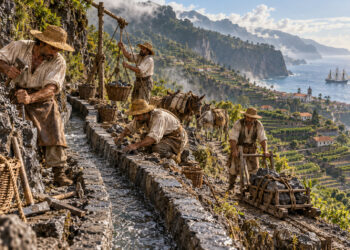
Levadas and the Making of Madeira’s Island Region
Regions

Levadas and the Making of Madeira’s Island Region

October 27, 2026
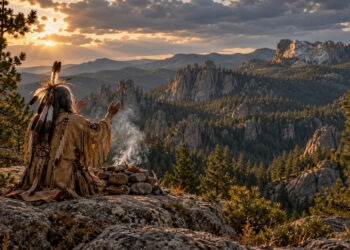
Black Hills: Paha Sapa, Gold Fever, and a Stolen Range
Regions

Black Hills: Paha Sapa, Gold Fever, and a Stolen Range

October 27, 2026
Next Post
The Dynasties of China: From Qin to Qing

The Dynasties of China: From Qin to Qing

Search..

No Result
View All Result

Recent Articles

When Boston Flooded with Molasses: The 1919 North End Disaster

When Boston Flooded with Molasses: The 1919 North End Disaster

November 3, 2026
The 1518 Dancing Plague: When Strasbourg Danced to Exhaustion

The 1518 Dancing Plague: When Strasbourg Danced to Exhaustion

November 3, 2026
1453: The Fall of Constantinople — A Brief Timeline

1453: The Fall of Constantinople — A Brief Timeline

November 2, 2026
How Penicillin Went from Petri Dish to Battlefield Medicine

How Penicillin Went from Petri Dish to Battlefield Medicine

November 2, 2026
How Carrara’s Marble Carved a Peculiar Mountain Region

How Carrara’s Marble Carved a Peculiar Mountain Region

November 1, 2026

Subscribe Us

By clicking submit, I authorize History Ours and its affiliated companies to: (1) use, sell, and share my information for marketing purposes, including cross-context behavioral advertising, as described in our Terms of Service and Privacy Policy, (2) supplement the information that I provide with additional information lawfully obtained from other sources, like demographic data from public sources, interests inferred from web page views, or other data relevant to what might interest me, like past purchase or location data, (3) contact me or enable others to contact me by email with offers for goods and services from any category at the email address provided, and (4) retain my information while I am engaging with marketing messages that I receive and for a reasonable amount of time thereafter. I understand I can opt out at any time through an email that I receive, or by clicking here

Subscribe To Our Newsletter

By clicking submit, I authorize History Ours and its affiliated companies to: (1) use, sell, and share my information for marketing purposes, including cross-context behavioral advertising, as described in our Terms of Service and Privacy Policy, (2) supplement the information that I provide with additional information lawfully obtained from other sources, like demographic data from public sources, interests inferred from web page views, or other data relevant to what might interest me, like past purchase or location data, (3) contact me or enable others to contact me by email with offers for goods and services from any category at the email address provided, and (4) retain my information while I am engaging with marketing messages that I receive and for a reasonable amount of time thereafter. I understand I can opt out at any time through an email that I receive, or by clicking here.

© 2026 History Ours | All Rights Reserved

  • Contact Us
  • Privacy Policy
  • Terms of Service
  • Unsubscribe
  • Privacy Choices
  • Contact Us
  • Privacy Policy
  • Terms of Service
  • Unsubscribe
  • Privacy Choices

© 2026 History Ours | All Rights Reserved

No Result
View All Result
  • Home
  • History
  • Biographies
  • Eras
  • Regions
  • Timeline

© 2026 History Ours | All Rights Reserved

Skip to content
Open toolbar Accessibility Tools

Accessibility Tools

  • Increase TextIncrease Text
  • Decrease TextDecrease Text
  • GrayscaleGrayscale
  • High ContrastHigh Contrast
  • Negative ContrastNegative Contrast
  • Light BackgroundLight Background
  • Links UnderlineLinks Underline
  • Readable FontReadable Font
  • Reset Reset