Uncover History’s Secrets with Daily Updates!
Daily News Entertainment
  • Home
  • History
  • Biographies
  • Eras
  • Regions
  • Timeline
No Result
View All Result
History Ours
  • Home
  • History
  • Biographies
  • Eras
  • Regions
  • Timeline
No Result
View All Result
History Ours
No Result
View All Result
Home Regions

Tracing Cultural Landscapes Across Historical Regions and Borders

in Regions
Tracing Cultural Landscapes Across Historical Regions and Borders

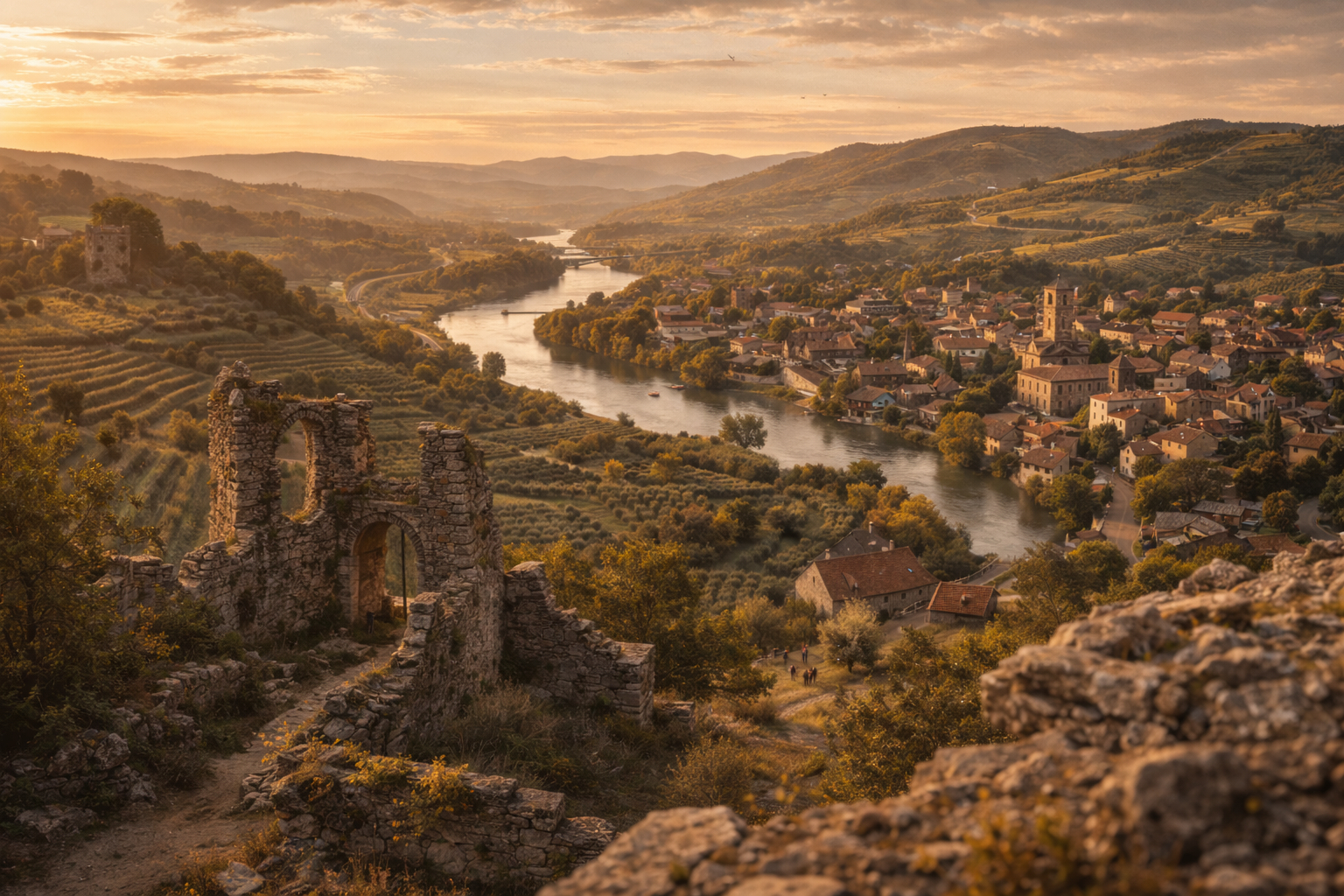
Understanding regions requires more than drawing boundaries on a map.
Regions are living constructs shaped by trade, language, migration and memory.
Historians, archaeologists, and geographers collaborate to reveal how places evolve.
This article explores the processes that create regional identities and legacies.

Regional identities and migration
Regional identity often emerges from the intersection of human movement and local adaptation. Migratory flows — whether seasonal, forced, or voluntary — introduce new languages, crafts, and beliefs that interact with existing practices. Over generations, these interactions produce hybrid cultural forms that feel native to a place even if their components arrived from afar. Understanding that hybridity is essential to interpreting material evidence, oral histories, and written records, and it helps explain why adjacent communities can develop distinct senses of belonging.

Economic and environmental drivers
Trade routes, resource distribution, and environmental change have long shaped how regions form and dissolve. Ports, river valleys, and crossroads concentrate exchange, fostering cosmopolitan centers whose influence radiates into hinterlands. Conversely, environmental stressors such as drought, deforestation, or soil depletion can fragment economic systems and push populations to seek new territories, altering regional alignments. Studying economic ties alongside climatic and ecological records gives a fuller picture of why political and cultural boundaries shift over time.

Political structures and memory
State institutions, legal regimes, and religious authorities play powerful roles in defining regions by standardizing language, law, and education. Administrative practices can make a region legible on maps and in archives, but popular memory often resists such formal definitions. Festivals, local narratives, and place names preserve alternative regional imaginaries that may survive regime change. Researchers need to balance official documents with grassroots sources to appreciate the tension between imposed boundaries and lived experience.

Preserving layered heritage
Conservation and interpretation of regional heritage require attention to multiple temporal layers and stakeholder voices. Archeological sites, buildings, and landscapes hold evidence of successive occupations, each adding value and complexity. Inclusive heritage practices invite community participation, ensuring that preservation respects contemporary needs as well as historical significance. By embracing complexity rather than seeking a single origin story, stewards can create narratives that resonate with diverse audiences and support sustainable cultural tourism.

Conclusion
Regions are dynamic tapestries woven from migration, economy, politics, and memory.
Studying them demands interdisciplinary methods and sensitivity to local voices.
Recognizing layered identities enriches our understanding of past and present landscapes.
Previous Post

Environmental Clues and the Geography of Historical Regions

Next Post

Charting Message Exchange Across Historical Eras

Related Posts

How Carrara’s Marble Carved a Peculiar Mountain Region
Regions

How Carrara’s Marble Carved a Peculiar Mountain Region

November 1, 2026
The Great Dismal Swamp: Refuge, Labor, and a Hidden Region
Regions

The Great Dismal Swamp: Refuge, Labor, and a Hidden Region

November 1, 2026
Levadas and the Making of Madeira’s Island Region
Regions

Levadas and the Making of Madeira’s Island Region

October 27, 2026
Black Hills: Paha Sapa, Gold Fever, and a Stolen Range
Regions

Black Hills: Paha Sapa, Gold Fever, and a Stolen Range

October 27, 2026
Next Post
Charting Message Exchange Across Historical Eras

Charting Message Exchange Across Historical Eras

Search..

No Result
View All Result

Recent Articles

1453: The Fall of Constantinople — A Brief Timeline

1453: The Fall of Constantinople — A Brief Timeline

November 2, 2026
How Penicillin Went from Petri Dish to Battlefield Medicine

How Penicillin Went from Petri Dish to Battlefield Medicine

November 2, 2026
How Carrara’s Marble Carved a Peculiar Mountain Region

How Carrara’s Marble Carved a Peculiar Mountain Region

November 1, 2026
The Great Dismal Swamp: Refuge, Labor, and a Hidden Region

The Great Dismal Swamp: Refuge, Labor, and a Hidden Region

November 1, 2026
The Salon Era: How Conversation Shaped the Enlightenment

The Salon Era: How Conversation Shaped the Enlightenment

October 31, 2026

Subscribe Us

By clicking submit, I authorize History Ours and its affiliated companies to: (1) use, sell, and share my information for marketing purposes, including cross-context behavioral advertising, as described in our Terms of Service and Privacy Policy, (2) supplement the information that I provide with additional information lawfully obtained from other sources, like demographic data from public sources, interests inferred from web page views, or other data relevant to what might interest me, like past purchase or location data, (3) contact me or enable others to contact me by email with offers for goods and services from any category at the email address provided, and (4) retain my information while I am engaging with marketing messages that I receive and for a reasonable amount of time thereafter. I understand I can opt out at any time through an email that I receive, or by clicking here

Subscribe To Our Newsletter

By clicking submit, I authorize History Ours and its affiliated companies to: (1) use, sell, and share my information for marketing purposes, including cross-context behavioral advertising, as described in our Terms of Service and Privacy Policy, (2) supplement the information that I provide with additional information lawfully obtained from other sources, like demographic data from public sources, interests inferred from web page views, or other data relevant to what might interest me, like past purchase or location data, (3) contact me or enable others to contact me by email with offers for goods and services from any category at the email address provided, and (4) retain my information while I am engaging with marketing messages that I receive and for a reasonable amount of time thereafter. I understand I can opt out at any time through an email that I receive, or by clicking here.

© 2026 History Ours | All Rights Reserved

  • Contact Us
  • Privacy Policy
  • Terms of Service
  • Unsubscribe
  • Privacy Choices
  • Contact Us
  • Privacy Policy
  • Terms of Service
  • Unsubscribe
  • Privacy Choices

© 2026 History Ours | All Rights Reserved

No Result
View All Result
  • Home
  • History
  • Biographies
  • Eras
  • Regions
  • Timeline

© 2026 History Ours | All Rights Reserved

Skip to content
Open toolbar Accessibility Tools

Accessibility Tools

  • Increase TextIncrease Text
  • Decrease TextDecrease Text
  • GrayscaleGrayscale
  • High ContrastHigh Contrast
  • Negative ContrastNegative Contrast
  • Light BackgroundLight Background
  • Links UnderlineLinks Underline
  • Readable FontReadable Font
  • Reset Reset