
Uncover History’s Secrets with Daily Updates!
Daily News Entertainment
  • Home
  • History
  • Biographies
  • Eras
  • Regions
  • Timeline
No Result
View All Result
History Ours
  • Home
  • History
  • Biographies
  • Eras
  • Regions
  • Timeline
No Result
View All Result
History Ours
No Result
View All Result
Home Timeline

Constructing Narrative Timelines That Encourage Public Inquiry

in Timeline
Constructing Narrative Timelines That Encourage Public Inquiry

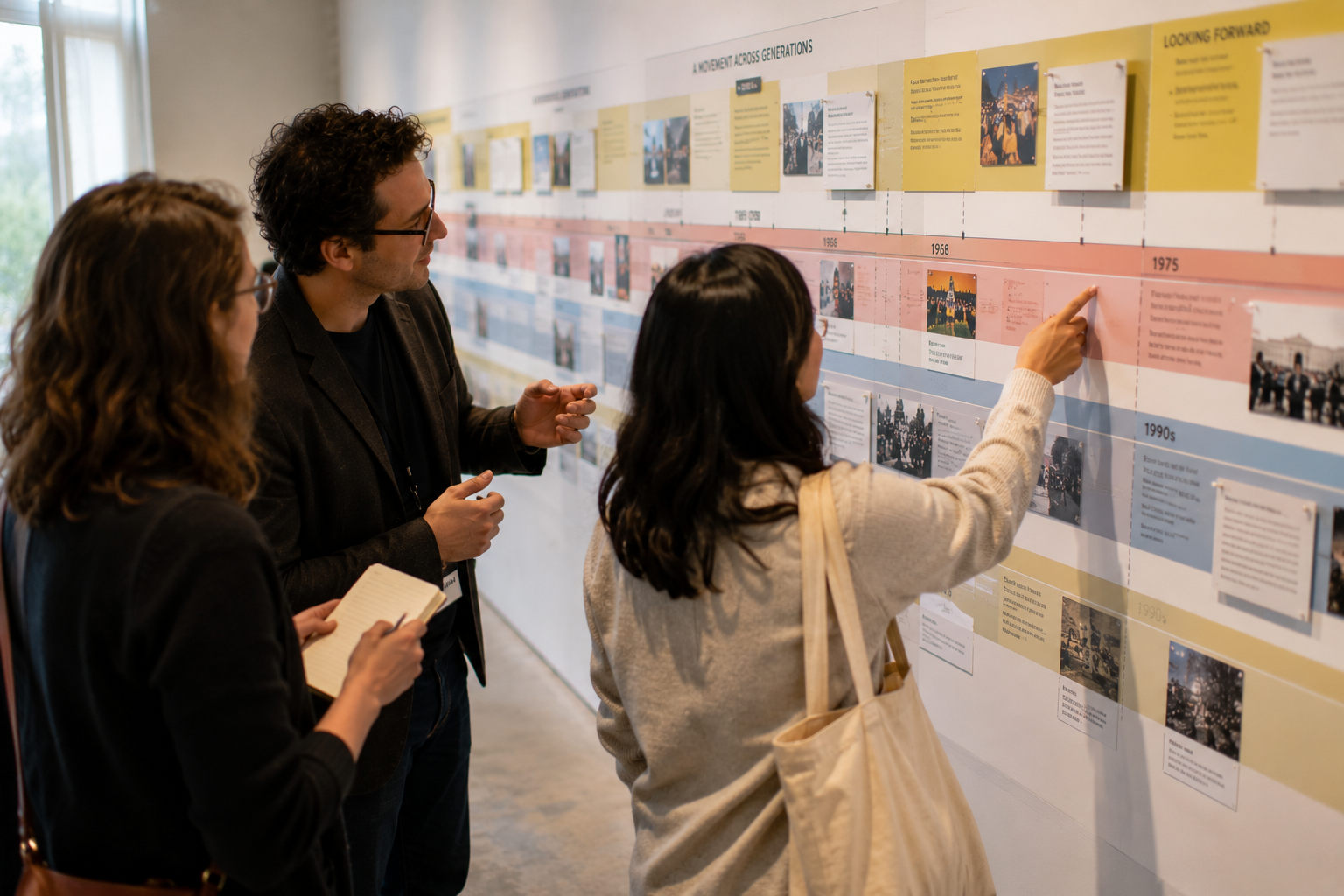
Timelines are more than lists of dates; they are curated narratives that guide public understanding of past change. A well-crafted timeline clarifies sequence while suggesting cause, consequence, and continuity. When aimed at general audiences, timelines must balance accuracy, clarity, and storytelling to invite curiosity rather than overwhelm. This introduction outlines practical approaches to build timelines that invite visitors to ask questions and explore deeper.

Defining Scope and Focus

Begin by setting clear limits on temporal range and thematic emphasis so the timeline does not become diffuse. Decide whether the project prioritizes political events, cultural change, technological developments, or a combination, and identify a coherent organizing question. Establishing scope early streamlines research and helps select representative events rather than exhaustive lists. This focus also informs visual scale and the amount of contextual text each entry needs.

Limit decisions should be driven by audience needs and available sources to keep entries meaningful and verifiable. A narrow scope can reveal patterns more clearly, while a broader frame may require additional layering to avoid confusion. Aim for a balance that allows narrative threads to emerge without sacrificing nuance.

Layering Events and Context

Good timelines present multiple layers of information so readers can choose their depth of engagement. Use a primary chronological band for headline events and secondary bands for social, economic, or cultural context. Brief contextual sentences help connect events into a causal or thematic arc without burdening the layout with long prose. Where appropriate, include short annotations that signal contested interpretations or link to primary sources.

Layering helps accommodate both skimmers and close readers by offering entry points at different levels. It also supports comparisons across categories, making continuity or divergence easier to perceive. Thoughtful layering enhances critical reading rather than simply displaying chronology.

Designing for Audience Engagement

Design choices directly affect how inviting and usable a timeline will be for the public. Prioritize legible typography, clear visual hierarchy, and a consistent time scale so viewers can orient themselves quickly. Use color and spacing to differentiate themes but avoid decorative excess that obscures meaning. Interactive elements or clear callouts can encourage further reading and link to source documents or explanatory essays.

Engagement is also achieved through storytelling choices: highlight surprising connections, pose interpretive questions alongside entries, and suggest pathways for exploration. These strategies transform a passive display into an invitation to inquire and learn more.

Conclusion

Constructing narrative timelines requires deliberate choices about scope, layering, and design to foster public inquiry. When focused, contextualized, and clearly presented, timelines become tools for learning rather than mere calendars. Thoughtful timelines encourage questions and deeper engagement with history.

Previous Post

Choosing Focus and Pace in Timeline Construction

Next Post

Shared Spaces and Social Practice in Early Market Towns

Related Posts

How Haiti Broke Its Chains: A 1791–1804 Timeline
Timeline

How Haiti Broke Its Chains: A 1791–1804 Timeline

September 15, 2026
From Horses to Wires: How the Pony Express Met the Telegraph
Timeline

From Horses to Wires: How the Pony Express Met the Telegraph

September 15, 2026
From Swamps to Shortcut: A Timeline of the Panama Canal
Timeline

From Swamps to Shortcut: A Timeline of the Panama Canal

September 15, 2026
1815–1818: The Tambora Eruption and the Year Without a Summer
Timeline

1815–1818: The Tambora Eruption and the Year Without a Summer

September 15, 2026
Next Post
Shared Spaces and Social Practice in Early Market Towns

Shared Spaces and Social Practice in Early Market Towns

Search..

No Result
View All Result

Recent Articles

Edo: Japan’s Urban Revolution of Lanterns and Printshops

Edo: Japan’s Urban Revolution of Lanterns and Printshops

September 16, 2026
How the Little Ice Age Changed Everyday Life in Europe

How the Little Ice Age Changed Everyday Life in Europe

September 16, 2026
The Disguise That Broke Chains: Ellen and William Craft

The Disguise That Broke Chains: Ellen and William Craft

September 15, 2026
Bass Reeves: The Marshal Who Hunted Outlaws in Indian Territory

Bass Reeves: The Marshal Who Hunted Outlaws in Indian Territory

September 15, 2026
How the Crystal Palace Turned Glass and Iron into a Modern Stage

How the Crystal Palace Turned Glass and Iron into a Modern Stage

September 15, 2026

Subscribe Us

By clicking submit, I authorize History Ours and its affiliated companies to: (1) use, sell, and share my information for marketing purposes, including cross-context behavioral advertising, as described in our Terms of Service and Privacy Policy, (2) supplement the information that I provide with additional information lawfully obtained from other sources, like demographic data from public sources, interests inferred from web page views, or other data relevant to what might interest me, like past purchase or location data, (3) contact me or enable others to contact me by email with offers for goods and services from any category at the email address provided, and (4) retain my information while I am engaging with marketing messages that I receive and for a reasonable amount of time thereafter. I understand I can opt out at any time through an email that I receive, or by clicking here

Subscribe To Our Newsletter

By clicking submit, I authorize History Ours and its affiliated companies to: (1) use, sell, and share my information for marketing purposes, including cross-context behavioral advertising, as described in our Terms of Service and Privacy Policy, (2) supplement the information that I provide with additional information lawfully obtained from other sources, like demographic data from public sources, interests inferred from web page views, or other data relevant to what might interest me, like past purchase or location data, (3) contact me or enable others to contact me by email with offers for goods and services from any category at the email address provided, and (4) retain my information while I am engaging with marketing messages that I receive and for a reasonable amount of time thereafter. I understand I can opt out at any time through an email that I receive, or by clicking here.

© 2026 History Ours | All Rights Reserved

  • Contact Us
  • Privacy Policy
  • Terms of Service
  • Unsubscribe
  • Privacy Choices
  • Contact Us
  • Privacy Policy
  • Terms of Service
  • Unsubscribe
  • Privacy Choices

© 2026 History Ours | All Rights Reserved

No Result
View All Result
  • Home
  • History
  • Biographies
  • Eras
  • Regions
  • Timeline

© 2026 History Ours | All Rights Reserved

Skip to content
Open toolbar Accessibility Tools

Accessibility Tools

  • Increase TextIncrease Text
  • Decrease TextDecrease Text
  • GrayscaleGrayscale
  • High ContrastHigh Contrast
  • Negative ContrastNegative Contrast
  • Light BackgroundLight Background
  • Links UnderlineLinks Underline
  • Readable FontReadable Font
  • Reset Reset