Uncover History’s Secrets with Daily Updates!
Daily News Entertainment
  • Home
  • History
  • Biographies
  • Eras
  • Regions
  • Timeline
No Result
View All Result
History Ours
  • Home
  • History
  • Biographies
  • Eras
  • Regions
  • Timeline
No Result
View All Result
History Ours
No Result
View All Result
Home Timeline

Choosing Focus and Pace in Timeline Construction

in Timeline
Choosing Focus and Pace in Timeline Construction

Timelines are powerful tools for revealing sequence, causation, and context, but they require deliberate choices about focus and pacing. A well-crafted timeline guides attention to key moments without overwhelming the reader with minutiae. This article outlines practical approaches to defining scope, setting visual hierarchy, and pacing narrative flow so timelines communicate clearly. The goal is to help creators build timelines that are informative, navigable, and adaptable to different audiences.

Define Scope and Audience

Begin by clarifying the timeline’s purpose and who will use it, because scope determines level of detail and temporal span. Decide whether the timeline aims to present a broad era, a focused event series, or a thematic thread, and list the core events that serve that aim. Consider the audience’s prior knowledge: general readers need context and fewer dense data points, while specialists can handle more granular entries. Select time boundaries and a manageable number of focal points early to prevent scope creep.

After establishing scope, create a storyboard or outline that sequences chosen events and notes gaps. This prototype helps identify when additional context or consolidation is necessary.

Establish Visual Hierarchy

Visual cues guide readers through complex chronologies, so use hierarchy to differentiate primary events from supporting details. Vary size, color, or typographic weight to highlight milestones, and group related occurrences using bands or aligned rows to show simultaneity. Keep annotation concise: short labels with optional expandable details preserve initial clarity while allowing deeper exploration. Consistent patterns across the timeline reduce cognitive load and make navigation intuitive.

Test the hierarchy at different scales to ensure that essential events remain visible and that secondary items do not compete for attention.

Balance Granularity and Narrative Flow

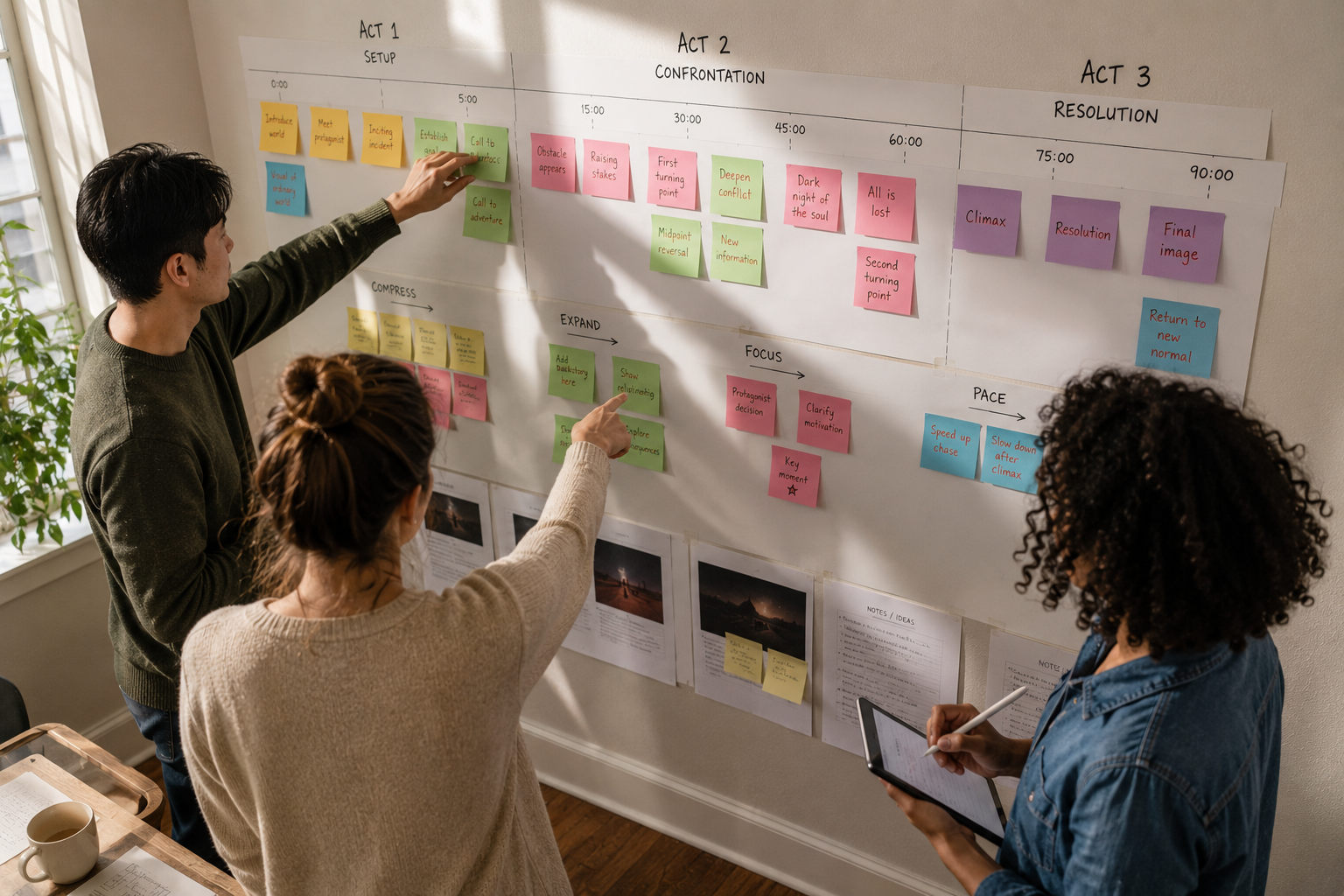
Pacing a timeline means choosing where to compress time and where to expand it so narrative arcs are apparent. Use clustering to combine minor, recurring items into a single entry and expand sections where causation or change deserves a closer look. Integrate brief explanatory captions that link events together and emphasize continuity rather than isolated facts. When necessary, provide layers or filters that allow users to toggle between overview and detailed modes.

Strive for a rhythm that alternates context-setting entries with detailed focal points to keep readers oriented and engaged.

Iterate with Feedback

Draft versions and solicit feedback from intended users and subject-matter collaborators to reveal blind spots in emphasis or pacing. Observe how people read the draft timeline and which elements they ignore or misinterpret; these insights guide refinements in labeling, scale, and grouping. Maintain flexible source documentation so revisions remain traceable and defensible.

Iteration helps balance accuracy with readability and ensures the timeline meets both educational and engagement goals.

Conclusion

Choosing focus and pace transforms a list of dates into a coherent historical narrative that readers can follow and interpret. Thoughtful scope, clear visual hierarchy, measured granularity, and iterative testing keep timelines both accurate and accessible. Apply these principles to create timelines that communicate meaning as well as chronology.


Previous Post

Placecraft: Everyday Work and the Making of Regions

Next Post

Constructing Narrative Timelines That Encourage Public Inquiry

Related Posts

How Haiti Broke Its Chains: A 1791–1804 Timeline
Timeline

How Haiti Broke Its Chains: A 1791–1804 Timeline

September 15, 2026
From Horses to Wires: How the Pony Express Met the Telegraph
Timeline

From Horses to Wires: How the Pony Express Met the Telegraph

September 15, 2026
From Swamps to Shortcut: A Timeline of the Panama Canal
Timeline

From Swamps to Shortcut: A Timeline of the Panama Canal

September 15, 2026
1815–1818: The Tambora Eruption and the Year Without a Summer
Timeline

1815–1818: The Tambora Eruption and the Year Without a Summer

September 15, 2026
Next Post
Constructing Narrative Timelines That Encourage Public Inquiry

Constructing Narrative Timelines That Encourage Public Inquiry

Search..

No Result
View All Result

Recent Articles

The Disguise That Broke Chains: Ellen and William Craft

The Disguise That Broke Chains: Ellen and William Craft

September 15, 2026
Bass Reeves: The Marshal Who Hunted Outlaws in Indian Territory

Bass Reeves: The Marshal Who Hunted Outlaws in Indian Territory

September 15, 2026
How the Crystal Palace Turned Glass and Iron into a Modern Stage

How the Crystal Palace Turned Glass and Iron into a Modern Stage

September 15, 2026
Anne Bonny: The Pirate Who Broke Rules and Expectations

Anne Bonny: The Pirate Who Broke Rules and Expectations

September 15, 2026
How Haiti Broke Its Chains: A 1791–1804 Timeline

How Haiti Broke Its Chains: A 1791–1804 Timeline

September 15, 2026

Subscribe Us

By clicking submit, I authorize History Ours and its affiliated companies to: (1) use, sell, and share my information for marketing purposes, including cross-context behavioral advertising, as described in our Terms of Service and Privacy Policy, (2) supplement the information that I provide with additional information lawfully obtained from other sources, like demographic data from public sources, interests inferred from web page views, or other data relevant to what might interest me, like past purchase or location data, (3) contact me or enable others to contact me by email with offers for goods and services from any category at the email address provided, and (4) retain my information while I am engaging with marketing messages that I receive and for a reasonable amount of time thereafter. I understand I can opt out at any time through an email that I receive, or by clicking here

Subscribe To Our Newsletter

By clicking submit, I authorize History Ours and its affiliated companies to: (1) use, sell, and share my information for marketing purposes, including cross-context behavioral advertising, as described in our Terms of Service and Privacy Policy, (2) supplement the information that I provide with additional information lawfully obtained from other sources, like demographic data from public sources, interests inferred from web page views, or other data relevant to what might interest me, like past purchase or location data, (3) contact me or enable others to contact me by email with offers for goods and services from any category at the email address provided, and (4) retain my information while I am engaging with marketing messages that I receive and for a reasonable amount of time thereafter. I understand I can opt out at any time through an email that I receive, or by clicking here.

© 2026 History Ours | All Rights Reserved

  • Contact Us
  • Privacy Policy
  • Terms of Service
  • Unsubscribe
  • Privacy Choices
  • Contact Us
  • Privacy Policy
  • Terms of Service
  • Unsubscribe
  • Privacy Choices

© 2026 History Ours | All Rights Reserved

No Result
View All Result
  • Home
  • History
  • Biographies
  • Eras
  • Regions
  • Timeline

© 2026 History Ours | All Rights Reserved

Skip to content
Open toolbar Accessibility Tools

Accessibility Tools

  • Increase TextIncrease Text
  • Decrease TextDecrease Text
  • GrayscaleGrayscale
  • High ContrastHigh Contrast
  • Negative ContrastNegative Contrast
  • Light BackgroundLight Background
  • Links UnderlineLinks Underline
  • Readable FontReadable Font
  • Reset Reset