
Uncover History’s Secrets with Daily Updates!
Daily News Entertainment
  • Home
  • History
  • Biographies
  • Eras
  • Regions
  • Timeline
No Result
View All Result
History Ours
  • Home
  • History
  • Biographies
  • Eras
  • Regions
  • Timeline
No Result
View All Result
History Ours
No Result
View All Result
Home Timeline

Integrating Primary Sources into Readable Historical Timelines

in Timeline
Integrating Primary Sources into Readable Historical Timelines

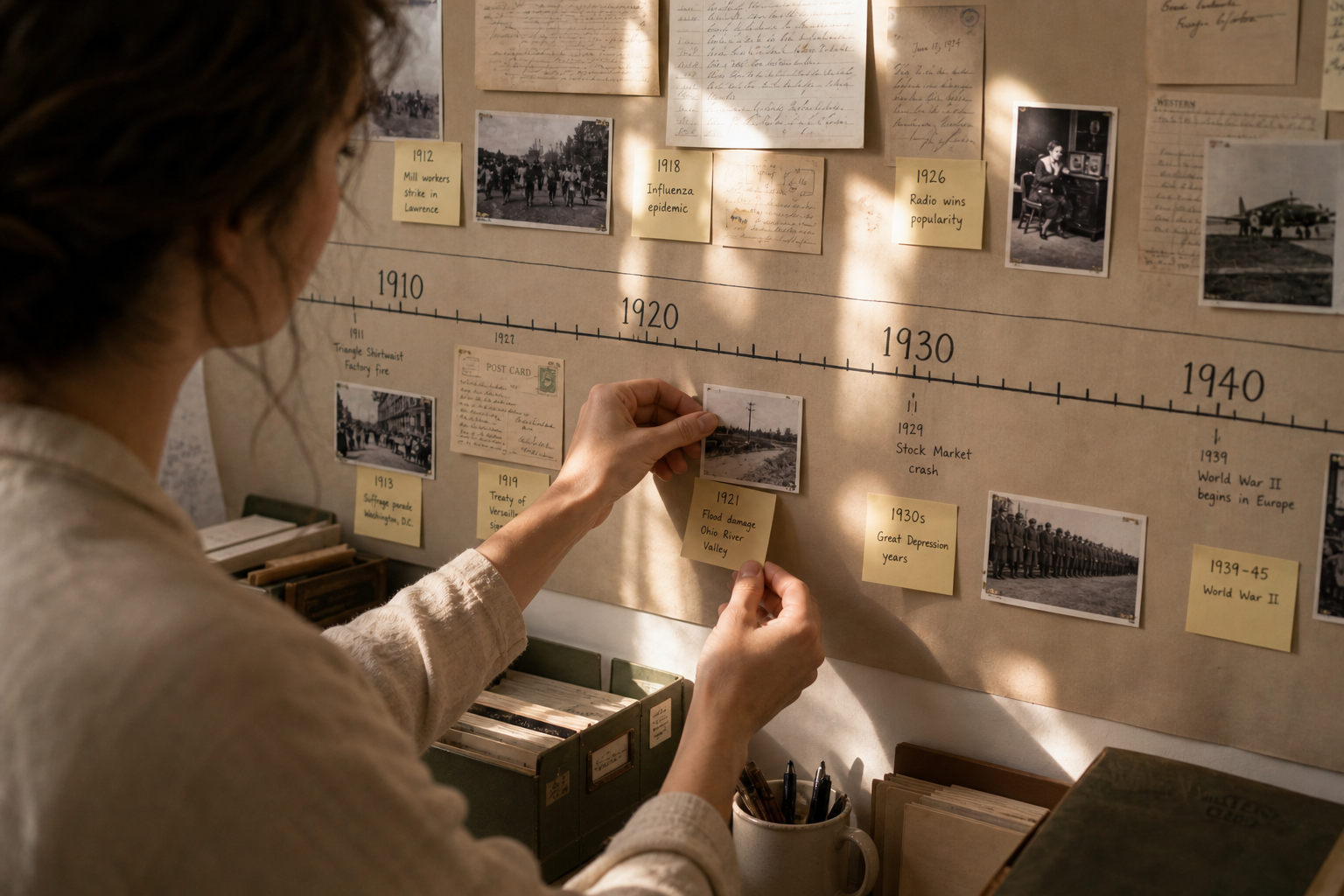
Primary sources bring texture and authority to timelines, but they can also clutter or confuse if not handled with care. Thoughtful selection and clear presentation let fragments of original material illuminate broader trends without overwhelming readers. This article outlines practical approaches for choosing excerpts, placing them in context, and designing for readability across audiences. The goal is to help timeline creators use primary evidence as a storytelling tool rather than as raw data dumped onto a chart.

Why include primary sources in timelines

Primary sources connect audiences to the lived experience behind dates and labels, offering voices, visuals, and documents that make abstract change concrete. They can reveal contested meanings, highlight underrepresented perspectives, and anchor chronology in human detail. When integrated well they build trust by showing the evidentiary basis for claims on the timeline. The challenge is balancing illustrative richness with the need for a clear, navigable narrative.

Effective use begins with clear intent: decide whether a source will illustrate a theme, support a claim, or provide an evocative counterpoint. Choosing with purpose reduces clutter and focuses attention where it matters most.

Selecting and excerpting sources

Not every document belongs on a public timeline; choose items that are representative, accessible, and legally usable. Short excerpts work best: a brief quote, a cropped image, or a dated entry that directly ties to the event shown. Provide a plain-language caption that explains why the item matters and what it reveals about the moment. Prioritize readability—avoid long quotations or dense handwriting that require deep interpretation on first glance.

Include citation details and provenance in the metadata rather than the main label, so interested users can follow up without disrupting the primary flow. This keeps the timeline lean while preserving scholarly rigor.

Visual integration and layout choices

Design decisions determine whether sources support or obscure the timeline’s narrative. Use size, contrast, and placement to create a clear hierarchy: timeline entries first, source images or quotes as supporting elements. Consider pop-ups or expandable panels for full documents so the main view stays uncluttered. Maintain consistent typography and spacing so users can scan quickly without visual friction.

  • Use thumbnails for images with clear captions.
  • Limit on-screen text to one short sentence per source snippet.

Responsive layouts matter: ensure excerpts remain legible on small screens and that interactive expansions are accessible to keyboard and screen-reader users.

Attribution, context, and interaction

Always attribute sources clearly and provide contextual notes that explain biases, gaps, or conflicting accounts. Where possible, offer links to full archives and suggestions for further reading to encourage deeper engagement. Interactive features—filters, thematic layers, or user comments—can let audiences explore sources without losing the timeline’s main throughline. Thoughtful annotation helps prevent misunderstanding and invites critical reading.

Design interactions that encourage curiosity while guiding interpretation; a well-annotated source can spark questions rather than present answers as absolute.

Conclusion

Primary sources, when carefully selected and clearly presented, enrich timelines by adding authenticity and nuance. Prioritize brief excerpts, purposeful placement, and transparent attribution to keep narratives accessible. With thoughtful design, original documents become gateways to deeper historical understanding.

Previous Post

Visual Hierarchy and Context in Historical Timelines

Next Post

Crafting Survival: Household Production in Early Market Towns

Related Posts

How Haiti Broke Its Chains: A 1791–1804 Timeline
Timeline

How Haiti Broke Its Chains: A 1791–1804 Timeline

September 15, 2026
From Horses to Wires: How the Pony Express Met the Telegraph
Timeline

From Horses to Wires: How the Pony Express Met the Telegraph

September 15, 2026
From Swamps to Shortcut: A Timeline of the Panama Canal
Timeline

From Swamps to Shortcut: A Timeline of the Panama Canal

September 15, 2026
1815–1818: The Tambora Eruption and the Year Without a Summer
Timeline

1815–1818: The Tambora Eruption and the Year Without a Summer

September 15, 2026
Next Post
Crafting Survival: Household Production in Early Market Towns

Crafting Survival: Household Production in Early Market Towns

Search..

No Result
View All Result

Recent Articles

The Disguise That Broke Chains: Ellen and William Craft

The Disguise That Broke Chains: Ellen and William Craft

September 15, 2026
Bass Reeves: The Marshal Who Hunted Outlaws in Indian Territory

Bass Reeves: The Marshal Who Hunted Outlaws in Indian Territory

September 15, 2026
How the Crystal Palace Turned Glass and Iron into a Modern Stage

How the Crystal Palace Turned Glass and Iron into a Modern Stage

September 15, 2026
Anne Bonny: The Pirate Who Broke Rules and Expectations

Anne Bonny: The Pirate Who Broke Rules and Expectations

September 15, 2026
How Haiti Broke Its Chains: A 1791–1804 Timeline

How Haiti Broke Its Chains: A 1791–1804 Timeline

September 15, 2026

Subscribe Us

By clicking submit, I authorize History Ours and its affiliated companies to: (1) use, sell, and share my information for marketing purposes, including cross-context behavioral advertising, as described in our Terms of Service and Privacy Policy, (2) supplement the information that I provide with additional information lawfully obtained from other sources, like demographic data from public sources, interests inferred from web page views, or other data relevant to what might interest me, like past purchase or location data, (3) contact me or enable others to contact me by email with offers for goods and services from any category at the email address provided, and (4) retain my information while I am engaging with marketing messages that I receive and for a reasonable amount of time thereafter. I understand I can opt out at any time through an email that I receive, or by clicking here

Subscribe To Our Newsletter

By clicking submit, I authorize History Ours and its affiliated companies to: (1) use, sell, and share my information for marketing purposes, including cross-context behavioral advertising, as described in our Terms of Service and Privacy Policy, (2) supplement the information that I provide with additional information lawfully obtained from other sources, like demographic data from public sources, interests inferred from web page views, or other data relevant to what might interest me, like past purchase or location data, (3) contact me or enable others to contact me by email with offers for goods and services from any category at the email address provided, and (4) retain my information while I am engaging with marketing messages that I receive and for a reasonable amount of time thereafter. I understand I can opt out at any time through an email that I receive, or by clicking here.

© 2026 History Ours | All Rights Reserved

  • Contact Us
  • Privacy Policy
  • Terms of Service
  • Unsubscribe
  • Privacy Choices
  • Contact Us
  • Privacy Policy
  • Terms of Service
  • Unsubscribe
  • Privacy Choices

© 2026 History Ours | All Rights Reserved

No Result
View All Result
  • Home
  • History
  • Biographies
  • Eras
  • Regions
  • Timeline

© 2026 History Ours | All Rights Reserved

Skip to content
Open toolbar Accessibility Tools

Accessibility Tools

  • Increase TextIncrease Text
  • Decrease TextDecrease Text
  • GrayscaleGrayscale
  • High ContrastHigh Contrast
  • Negative ContrastNegative Contrast
  • Light BackgroundLight Background
  • Links UnderlineLinks Underline
  • Readable FontReadable Font
  • Reset Reset