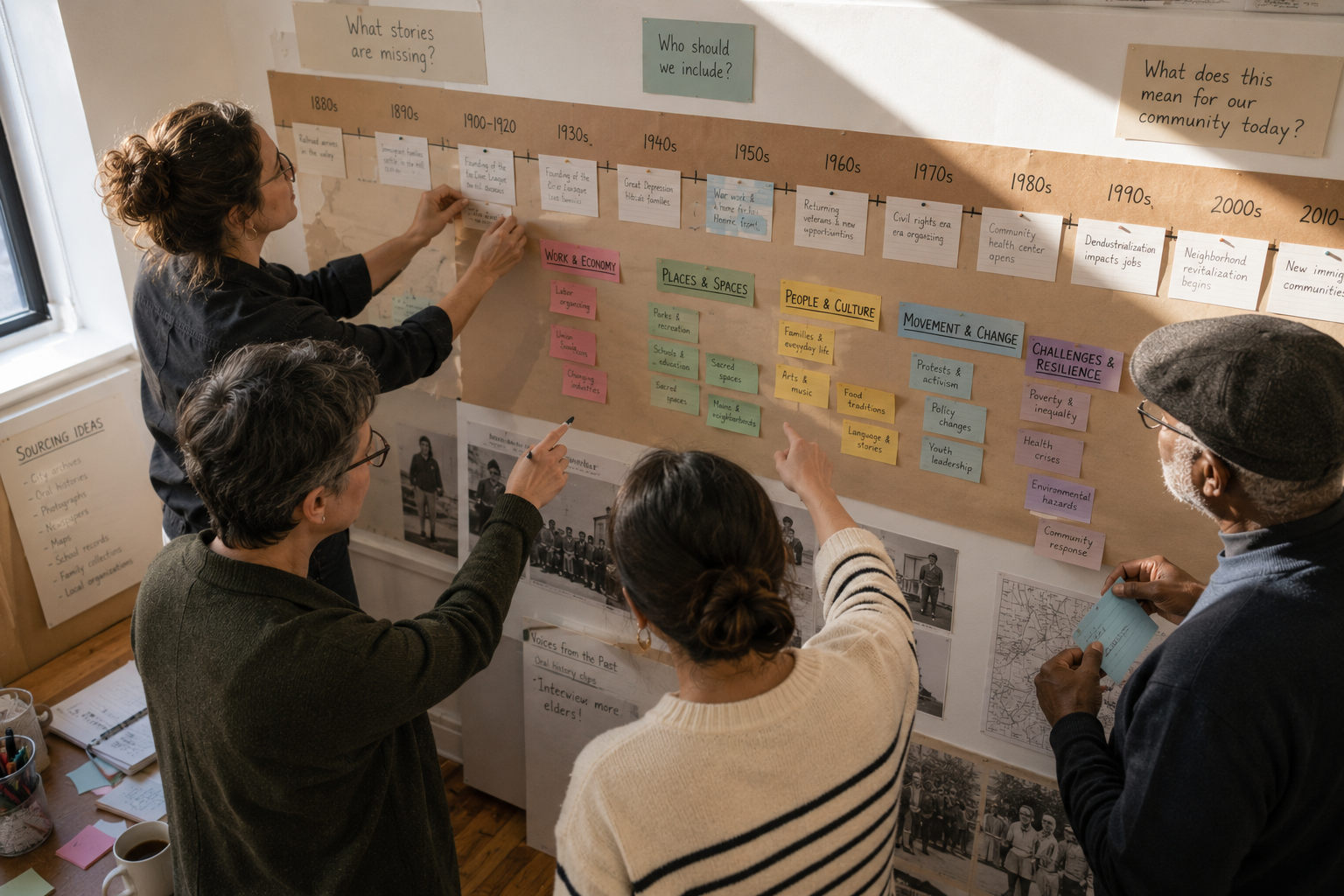
Creating a useful historical timeline means more than arranging dates; it requires deliberate choices about scope, narrative, and audience. A well-crafted timeline balances breadth with focus so readers can follow patterns without getting lost in detail. This article outlines practical steps for planning timelines that inform and invite further exploration. It is aimed at museum professionals, educators, and community historians who need clear, actionable guidance.
Defining Scope and Scale
Begin by establishing the temporal and thematic boundaries of your timeline: decide the start and end dates and whether the focus is political, social, technological, or mixed. Consider scale carefully — decades, years, or single days change how users interpret causation and continuity. Narrowing scope early prevents overload and helps you choose meaningful events rather than an exhaustive list. Establishing scale also guides layout choices and research depth.
A concise scope keeps the project manageable and the story coherent. Revisit these decisions as research uncovers new connections.
Prioritizing Events and Themes
Create selection criteria that reflect your timeline’s purpose: significance, representativeness, and availability of reliable sources. Group events under themes to reveal patterns instead of presenting isolated incidents, which helps users draw interpretive links. Use hierarchy — primary entries for turning points and secondary entries for background developments — to direct attention. Transparency about selection choices strengthens trust and invites critique.
- Significance to the broader narrative
- Documentary support and source diversity
- Connections to other entries
These guidelines help balance completeness with clarity. You can adapt them to thematic or community-centered projects.
Designing for Readability and Context
Visual hierarchy, spacing, and concise labels make timelines scannable and approachable for diverse audiences. Provide contextual captions or short annotations to explain why an item matters, avoiding jargon and keeping language active. Consider multiple layers — a general overview with expandable details for readers who want depth. Accessibility choices such as color contrast and font size affect how inclusive your timeline will be.
Test prototypes with target users to catch confusion early. Iteration improves both comprehension and engagement.
Research, Sources, and Attribution
Ground each entry in verifiable sources and note where interpretation is contested or incomplete. Maintain a source list and link to primary documents when possible so users can verify and explore. Keep brief citations on the timeline and reserve detailed bibliographies for accompanying materials or a website. Clear attribution practices build credibility and support future scholarship.
When uncertainty remains, flag it rather than erasing it from the narrative. This honest approach fosters critical thinking among viewers.
Conclusion
Effective timelines result from choices about scope, selection, and presentation that prioritize comprehension and trust. Combining clear visual design with rigorous sourcing creates tools that both inform and invite inquiry. With user testing and transparent decisions, timelines can turn sequence into meaningful historical insight.