

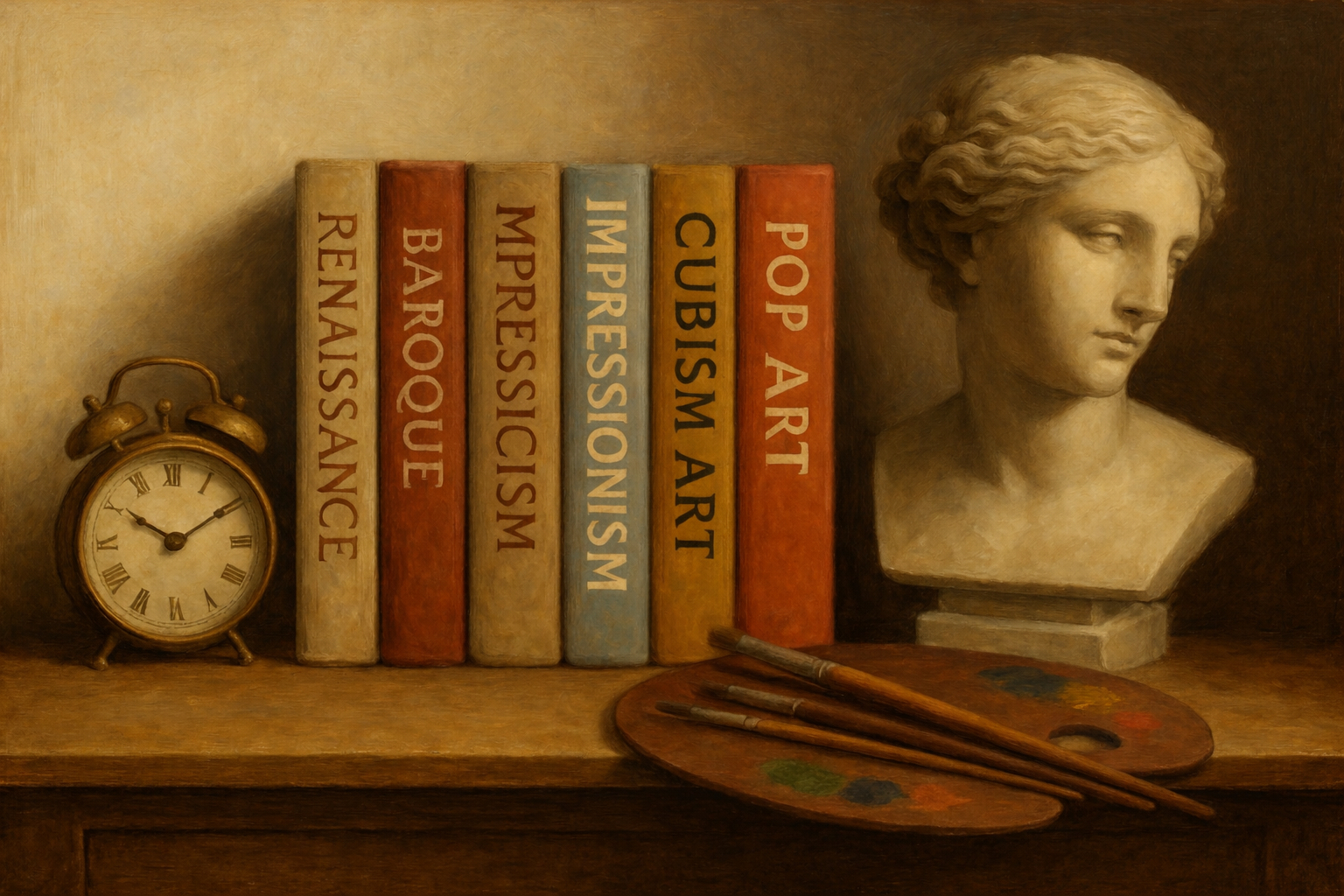
Art has always reflected humanity—our stories, beliefs, emotions, and evolving perspectives. Across centuries, artists have used their work to challenge norms, celebrate beauty, and explore the unknown. Each art movement emerged as a response to its time, shaping and reshaping the visual language of culture. When viewed together, these movements form a timeline painted across historical canvas where time itself becomes the medium.
Classical Foundations and the Pursuit of Perfection
Early civilizations laid the foundation for artistic expression with works centered on harmony, symmetry, and idealized beauty. From Greek sculptures to Renaissance masterpieces, these eras valued realism and precision. Artists sought to capture the human form and divine narratives, creating timeless standards for composition and technique that still influence modern art.
Rebellion and Innovation in the Modern Era
As society changed, so did art. The 19th and 20th centuries brought movements that challenged traditional rules. Impressionists painted fleeting moments with light and color rather than perfect detail. Expressionists explored emotion through bold strokes, while Cubists deconstructed forms into abstract shapes. Each movement reflected a growing desire to see the world not just as it is, but as it feels.
Art as a Voice for Change
The 20th century saw art become a powerful tool for social commentary. Surrealism delved into dreams and the subconscious, while Abstract Expressionism emphasized raw emotion. Pop Art celebrated—and critiqued—mass culture. These movements mirrored global changes, from industrialization to political upheaval, giving artists a voice to question and redefine society.
Contemporary Art and Unlimited Possibilities
Today, art is more diverse than ever. Digital mediums, installations, performance art, and mixed media blur the boundaries between traditional categories. Contemporary artists draw inspiration from global cultures, technology, and personal identity. The modern era shows that art is no longer confined to canvas or sculpture, evolving continuously, echoing the rapid pace of the world around us.
Conclusion
The history of art movements reveals how deeply creative expression is intertwined with time. Each era adds its own colors, shapes, and messages, creating a vast, interconnected canvas of human experience. As art continues to evolve, it reminds us that creativity is a timeless force that both shapes and reflects the world.