

Migration is one of the most enduring aspects of human history, shaping civilizations, societies, and cultures over millennia. Whether through voluntary movement or forced relocation, migration has driven cultural exchanges, influenced economies, and even redefined entire nations. The fusion of different cultures through migration has led to the development of new traditions, cuisines, languages, and philosophies that continue to define human society today.
The Early Days of Human Migration
The story of migration begins in the prehistorical period. Early humans were nomadic, moving in search of food, water, and shelter. Over time, as the human population grew and various groups developed different tools and practices, people began migrating in larger waves. These migrations were often in response to climate changes, hunting grounds, or resource scarcity. By the time early humans ventured out of Africa, migration became not just a survival mechanism but a way to spread ideas and technologies.
Cultural Exchange Through the Silk Road
One of the most significant periods of cultural exchange in ancient history occurred through the Silk Road. This vast network of trade routes connected the East (China, India) to the West (Persia, Europe). As merchants, travelers, and scholars moved along these routes, they didn’t just exchange goods—they exchanged knowledge, religion, and artistic practices. For example, the spread of Buddhism from India to China, Korea, and Japan occurred largely through these exchanges.
Alongside religious and philosophical exchanges, practical knowledge about astronomy, mathematics, and medicine was shared, creating a fusion of intellectual traditions. The Silk Road exemplifies how migration and trade could blend cultures in profound ways.
Colonization and Forced Migration
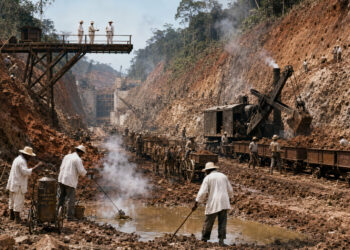
The Age of Exploration in the 15th and 16th centuries marked a darker chapter in the history of migration. European powers sought to expand their empires by colonizing the Americas, Africa, and Asia. This led to the forced migration of millions of people, including enslaved Africans transported to the New World and indigenous populations displaced from their lands.
While these movements often resulted in the destruction of native cultures, they also initiated a new kind of cultural exchange—albeit one marked by violence and exploitation. The blending of African, European, and indigenous cultures in the Americas led to the creation of new languages, musical styles, culinary traditions, and social structures that shaped the Americas’ cultural landscape.
The Modern Era: Immigration and Globalization
In the modern era, migration has continued to play a pivotal role in cultural exchange, particularly through the forces of globalization. The rise of industrialization, urbanization, and improved transportation systems during the 19th and 20th centuries facilitated the movement of people on an unprecedented scale.
Mass migrations of people seeking better economic opportunities, escaping war, or fleeing political oppression created the multicultural societies we see today in places like the United States, Canada, and Western Europe. Immigrants brought with them new languages, traditions, foods, and customs, enriching the cultural fabric of their new homes.
For instance, the Italian migration to the U.S. in the early 20th century introduced pizza and pasta to American culture, which later became staples in the American diet. The Irish immigration during the same period brought their unique traditions, including St. Patrick’s Day celebrations, which have become globally recognized.
The Digital Era and Virtual Migration
In the 21st century, migration isn’t confined to physical movement alone. The advent of the internet and digital communication has given rise to virtual migration, where people can participate in cultural exchanges without leaving their home countries. Online communities, social media platforms, and digital spaces have become melting pots of ideas, art, music, and knowledge. This virtual migration allows for unprecedented cross-cultural collaborations and exchanges.
The Future of Migration and Cultural Exchange
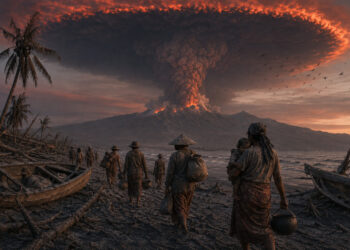
The future of migration and cultural exchange will likely continue to evolve. As climate change and political instability create new patterns of migration, society will have to grapple with the challenges and opportunities that come with it. The integration of migrants into new communities will continue to enrich global cultures, while also presenting unique social, political, and economic challenges.
At the same time, technology will enable more seamless cultural exchanges. Advances in virtual reality, AI, and digital communication will allow people to experience and interact with cultures from around the world in real-time, without the need for physical migration. This will create new forms of cultural expression, with people sharing and experiencing the world in ways never before possible.
Conclusion
The history of migration and cultural exchange is as old as human civilization itself. From ancient trade routes to modern immigration, migration has played a key role in shaping cultures and societies. Whether through the exchange of goods, ideas, or people, these movements have woven a rich tapestry of human history—one that continues to evolve in the age of globalization and digital connectivity.