Uncover History’s Secrets with Daily Updates!
Daily News Entertainment
  • Home
  • History
  • Biographies
  • Eras
  • Regions
  • Timeline
No Result
View All Result
History Ours
  • Home
  • History
  • Biographies
  • Eras
  • Regions
  • Timeline
No Result
View All Result
History Ours
No Result
View All Result
Home Eras

Urban and Social Change in a Defining Era

in Eras
Urban and Social Change in a Defining Era

Introduction

This era reshaped the layout of towns and the rhythms of daily life in profound ways. Rapid urban growth drew people from rural zones into denser neighborhoods and altered family structures. New patterns of work and movement changed how communities organized leisure, religion, and education. Understanding these shifts helps explain many institutions and inequalities that emerged during the period.

Examining urbanization, labor, technology, and cultural practice together reveals interconnected forces at work. Each change influenced the others, producing both opportunity and strain. The following sections explore those dynamics and their continuing significance.

Urban Growth and Migration

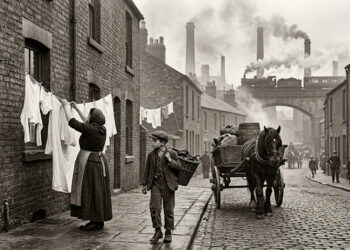
Expanding towns and cities became centers of commerce, administration, and social life, concentrating resources and people. Housing and infrastructure often lagged behind population growth, which created crowded neighborhoods and public health challenges. Transportation improvements made longer-distance commuting possible and redefined the geography of work and leisure. These shifts fostered diverse urban communities while also intensifying competition for jobs and services.

Urban growth changed local governance and planning priorities as officials confronted sanitation, housing, and policing needs. Civic institutions adapted unevenly, and responses shaped long-term urban form and public policy. The concentration of people also accelerated cultural exchange and innovation.

Work, Technology, and Economic Shifts

Advances in machines, energy use, and organization of production transformed how goods were made and distributed across regions. Many industries moved from home-based production to larger workshops and centralized factories, changing the rhythms of work and the skills demanded of laborers. Wage labor became more common and time discipline more exacting, altering household economies and gendered divisions of labor. Economic expansion created new markets but also produced dislocation for traditional artisans and small-scale producers.

These changes prompted new forms of labor organization, legal frameworks, and social advocacy. Responses by workers, employers, and policymakers helped shape labor standards and economic institutions that persisted beyond the era itself.

Cultural Life and Social Change

The era saw a reconfiguration of leisure, education, and civic life as people adapted to denser living and regulated work hours. Public institutions such as libraries, schools, and theaters expanded, offering shared spaces for learning and entertainment. Shifts in family structure and daily routines influenced social norms and expectations, including attitudes toward childhood and gender roles. Cultural production often reflected and critiqued the rapid transformations of the time.

At the same time, social reform movements emerged to address poverty, health, and inequality. These initiatives created new vocabularies for citizenship and responsibility that affected later policy debates.

Lasting Legacies

The combined effects of urbanization, technological change, and social reform created durable institutions and urban forms. Modern transportation networks, labor laws, and public services trace their roots to adaptations made during this formative period. Architectural patterns, neighborhood divisions, and civic infrastructures established trajectories that continue to influence contemporary planning and policy.

  • Emergence of organized labor and workplace regulations.
  • Development of municipal services and public health systems.
  • Expansion of mass education and cultural institutions.

These legacies offer lessons about adaptation and resilience as well as warning signs about inequality and environmental strain. Reflecting on them can inform current approaches to urban and social challenges.

Conclusion

The era transformed how people lived, worked, and interacted in growing urban environments. Its technological, economic, and cultural shifts created institutions that still shape daily life. Recognizing these continuities helps contextualize present challenges and possibilities.

Previous Post

A Life in Context: The Scholar Who Rewrote History

Next Post

Everyday Life During the Industrial Revolution Era

Related Posts

Everyday Life During the Industrial Revolution Era
Eras

Everyday Life During the Industrial Revolution Era

July 13, 2026
Choosing Timeframes That Illuminate Historical Change
Eras

Choosing Timeframes That Illuminate Historical Change

July 8, 2026
Making Eras Meaningful: Principles for Clear Historical Framing
Eras

Making Eras Meaningful: Principles for Clear Historical Framing

July 8, 2026
Practical Frameworks for Defining Historical Eras
Eras

Practical Frameworks for Defining Historical Eras

July 2, 2026
Next Post
Everyday Life During the Industrial Revolution Era

Everyday Life During the Industrial Revolution Era

Search..

No Result
View All Result

Recent Articles

Everyday Life During the Industrial Revolution Era

Everyday Life During the Industrial Revolution Era

July 13, 2026
Urban and Social Change in a Defining Era

Urban and Social Change in a Defining Era

July 13, 2026
A Life in Context: The Scholar Who Rewrote History

A Life in Context: The Scholar Who Rewrote History

July 12, 2026
The Archivist Who Reframed Everyday Lives in History

The Archivist Who Reframed Everyday Lives in History

July 12, 2026
Neighborhood Kitchens and Urban Foodways in Historic Towns

Neighborhood Kitchens and Urban Foodways in Historic Towns

July 11, 2026

Subscribe Us

By clicking submit, I authorize History Ours and its affiliated companies to: (1) use, sell, and share my information for marketing purposes, including cross-context behavioral advertising, as described in our Terms of Service and Privacy Policy, (2) supplement the information that I provide with additional information lawfully obtained from other sources, like demographic data from public sources, interests inferred from web page views, or other data relevant to what might interest me, like past purchase or location data, (3) contact me or enable others to contact me by email with offers for goods and services from any category at the email address provided, and (4) retain my information while I am engaging with marketing messages that I receive and for a reasonable amount of time thereafter. I understand I can opt out at any time through an email that I receive, or by clicking here

Subscribe To Our Newsletter

By clicking submit, I authorize History Ours and its affiliated companies to: (1) use, sell, and share my information for marketing purposes, including cross-context behavioral advertising, as described in our Terms of Service and Privacy Policy, (2) supplement the information that I provide with additional information lawfully obtained from other sources, like demographic data from public sources, interests inferred from web page views, or other data relevant to what might interest me, like past purchase or location data, (3) contact me or enable others to contact me by email with offers for goods and services from any category at the email address provided, and (4) retain my information while I am engaging with marketing messages that I receive and for a reasonable amount of time thereafter. I understand I can opt out at any time through an email that I receive, or by clicking here.

© 2026 History Ours | All Rights Reserved

  • Contact Us
  • Privacy Policy
  • Terms of Service
  • Unsubscribe
  • Privacy Choices
  • Contact Us
  • Privacy Policy
  • Terms of Service
  • Unsubscribe
  • Privacy Choices

© 2026 History Ours | All Rights Reserved

No Result
View All Result
  • Home
  • History
  • Biographies
  • Eras
  • Regions
  • Timeline

© 2026 History Ours | All Rights Reserved

Skip to content
Open toolbar Accessibility Tools

Accessibility Tools

  • Increase TextIncrease Text
  • Decrease TextDecrease Text
  • GrayscaleGrayscale
  • High ContrastHigh Contrast
  • Negative ContrastNegative Contrast
  • Light BackgroundLight Background
  • Links UnderlineLinks Underline
  • Readable FontReadable Font
  • Reset Reset