Uncover History’s Secrets with Daily Updates!
Daily News Entertainment
  • Home
  • History
  • Biographies
  • Eras
  • Regions
  • Timeline
No Result
View All Result
History Ours
  • Home
  • History
  • Biographies
  • Eras
  • Regions
  • Timeline
No Result
View All Result
History Ours
No Result
View All Result
Home Regions

Corsica’s Rocky Turn: Genoese Towers, Paoli, and an Island’s Identity

in Regions
Corsica’s Rocky Turn: Genoese Towers, Paoli, and an Island’s Identity

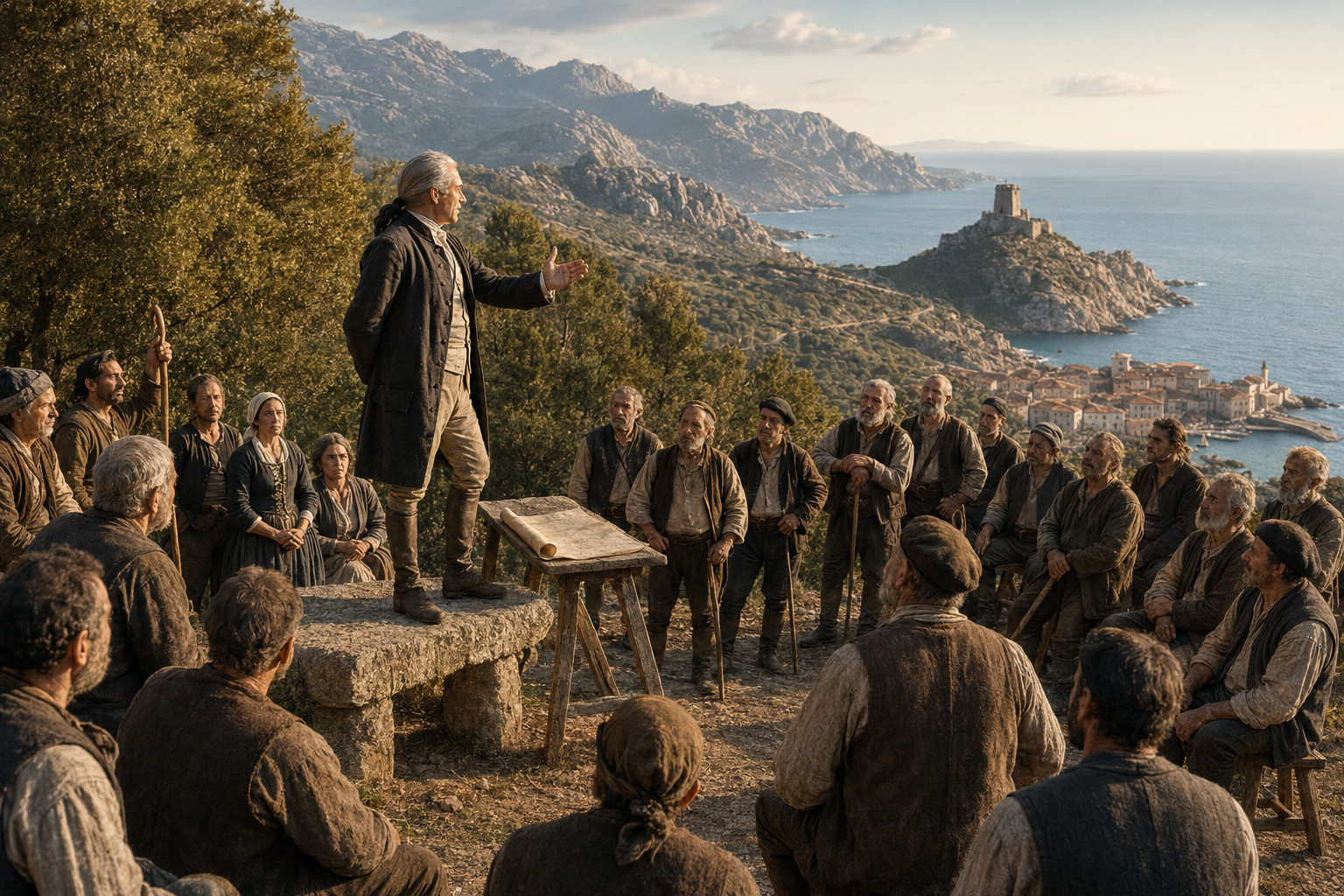
Walk along Corsica’s shore and the landscape still reads like a ledger of past dangers: low stone towers perched on promontories, villages tucked where cliffs meet scrub. Those Genoese towers, raised from the 15th century onward, were a response to a very specific problem — raids by North African corsairs that took people and livestock and reshaped how communities organized themselves. The sea was at once a highway for trade and a threat, and that double life of commerce and defense left a durable imprint on the island’s coastal towns.

Mountain People, Mountain Politics

Move inland and the story becomes about height and habit. Corsica’s granite spine pushed settlements into valleys and shepherding paths, creating small, fiercely local communities. Chestnut groves fed families through harsh winters; seasonal migration of shepherds kept human networks stretched along ridgelines and passes. The terrain helped preserve distinctive customs — including blood feuds and clan loyalties — but it also shaped ways of resisting outside control. Centuries of Genoese rule leavened with local autonomy left Corsicans with a habit of self-governance that was more than nostalgia.

Paoli, the Republic, and a Short Surge of Self-Rule

One of the clearest moments when Corsica’s local habits met large politics came in the 18th century. Pasquale Paoli, a Corsican leader, is credited with assembling a written constitution in 1755 that created an elected assembly and attempted to modernize administration and education on the island. For nearly fifteen years Corsica functioned as a republic in the sense that it claimed internal sovereignty and institutions built on local participation. That experiment ended after sustained military pressure and a decisive defeat at Ponte Novu in 1769, when France took control. The same year Napoleon Bonaparte was born in Ajaccio — a small, ironic hinge between an island’s republican moment and its place in modern European empires.

Conclusion

Corsica’s history is not a neat arc from backwardness to nationhood but a series of local responses to geography, outsiders, and opportunity. Towers remain on the headlands; chestnut trees shade village paths; the word maquis — for the island’s scrubby interior — later named resistance fighters in World War II. Traditional polyphonic songs and the memory of Paoli’s constitution circulate alongside French administration. That mix of stubborn locality and intermittent modern reform makes Corsica less an exotic relic than a vivid example of how a region’s landscape and daily practices can shape political life, for better and worse, over centuries.
Previous Post

Mapping Cultural Layers Across Distinct Regional Landscapes

Next Post

How Oysters Shaped the Chesapeake’s Past and Present

Related Posts

Levadas and the Making of Madeira’s Island Region
Regions

Levadas and the Making of Madeira’s Island Region

October 27, 2026
Black Hills: Paha Sapa, Gold Fever, and a Stolen Range
Regions

Black Hills: Paha Sapa, Gold Fever, and a Stolen Range

October 27, 2026
Aksum: The Ancient Ethiopian Empire That Linked Rome and India
Regions

Aksum: The Ancient Ethiopian Empire That Linked Rome and India

October 22, 2026
Timbuktu: How a Sahara Outpost Became a City of Books
Regions

Timbuktu: How a Sahara Outpost Became a City of Books

October 22, 2026
Next Post
How Oysters Shaped the Chesapeake’s Past and Present

How Oysters Shaped the Chesapeake's Past and Present

Search..

No Result
View All Result

Recent Articles

The Salon Era: How Conversation Shaped the Enlightenment

The Salon Era: How Conversation Shaped the Enlightenment

October 31, 2026
Tenement New York: Life in Vertical Slums, 1870–1910

Tenement New York: Life in Vertical Slums, 1870–1910

October 31, 2026
Mary Seacole: The Jamaican Nurse Who Went to War

Mary Seacole: The Jamaican Nurse Who Went to War

October 30, 2026
Ada Lovelace: The Poet Who Helped Imagine Modern Computers

Ada Lovelace: The Poet Who Helped Imagine Modern Computers

October 30, 2026
John Snow, the Broad Street Pump, and Cholera’s Fall

John Snow, the Broad Street Pump, and Cholera’s Fall

October 29, 2026

Subscribe Us

By clicking submit, I authorize History Ours and its affiliated companies to: (1) use, sell, and share my information for marketing purposes, including cross-context behavioral advertising, as described in our Terms of Service and Privacy Policy, (2) supplement the information that I provide with additional information lawfully obtained from other sources, like demographic data from public sources, interests inferred from web page views, or other data relevant to what might interest me, like past purchase or location data, (3) contact me or enable others to contact me by email with offers for goods and services from any category at the email address provided, and (4) retain my information while I am engaging with marketing messages that I receive and for a reasonable amount of time thereafter. I understand I can opt out at any time through an email that I receive, or by clicking here

Subscribe To Our Newsletter

By clicking submit, I authorize History Ours and its affiliated companies to: (1) use, sell, and share my information for marketing purposes, including cross-context behavioral advertising, as described in our Terms of Service and Privacy Policy, (2) supplement the information that I provide with additional information lawfully obtained from other sources, like demographic data from public sources, interests inferred from web page views, or other data relevant to what might interest me, like past purchase or location data, (3) contact me or enable others to contact me by email with offers for goods and services from any category at the email address provided, and (4) retain my information while I am engaging with marketing messages that I receive and for a reasonable amount of time thereafter. I understand I can opt out at any time through an email that I receive, or by clicking here.

© 2026 History Ours | All Rights Reserved

  • Contact Us
  • Privacy Policy
  • Terms of Service
  • Unsubscribe
  • Privacy Choices
  • Contact Us
  • Privacy Policy
  • Terms of Service
  • Unsubscribe
  • Privacy Choices

© 2026 History Ours | All Rights Reserved

No Result
View All Result
  • Home
  • History
  • Biographies
  • Eras
  • Regions
  • Timeline

© 2026 History Ours | All Rights Reserved

Skip to content
Open toolbar Accessibility Tools

Accessibility Tools

  • Increase TextIncrease Text
  • Decrease TextDecrease Text
  • GrayscaleGrayscale
  • High ContrastHigh Contrast
  • Negative ContrastNegative Contrast
  • Light BackgroundLight Background
  • Links UnderlineLinks Underline
  • Readable FontReadable Font
  • Reset Reset