

Uncover History’s Secrets with Daily Updates!
Daily News Entertainment
  • Home
  • History
  • Biographies
  • Eras
  • Regions
  • Timeline
No Result
View All Result
History Ours
  • Home
  • History
  • Biographies
  • Eras
  • Regions
  • Timeline
No Result
View All Result
History Ours
No Result
View All Result
Home Regions

How Oysters Shaped the Chesapeake’s Past and Present

in Regions
How Oysters Shaped the Chesapeake’s Past and Present

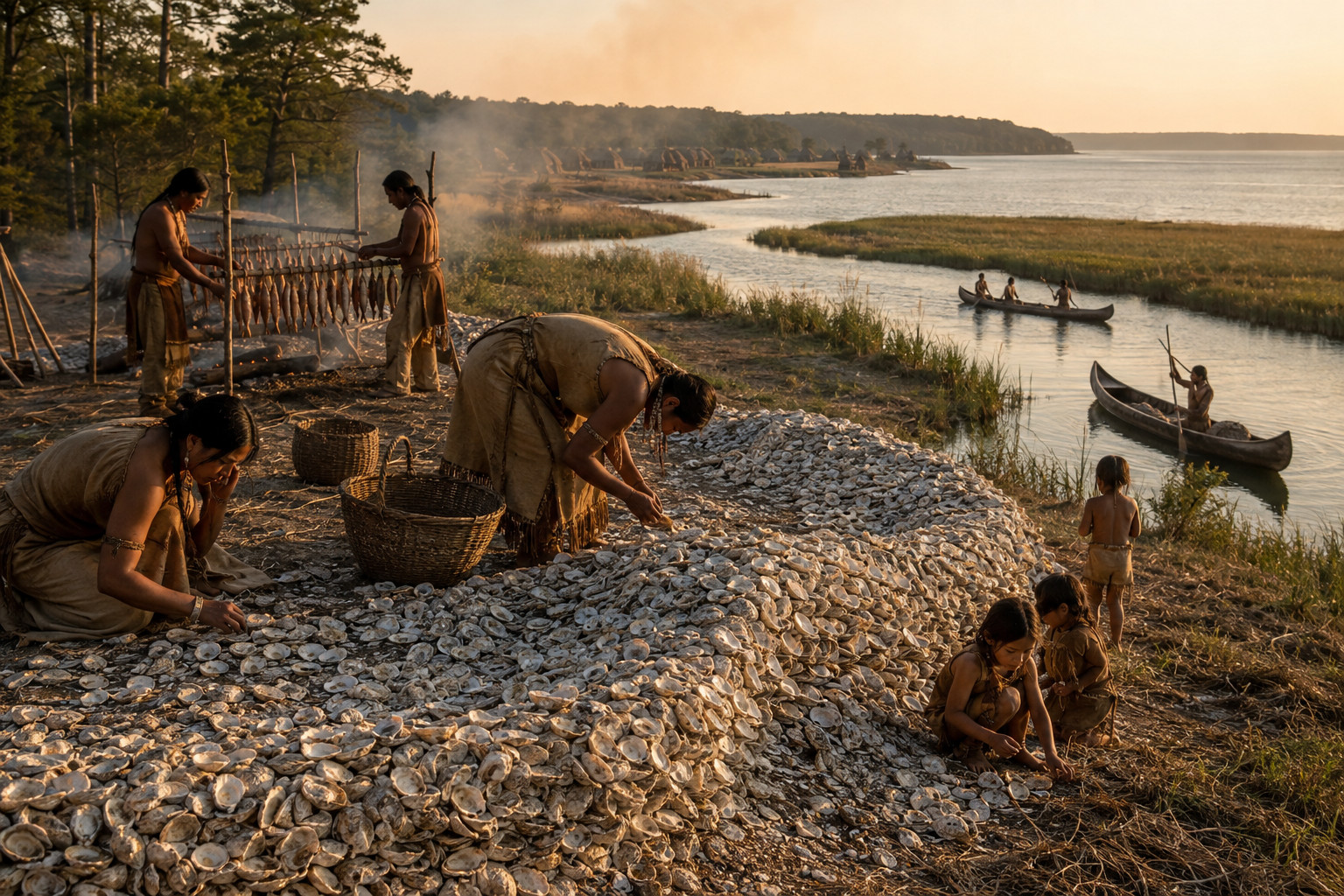
Walk any low bluff above the Chesapeake Bay and you are likely standing on centuries of discarded shells. Native communities long before European arrival relied on Atlantic oysters so heavily that their refuse formed ridges and mounds—visible, living records of diets and seasons. Those middens mapped places where people gathered, smoked fish, and returned year after year. Oysters were not a curiosity; they were a foundation for settlement, travel, and trade along creeks and sounds.

From tidewater table to urban economy

By the 18th and especially the 19th century, oysters graduated from local staple to industrial commodity. Shallow-bodied sailboats, hand tongs, and later steam-powered dredges transformed harvests. Cities—Baltimore, Norfolk, New York—filled restaurants and markets with Chesapeake oysters. Entire neighborhoods grew around shucking houses and packing plants. For many watermen, the rhythm of the year revolved around spawning seasons, tides and the work of bringing sack after sack to market.

There was theatre to it, too. Oyster saloons and oyster cellars introduced new social rituals: meals shared at counters, afternoon oyster suppers, and a foodway that crossed class lines. Oysters fed dockworkers and politicians alike. They also inspired illicit economies—conflicts over beds and access sometimes boiled over into the so-called oyster wars, when competing crews and state authorities clashed on the water.

Decline, diagnosis, and the long effort to repair

Twentieth-century pressures—overharvesting, runoff from growing agriculture, and diseases that target oysters—dramatically reduced harvests. Trawling and dredging scoured reef habitats, while pollution lowered water clarity and stressed shellfish. Scientists later identified parasites and pathogens that further thinned populations, and whole industries collapsed where reefs once rose visibly from shallows.

Today, the Chesapeake’s relationship with oysters is part cautionary tale, part comeback story. Researchers, bay restoration groups, and some watermen have focused on rebuilding reef structure, replanting shell, and improving water quality so spat can set and grow. Return is not guaranteed; reefs are fragile, and gains depend on cleaner rivers as much as on careful harvesting. Still, where restoration has taken hold, the landscape shows promise—and a very old foodway begins to matter again.

Conclusion

The Chesapeake’s history can be read in oysters: who lived where, how towns prospered, what industrial appetites looked like, and how ecosystems respond when pushed. Those plain, briny bivalves tell a regional story that mixes culture, commerce, and the hard limits of nature—reminding us that a place and its people can be shaped by the simplest of foods.

Previous Post

Corsica’s Rocky Turn: Genoese Towers, Paoli, and an Island’s Identity

Related Posts

Corsica’s Rocky Turn: Genoese Towers, Paoli, and an Island’s Identity
Regions

Corsica’s Rocky Turn: Genoese Towers, Paoli, and an Island’s Identity

August 28, 2026
Mapping Cultural Layers Across Distinct Regional Landscapes
Regions

Mapping Cultural Layers Across Distinct Regional Landscapes

August 28, 2026
Regional Narratives: Tracing Place, People, and Memory
Regions

Regional Narratives: Tracing Place, People, and Memory

August 28, 2026
How Landscapes Shape Regional Histories and Local Identity
Regions

How Landscapes Shape Regional Histories and Local Identity

August 28, 2026

Search..

No Result
View All Result

Recent Articles

How Oysters Shaped the Chesapeake’s Past and Present

How Oysters Shaped the Chesapeake’s Past and Present

August 28, 2026
Corsica’s Rocky Turn: Genoese Towers, Paoli, and an Island’s Identity

Corsica’s Rocky Turn: Genoese Towers, Paoli, and an Island’s Identity

August 28, 2026
Mapping Cultural Layers Across Distinct Regional Landscapes

Mapping Cultural Layers Across Distinct Regional Landscapes

August 28, 2026
Everyday Experience in Medieval Market Towns

Everyday Experience in Medieval Market Towns

August 28, 2026
Daily Life and Change During the Industrial Era

Daily Life and Change During the Industrial Era

August 28, 2026

Subscribe Us

By clicking submit, I authorize History Ours and its affiliated companies to: (1) use, sell, and share my information for marketing purposes, including cross-context behavioral advertising, as described in our Terms of Service and Privacy Policy, (2) supplement the information that I provide with additional information lawfully obtained from other sources, like demographic data from public sources, interests inferred from web page views, or other data relevant to what might interest me, like past purchase or location data, (3) contact me or enable others to contact me by email with offers for goods and services from any category at the email address provided, and (4) retain my information while I am engaging with marketing messages that I receive and for a reasonable amount of time thereafter. I understand I can opt out at any time through an email that I receive, or by clicking here

Subscribe To Our Newsletter

By clicking submit, I authorize History Ours and its affiliated companies to: (1) use, sell, and share my information for marketing purposes, including cross-context behavioral advertising, as described in our Terms of Service and Privacy Policy, (2) supplement the information that I provide with additional information lawfully obtained from other sources, like demographic data from public sources, interests inferred from web page views, or other data relevant to what might interest me, like past purchase or location data, (3) contact me or enable others to contact me by email with offers for goods and services from any category at the email address provided, and (4) retain my information while I am engaging with marketing messages that I receive and for a reasonable amount of time thereafter. I understand I can opt out at any time through an email that I receive, or by clicking here.

© 2026 History Ours | All Rights Reserved

  • Contact Us
  • Privacy Policy
  • Terms of Service
  • Unsubscribe
  • Privacy Choices
  • Contact Us
  • Privacy Policy
  • Terms of Service
  • Unsubscribe
  • Privacy Choices

© 2026 History Ours | All Rights Reserved

No Result
View All Result
  • Home
  • History
  • Biographies
  • Eras
  • Regions
  • Timeline

© 2026 History Ours | All Rights Reserved

Skip to content
Open toolbar Accessibility Tools

Accessibility Tools

  • Increase TextIncrease Text
  • Decrease TextDecrease Text
  • GrayscaleGrayscale
  • High ContrastHigh Contrast
  • Negative ContrastNegative Contrast
  • Light BackgroundLight Background
  • Links UnderlineLinks Underline
  • Readable FontReadable Font
  • Reset Reset