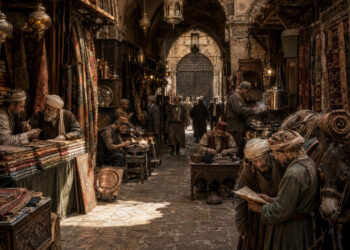


Histories of regions are often written in political events and shifting borders, but the texture of everyday life reveals how communities actually lived through change. Tracing routines, work, and local customs offers a clearer sense of continuity and adaptation than maps alone. Focusing on ordinary places and practices helps connect large-scale forces to the lived experiences of residents. This approach invites cross-disciplinary methods and attentive local study.
Layers of Daily Experience
Everyday activities—market days, schooling, domestic chores, and seasonal work—create repeating patterns that structure regional life. These routines leave material and social traces, from the layout of streets to informal networks of exchange. By examining calendars, account books, and household inventories, researchers can reconstruct rhythms that legal records often miss. Such microhistories reveal how broader economic and political shifts were interpreted and managed locally.
Reading these layers requires sensitivity to scale and context. Small changes in practice may signal larger transformations in consumption, mobility, or authority. Comparative attention to neighboring communities highlights both shared adaptations and distinctive local responses.
Material Traces and Built Environments
Built environments and objects anchor regional histories in tangible form: workshops, wells, bridges, and domestic tools testify to daily needs and skills. Archaeological surveys, architectural study, and the analysis of household goods can show how people repurposed resources and adjusted to environmental constraints. Mapping such materiality alongside documentary sources helps to chart continuity in use even when names and rulers change. Infrastructure like roads and waterworks often shaped patterns of settlement and commerce over generations.
- Marketplaces and trade routes
- Domestic spaces and craft workshops
- Religious and communal gathering spots
Combining material and textual evidence opens new angles on social relations, labor organization, and local economies. It also highlights the practical skills communities relied upon to manage scarcity and opportunity.
Memory, Narratives, and Local Practice
Oral traditions, commemorations, and everyday storytelling encode regional identities and ethical codes. These narratives can preserve alternative timelines of events and provide insight into contested memories of conflict, migration, or reform. Listening to multiple voices—including those often marginalized in official accounts—enriches understanding of how communities remember and explain their pasts. Local festivals, rituals, and naming practices often encode deep historical continuities.
Interpretation of such memories requires balancing respect for lived experience with critical comparison to documentary records. When combined, narratives and material evidence produce a fuller, more nuanced regional history.
Conclusion
Attending to everyday life grounds regional history in practices people actually enacted. It bridges the gap between macro-level change and local continuity. This perspective yields histories that are both empirically rich and socially resonant.