Uncover History’s Secrets with Daily Updates!
Daily News Entertainment
  • Home
  • History
  • Biographies
  • Eras
  • Regions
  • Timeline
No Result
View All Result
History Ours
  • Home
  • History
  • Biographies
  • Eras
  • Regions
  • Timeline
No Result
View All Result
History Ours
No Result
View All Result
Home Regions

Material Routes: Everyday Objects and the Boundaries of Region

in Regions
Material Routes: Everyday Objects and the Boundaries of Region

Regions are often read through official maps, political shifts, or dramatic events.
Yet the trajectories of everyday objects — the tools, textiles, and tokens people move and reuse — quietly shape regional identity.
Following those objects across markets, paths, and ritual calendars reveals recurring patterns that formal sources can obscure.
This article examines how material circulation helps fix boundaries and sustain distinct local practices over time.

Material Routes and Local Meaning

Objects acquire regional meaning through repeated uses, repair practices, and local vocabularies that attach value and memory to things. Local artisans and households often adapt incoming items to fit existing techniques, which in turn signals belonging or difference within a region. Material choices — the wood of a tool, the dye of a cloth, the style of a container — become shorthand for regional know-how and taste. Tracking these choices across time highlights both continuity and selective change in how communities define themselves.

Attention to materials shows that boundaries are not only drawn on maps but also stitched into practice and habit. By reading objects, historians can trace subtle shifts in regional cohesion.

Markets, Crafts, and Circulation

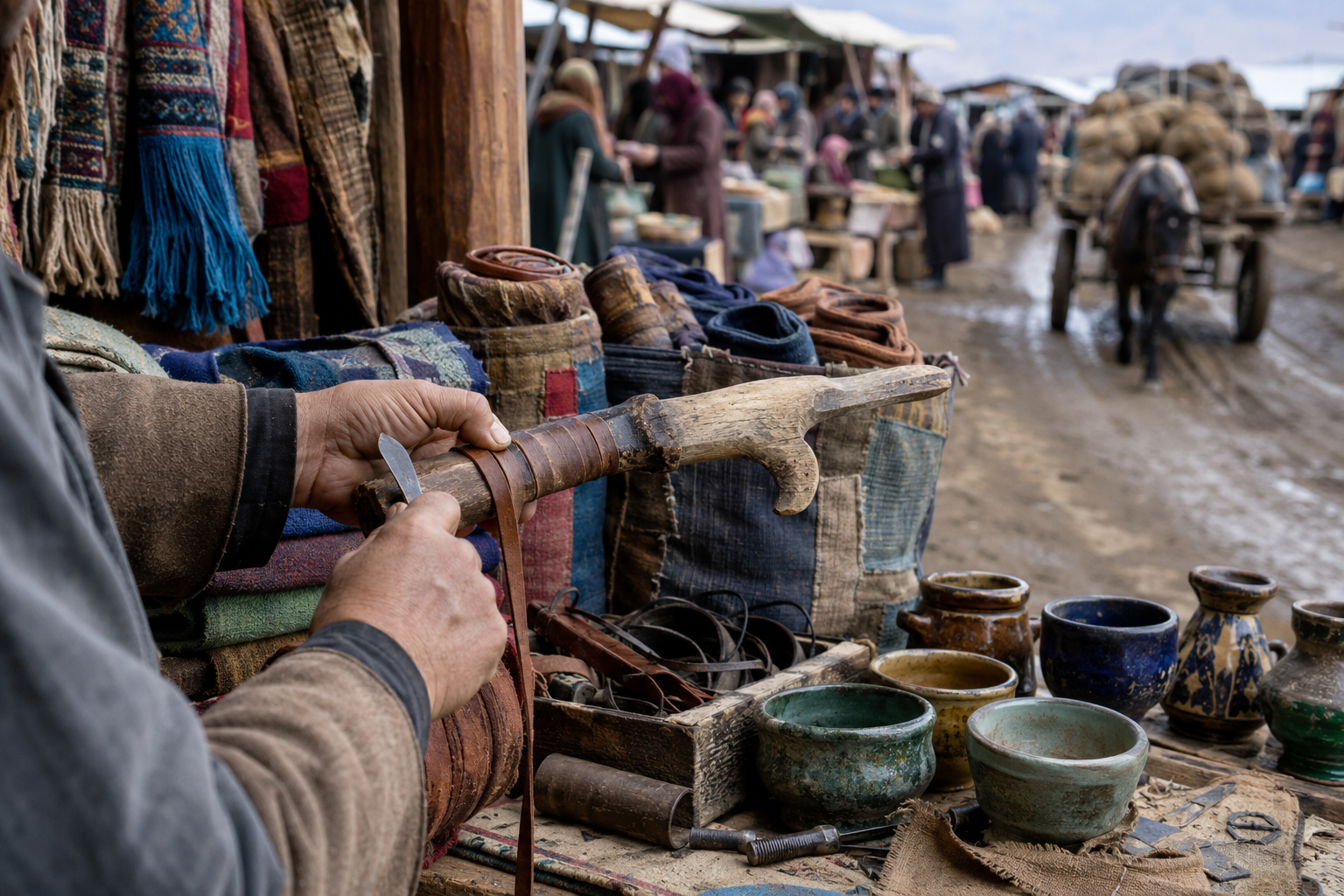
Markets and craft networks are central nodes in the routes that shape regions, mediating the flow of goods and the spread of techniques. Periodic markets gather producers and consumers from different settlements, creating opportunities for exchange, imitation, and resistance to external forms. Craftspeople serve as carriers of knowledge, transmitting repair methods, motifs, and production routines that reinforce regional styles. Examining trade ledgers, workshop records, and the material composition of finds exposes how economic circuits anchor cultural boundaries.

  • Local fairs that recur seasonally reinforce shared calendars and material repertoires.
  • Specialized craftsmen often signal regional distinction through distinctive methods and materials.

These interactions demonstrate that circulation is not mere movement: it reorganizes what counts as local by embedding items in daily practice and social expectation. Markets thus both connect and differentiate places.

Institutions, Infrastructure, and Time

Institutions like guilds, religious centers, and transport nodes shape durable material routes and the meanings attached to them. Investments in roads, warehouses, and ports reconfigure flows and can shift regional orientations over generations. Administrative choices about standards, weights, or permitted materials also influence what circulates and what is marginalized. Understanding infrastructure as cultural as well as physical helps explain why some regional forms persist while others fade.

Long-term perspectives reveal how infrastructures layer onto everyday practice to produce stable regional patterns. Institutions therefore act as scaffolding for material identity.

Conclusion

Reading the movement of everyday objects uncovers the slow work of making regions.
Material routes stitch together markets, rituals, and institutions into durable local worlds.
Attending to these routes refines how we understand regional boundaries and belonging.

Previous Post

Periodization Practices for Understanding Historical Change

Next Post

Invisible Routes: How Daily Life Crafts Regional Histories

Related Posts

Invisible Routes: How Daily Life Crafts Regional Histories
Regions

Invisible Routes: How Daily Life Crafts Regional Histories

July 19, 2026
How Historical Regions Shape Identity and Landscape
Regions

How Historical Regions Shape Identity and Landscape

July 14, 2026
Mapping the Layers of Historical Regions and Influence
Regions

Mapping the Layers of Historical Regions and Influence

July 14, 2026
Stitching Local Practices Into Regional Historical Landscapes
Regions

Stitching Local Practices Into Regional Historical Landscapes

July 9, 2026
Next Post
Invisible Routes: How Daily Life Crafts Regional Histories

Invisible Routes: How Daily Life Crafts Regional Histories

Search..

No Result
View All Result

Recent Articles

Reading Everyday Lives Through Material Culture and Artifacts

Reading Everyday Lives Through Material Culture and Artifacts

July 21, 2026
Everyday Life Unearthed: Urban Archaeology in Ancient Cities

Everyday Life Unearthed: Urban Archaeology in Ancient Cities

July 21, 2026
Creating Clear Historical Timelines: A Practical Guide

Creating Clear Historical Timelines: A Practical Guide

July 20, 2026
Mapping Events into Insightful, Usable Historical Timelines

Mapping Events into Insightful, Usable Historical Timelines

July 20, 2026
Invisible Routes: How Daily Life Crafts Regional Histories

Invisible Routes: How Daily Life Crafts Regional Histories

July 19, 2026

Subscribe Us

By clicking submit, I authorize History Ours and its affiliated companies to: (1) use, sell, and share my information for marketing purposes, including cross-context behavioral advertising, as described in our Terms of Service and Privacy Policy, (2) supplement the information that I provide with additional information lawfully obtained from other sources, like demographic data from public sources, interests inferred from web page views, or other data relevant to what might interest me, like past purchase or location data, (3) contact me or enable others to contact me by email with offers for goods and services from any category at the email address provided, and (4) retain my information while I am engaging with marketing messages that I receive and for a reasonable amount of time thereafter. I understand I can opt out at any time through an email that I receive, or by clicking here

Subscribe To Our Newsletter

By clicking submit, I authorize History Ours and its affiliated companies to: (1) use, sell, and share my information for marketing purposes, including cross-context behavioral advertising, as described in our Terms of Service and Privacy Policy, (2) supplement the information that I provide with additional information lawfully obtained from other sources, like demographic data from public sources, interests inferred from web page views, or other data relevant to what might interest me, like past purchase or location data, (3) contact me or enable others to contact me by email with offers for goods and services from any category at the email address provided, and (4) retain my information while I am engaging with marketing messages that I receive and for a reasonable amount of time thereafter. I understand I can opt out at any time through an email that I receive, or by clicking here.

© 2026 History Ours | All Rights Reserved

  • Contact Us
  • Privacy Policy
  • Terms of Service
  • Unsubscribe
  • Privacy Choices
  • Contact Us
  • Privacy Policy
  • Terms of Service
  • Unsubscribe
  • Privacy Choices

© 2026 History Ours | All Rights Reserved

No Result
View All Result
  • Home
  • History
  • Biographies
  • Eras
  • Regions
  • Timeline

© 2026 History Ours | All Rights Reserved

Skip to content
Open toolbar Accessibility Tools

Accessibility Tools

  • Increase TextIncrease Text
  • Decrease TextDecrease Text
  • GrayscaleGrayscale
  • High ContrastHigh Contrast
  • Negative ContrastNegative Contrast
  • Light BackgroundLight Background
  • Links UnderlineLinks Underline
  • Readable FontReadable Font
  • Reset Reset