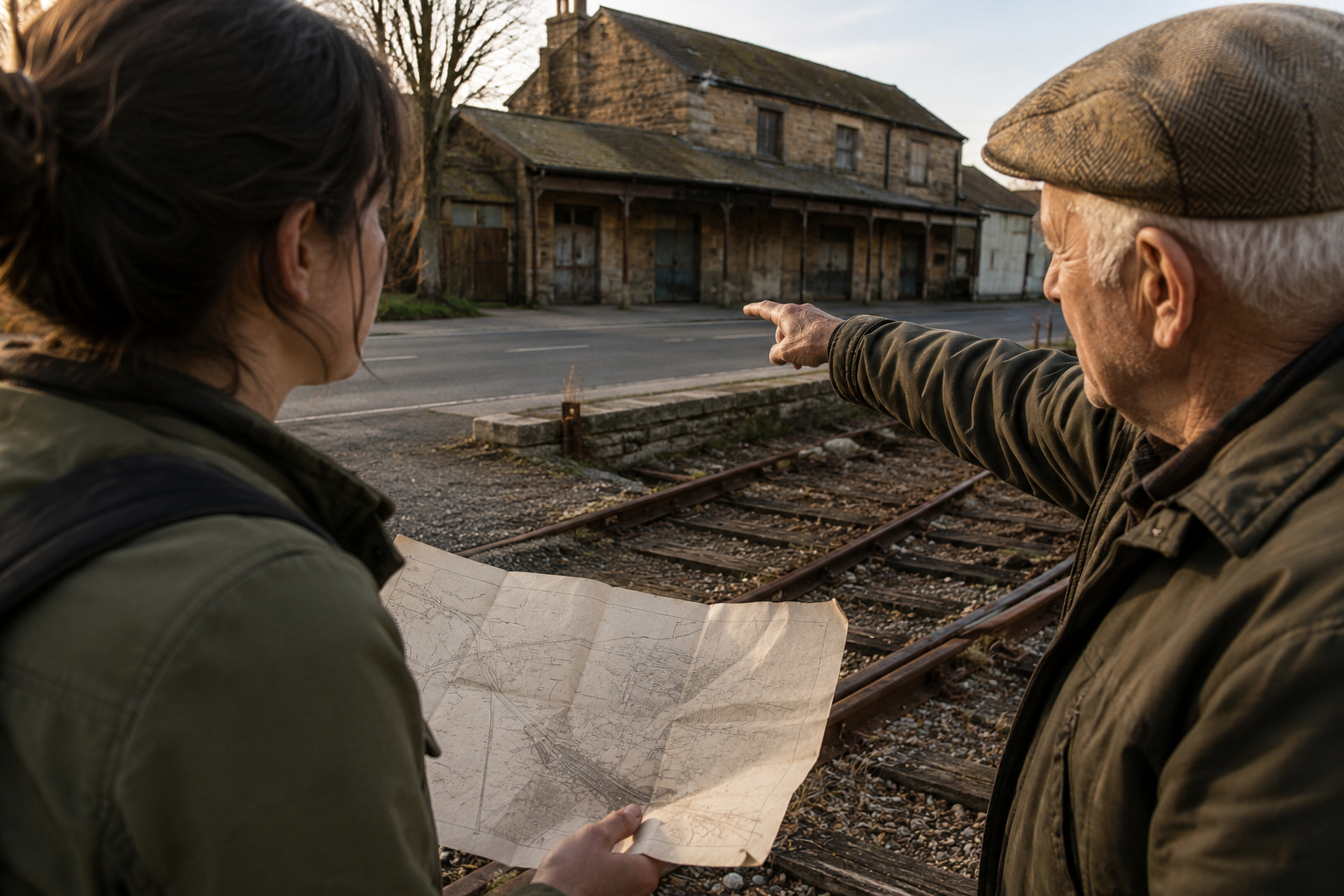
Small towns, crossroads, and overlooked infrastructure often carry more historical information than grand monuments. Looking closely at ordinary sites reveals long-term patterns of migration, economy, and cultural exchange that shape regions. Scholars and local historians alike can use everyday artifacts and routines to reconstruct how places were linked and transformed over time. This approach foregrounds practice and materiality as sources for regional storytelling.
Reading Local Infrastructure
Roads, bridges, markets, and wells are more than functional items; they record decisions, investments, and failures that matter to regional history. A disused railway siding, for example, can indicate past trade routes and shifting commodity flows that reoriented neighborhood economies. Similarly, the siting of a market or a ferry crossing often reflects social networks and legal regimes that defined access to resources. Paying attention to construction styles, maintenance patterns, and the rhythms of use provides clues to how communities engaged with broader forces. Such infrastructure is therefore a durable archive of negotiation between local practice and regional change.
Reading these traces requires combining maps, oral accounts, and material survey. Comparative time layers show how a single feature served different purposes across generations.
Everyday Practices and Memory
Rituals, labor routines, and seasonal migrations embed memory in landscapes long after formal institutions shift or vanish. Neighborhood festivals, repair practices, or patterns of shared labor can reveal affinities and rivalries that organized life across a region. These practices often leave subtle material traces—workshops, pathways, or patterns of land division—that historians can interpret. Oral histories contextualize those traces, linking everyday recollections to structural changes like market integration or policy shifts. Bringing practices and memory together helps reconstruct the lived dimensions of regional identity.
Engaging communities in recording these practices also democratizes the historical record and uncovers perspectives often missing from official archives.
Archival Traces in Small Places
Local records—minute books, estate inventories, and school registers—are invaluable for connecting micro-histories to regional transformations. These documents can chart demographic change, property networks, and the diffusion of technologies across a wider territory. When matched with material evidence on the ground, archival fragments allow for richer narratives that link personal experience to economic and political shifts. Digital mapping and databases make it easier to visualize these connections and to test hypotheses about regional integration. Prioritizing small-place archives thus yields a more textured understanding of long-term change.
Researchers should combine close reading of texts with field observation to avoid overgeneralizing from limited sources.
Conclusion
Small, everyday places are vital entry points for understanding regional history because they preserve layers of practice, infrastructure, and memory. Studying these sites with multiple methods reveals how local actions accumulate into broader historical patterns. This grounded approach produces richer, more inclusive regional narratives.