
Uncover History’s Secrets with Daily Updates!
Daily News Entertainment
  • Home
  • History
  • Biographies
  • Eras
  • Regions
  • Timeline
No Result
View All Result
History Ours
  • Home
  • History
  • Biographies
  • Eras
  • Regions
  • Timeline
No Result
View All Result
History Ours
No Result
View All Result
Home Regions

South America’s Incan and Mayan Marvels

in Regions
South America’s Incan and Mayan Marvels

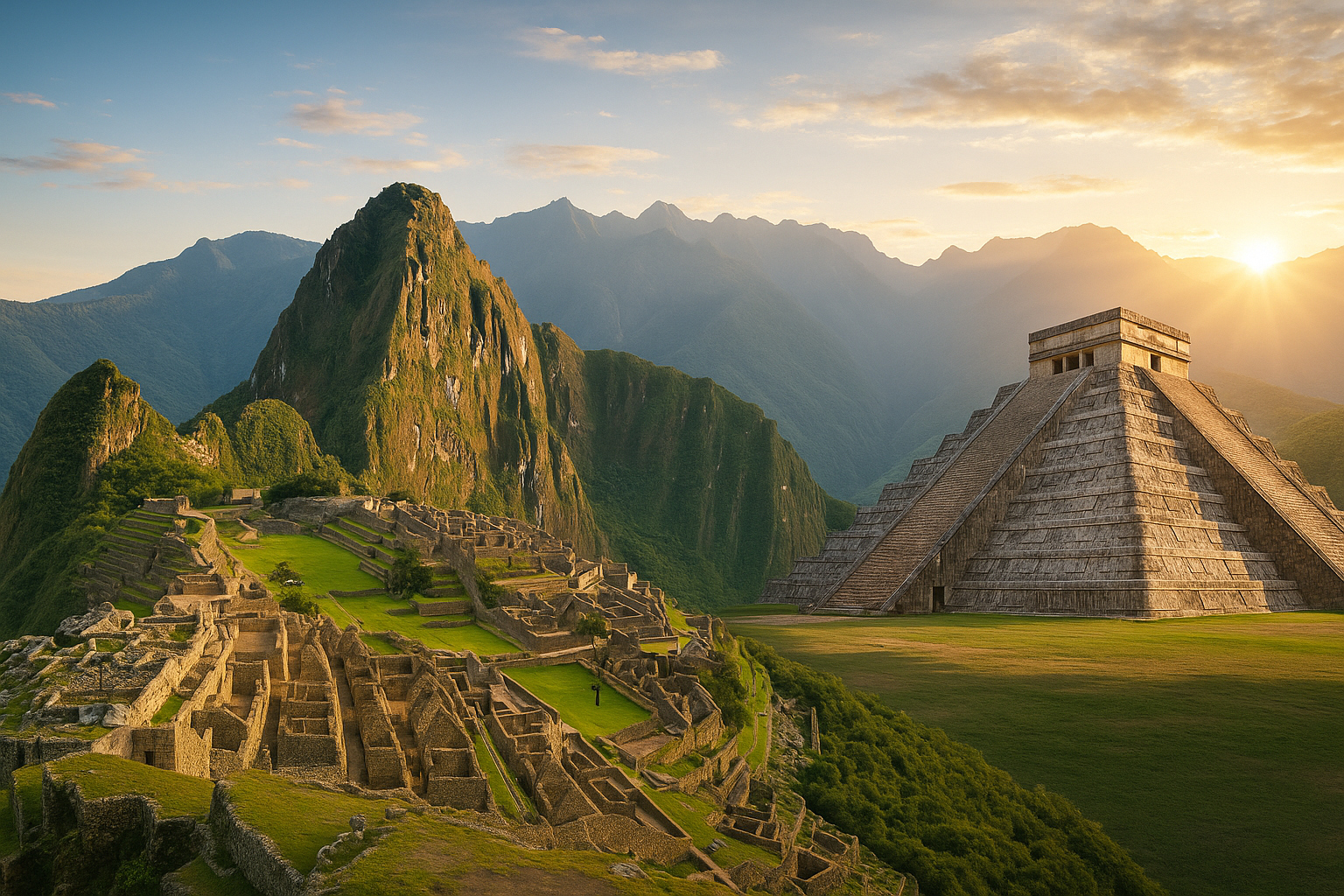
Long before modern technology and global empires, two extraordinary civilizations rose to greatness in the Americas — the Incas and the Mayans. Known for their architectural genius, astronomical precision, and deep spiritual connection to nature, these societies built wonders that continue to astonish historians and travelers alike. Their cities, temples, and traditions reveal an understanding of art, science, and sustainability that feels far ahead of their time. The Incan and Mayan worlds may have vanished, but their marvels still whisper stories of innovation and resilience.

The Incan Empire: Masters of the Mountains

The Incas, who flourished in the Andes Mountains, built one of the most remarkable empires in history. Stretching across modern-day Peru, Ecuador, Bolivia, and parts of Chile, their civilization thrived without wheels, iron, or written language — relying instead on ingenuity and organization. The crown jewel of their legacy is Machu Picchu, the “Lost City of the Incas.” Perched high above the Urubamba River valley, it stands as a masterpiece of engineering and harmony with nature. The Incas’ use of terraces, precise stonework, and alignment with celestial patterns showcases their advanced understanding of both environment and astronomy.

Engineering Feats and Environmental Harmony

What makes Incan architecture extraordinary is its adaptability. Structures were built to withstand earthquakes, using interlocking stones cut so precisely that even a knife blade couldn’t fit between them. Their terraced fields transformed steep mountain slopes into fertile farmland, proving that sustainability was central to their design. The Incas saw nature as a partner rather than a challenge — an idea that modern architecture and agriculture continue to draw inspiration from.

The Mayan Civilization: The Architects of the Stars

Farther north, the Mayan civilization flourished across present-day Mexico, Guatemala, Belize, and Honduras. Renowned for their mathematical precision and cosmic awareness, the Mayans built grand cities like Chichen Itza and Tikal, each reflecting a deep connection between human life and the universe. Their step pyramids, astronomical observatories, and intricate carvings reveal a culture obsessed with understanding time and the heavens. The Mayan calendar, based on astronomical cycles, remains one of the most sophisticated systems ever developed.

Science, Symbolism, and Spirituality

The Mayans were not only scientists but storytellers. Their writing system — among the most advanced in the pre-Columbian Americas — preserved myths, rituals, and histories that reveal a rich worldview where gods, nature, and humanity intertwined. Their temples were more than structures; they were stages for celestial drama, aligned with solstices and equinoxes to mark the passage of time. To stand at the base of a Mayan pyramid is to witness the merging of science and spirituality, precision and poetry.

Legacies That Endure

Though centuries have passed, the influence of the Incas and Mayans endures. Their ruins attract millions who marvel at their craftsmanship and imagination. But their truest legacy lies not just in stone, but in the lessons they left behind — the importance of living in balance with nature, of respecting the cosmos, and of building communities grounded in knowledge and purpose. These ancient civilizations remind us that progress is not just about innovation, but about connection — to the land, the stars, and one another.

Conclusion
The Incan and Mayan marvels stand as testaments to human creativity and perseverance. Rising from jungles and mountains, they reflect civilizations that thrived by understanding their world rather than conquering it. As modern society looks to the future, these ancient wonders continue to guide us — silent yet enduring voices from the past, reminding us that wisdom, like stone, can stand the test of time.

Previous Post

The Story of Ancient Egypt Beyond the Pyramids

Next Post

The Evolution of Science: Milestones of Discovery

Related Posts

Trieste: A Port at the Edge of Empires
Regions

Trieste: A Port at the Edge of Empires

September 15, 2026
Svalbard: How a Frozen Archipelago Became an International Outpost
Regions

Svalbard: How a Frozen Archipelago Became an International Outpost

September 15, 2026
Orkney: Where Norse Law and Scottish Life Intertwined
Regions

Orkney: Where Norse Law and Scottish Life Intertwined

September 15, 2026
Inside the Covered Streets: The Grand Bazaar and Istanbul’s Life
Regions

Inside the Covered Streets: The Grand Bazaar and Istanbul’s Life

September 15, 2026
Next Post
The Evolution of Science: Milestones of Discovery

The Evolution of Science: Milestones of Discovery

Search..

No Result
View All Result

Recent Articles

The Disguise That Broke Chains: Ellen and William Craft

The Disguise That Broke Chains: Ellen and William Craft

September 15, 2026
Bass Reeves: The Marshal Who Hunted Outlaws in Indian Territory

Bass Reeves: The Marshal Who Hunted Outlaws in Indian Territory

September 15, 2026
How the Crystal Palace Turned Glass and Iron into a Modern Stage

How the Crystal Palace Turned Glass and Iron into a Modern Stage

September 15, 2026
Anne Bonny: The Pirate Who Broke Rules and Expectations

Anne Bonny: The Pirate Who Broke Rules and Expectations

September 15, 2026
How Haiti Broke Its Chains: A 1791–1804 Timeline

How Haiti Broke Its Chains: A 1791–1804 Timeline

September 15, 2026

Subscribe Us

By clicking submit, I authorize History Ours and its affiliated companies to: (1) use, sell, and share my information for marketing purposes, including cross-context behavioral advertising, as described in our Terms of Service and Privacy Policy, (2) supplement the information that I provide with additional information lawfully obtained from other sources, like demographic data from public sources, interests inferred from web page views, or other data relevant to what might interest me, like past purchase or location data, (3) contact me or enable others to contact me by email with offers for goods and services from any category at the email address provided, and (4) retain my information while I am engaging with marketing messages that I receive and for a reasonable amount of time thereafter. I understand I can opt out at any time through an email that I receive, or by clicking here

Subscribe To Our Newsletter

By clicking submit, I authorize History Ours and its affiliated companies to: (1) use, sell, and share my information for marketing purposes, including cross-context behavioral advertising, as described in our Terms of Service and Privacy Policy, (2) supplement the information that I provide with additional information lawfully obtained from other sources, like demographic data from public sources, interests inferred from web page views, or other data relevant to what might interest me, like past purchase or location data, (3) contact me or enable others to contact me by email with offers for goods and services from any category at the email address provided, and (4) retain my information while I am engaging with marketing messages that I receive and for a reasonable amount of time thereafter. I understand I can opt out at any time through an email that I receive, or by clicking here.

© 2026 History Ours | All Rights Reserved

  • Contact Us
  • Privacy Policy
  • Terms of Service
  • Unsubscribe
  • Privacy Choices
  • Contact Us
  • Privacy Policy
  • Terms of Service
  • Unsubscribe
  • Privacy Choices

© 2026 History Ours | All Rights Reserved

No Result
View All Result
  • Home
  • History
  • Biographies
  • Eras
  • Regions
  • Timeline

© 2026 History Ours | All Rights Reserved

Skip to content
Open toolbar Accessibility Tools

Accessibility Tools

  • Increase TextIncrease Text
  • Decrease TextDecrease Text
  • GrayscaleGrayscale
  • High ContrastHigh Contrast
  • Negative ContrastNegative Contrast
  • Light BackgroundLight Background
  • Links UnderlineLinks Underline
  • Readable FontReadable Font
  • Reset Reset