Uncover History’s Secrets with Daily Updates!
Daily News Entertainment
  • Home
  • History
  • Biographies
  • Eras
  • Regions
  • Timeline
No Result
View All Result
History Ours
  • Home
  • History
  • Biographies
  • Eras
  • Regions
  • Timeline
No Result
View All Result
History Ours
No Result
View All Result
Home Timeline

A Timeline of the London Underground’s Transformations

in Timeline
A Timeline of the London Underground’s Transformations

On a January morning in 1863, carriages full of Londoners rolled out from Paddington beneath the city. The Metropolitan Railway—often called the world’s first underground passenger railway—was a crude, brilliant answer to daytime congestion: cut-and-cover tunnels, brick-lined stations and steam engines coughing under the streets. The experience was noisy and smoky, but it changed how people moved, allowing suburbs and central London to grow in new patterns.

Electrification, Deep Tunnels, and Legibility

By the end of the nineteenth century engineers began to push deeper. The City & South London Railway opened in 1890 as the first deep-level electric line, a narrow, cylindrical tunnel bored beneath the city and lit by electricity. Quiet replaced smoke; trains became faster and more frequent. Over the next decades competing companies built lines and stations in different styles until the network looked like a jumble on any geographically faithful map. That jumble was tamed in 1933 when Harry Beck introduced a schematic diagram that treated lines like electrical circuits—straight runs, clean junctions—making the Tube readable at a glance and changing how transit maps were drawn worldwide.

War, Shelter, and Social Life Below Ground

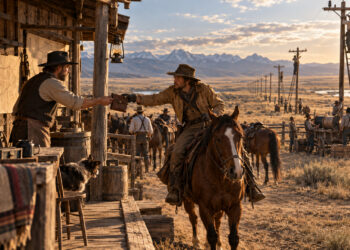
The Tube’s role shifted dramatically in the 1939–45 war. Stations, especially those on deep lines, doubled as air-raid shelters during the Blitz. People brought mattresses, ration books and pots of tea, and life went on between the tiled walls of platforms. The Underground also suffered damage: stations and tunnels were hit, operations were disrupted, but services resumed and the system emerged as both a tool of survival and a civic space where class boundaries blurred in the face of bombs.

Modernization, Extensions, and the New Century

Postwar decades focused on modernization. New lines and sections opened to relieve congestion: the Victoria line began carrying passengers from 1968, designed for high-frequency, high-capacity service. The Jubilee line arrived in 1979 and later pushed into Docklands, arriving at Canary Wharf in 1999 to serve London’s evolving business districts. Night services began on key routes in 2016, recognizing the city’s 24-hour rhythms. The most recent large-scale change was the arrival of the Elizabeth line in 2022, stitching long commuter tunnels through central London and reshaping journeys across the metropolis.

Conclusion

The Underground has always been more than a transit system: it’s a mirror of London’s growth, technology and social change. From steam-filled platforms to the clean geometry of Beck’s map, from blackout shelters to the hum of night trains, the Tube’s timeline traces how a city learned to carry its people beneath the street—and how life above ground was shaped by what ran below.

Previous Post

How a Gift from France Became the Statue of Liberty

Next Post

When the Thames Smelled: The Great Stink and London’s Sewers

Related Posts

How Haiti Broke Its Chains: A 1791–1804 Timeline
Timeline

How Haiti Broke Its Chains: A 1791–1804 Timeline

September 15, 2026
From Horses to Wires: How the Pony Express Met the Telegraph
Timeline

From Horses to Wires: How the Pony Express Met the Telegraph

September 15, 2026
From Swamps to Shortcut: A Timeline of the Panama Canal
Timeline

From Swamps to Shortcut: A Timeline of the Panama Canal

September 15, 2026
1815–1818: The Tambora Eruption and the Year Without a Summer
Timeline

1815–1818: The Tambora Eruption and the Year Without a Summer

September 15, 2026
Next Post
When the Thames Smelled: The Great Stink and London’s Sewers

When the Thames Smelled: The Great Stink and London's Sewers

Search..

No Result
View All Result

Recent Articles

Bass Reeves: The Marshal Who Hunted Outlaws in Indian Territory

Bass Reeves: The Marshal Who Hunted Outlaws in Indian Territory

September 15, 2026
How the Crystal Palace Turned Glass and Iron into a Modern Stage

How the Crystal Palace Turned Glass and Iron into a Modern Stage

September 15, 2026
Anne Bonny: The Pirate Who Broke Rules and Expectations

Anne Bonny: The Pirate Who Broke Rules and Expectations

September 15, 2026
How Haiti Broke Its Chains: A 1791–1804 Timeline

How Haiti Broke Its Chains: A 1791–1804 Timeline

September 15, 2026
From Horses to Wires: How the Pony Express Met the Telegraph

From Horses to Wires: How the Pony Express Met the Telegraph

September 15, 2026

Subscribe Us

By clicking submit, I authorize History Ours and its affiliated companies to: (1) use, sell, and share my information for marketing purposes, including cross-context behavioral advertising, as described in our Terms of Service and Privacy Policy, (2) supplement the information that I provide with additional information lawfully obtained from other sources, like demographic data from public sources, interests inferred from web page views, or other data relevant to what might interest me, like past purchase or location data, (3) contact me or enable others to contact me by email with offers for goods and services from any category at the email address provided, and (4) retain my information while I am engaging with marketing messages that I receive and for a reasonable amount of time thereafter. I understand I can opt out at any time through an email that I receive, or by clicking here

Subscribe To Our Newsletter

By clicking submit, I authorize History Ours and its affiliated companies to: (1) use, sell, and share my information for marketing purposes, including cross-context behavioral advertising, as described in our Terms of Service and Privacy Policy, (2) supplement the information that I provide with additional information lawfully obtained from other sources, like demographic data from public sources, interests inferred from web page views, or other data relevant to what might interest me, like past purchase or location data, (3) contact me or enable others to contact me by email with offers for goods and services from any category at the email address provided, and (4) retain my information while I am engaging with marketing messages that I receive and for a reasonable amount of time thereafter. I understand I can opt out at any time through an email that I receive, or by clicking here.

© 2026 History Ours | All Rights Reserved

  • Contact Us
  • Privacy Policy
  • Terms of Service
  • Unsubscribe
  • Privacy Choices
  • Contact Us
  • Privacy Policy
  • Terms of Service
  • Unsubscribe
  • Privacy Choices

© 2026 History Ours | All Rights Reserved

No Result
View All Result
  • Home
  • History
  • Biographies
  • Eras
  • Regions
  • Timeline

© 2026 History Ours | All Rights Reserved

Skip to content
Open toolbar Accessibility Tools

Accessibility Tools

  • Increase TextIncrease Text
  • Decrease TextDecrease Text
  • GrayscaleGrayscale
  • High ContrastHigh Contrast
  • Negative ContrastNegative Contrast
  • Light BackgroundLight Background
  • Links UnderlineLinks Underline
  • Readable FontReadable Font
  • Reset Reset