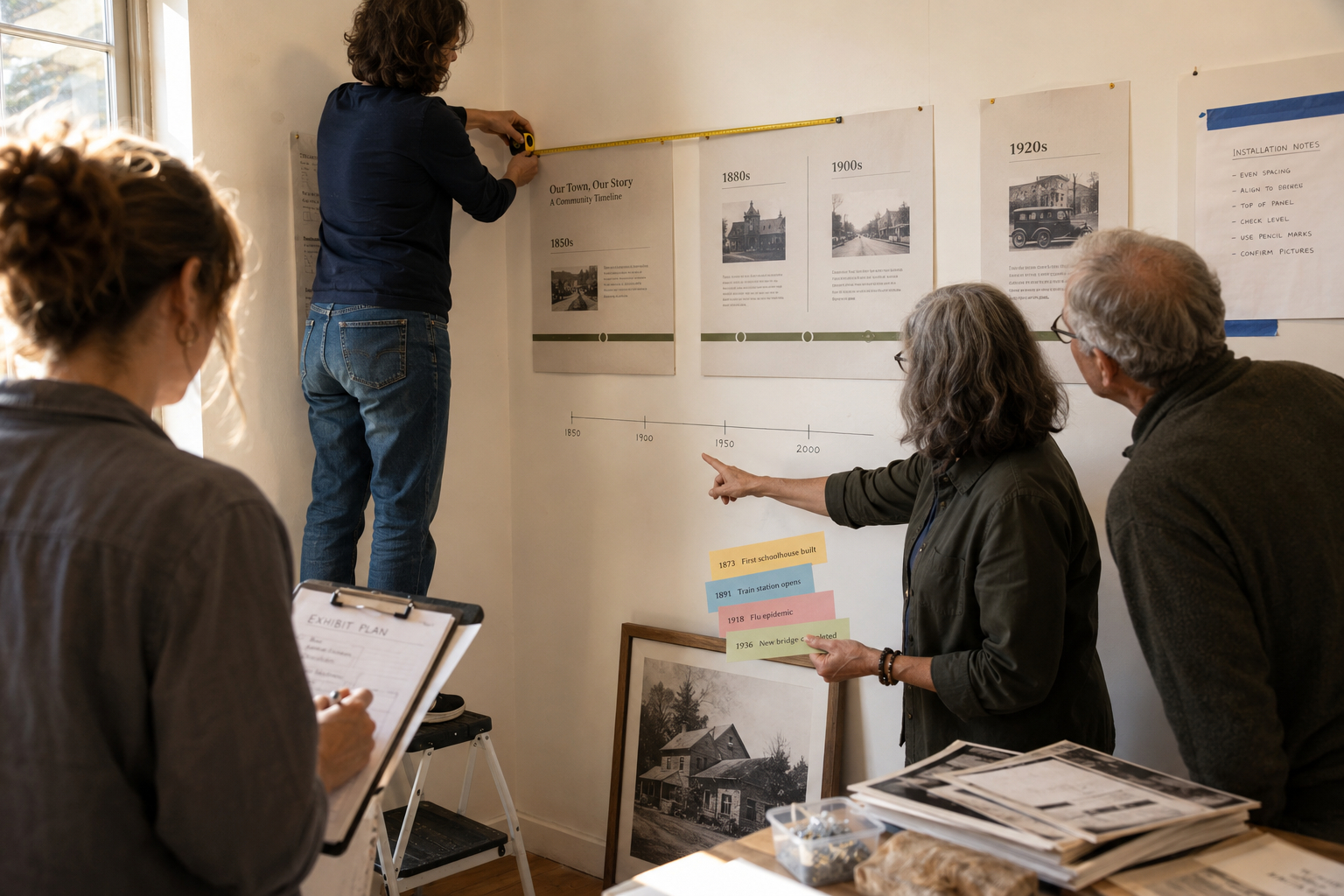
Public history timelines translate complex pasts into accessible sequences.
A clear frame helps visitors understand scale, causality, and relevance.
Thoughtful scope and layered context keep narratives honest without overwhelming viewers.
This article outlines practical steps to plan usable timelines for diverse audiences.
Clarify Purpose and Audience
Begin by naming the timeline’s purpose and the people it serves. Is it teaching a theme, documenting community change, or supporting research? Clarifying goals guides decisions about precision, tone, and which events to include. Consult stakeholders early — educators, local historians, and likely visitors — to avoid assumptions.
Set measurable objectives: comprehension, engagement, or archival completeness. These targets make editorial trade-offs easier and faster.
Set Scope, Scale, and Visual Hierarchy
Decide the temporal range and granularity early: centuries, decades, years, or events. Scale affects labeling, spacing, and how much context each entry needs. Use visual hierarchy — size, color, and placement — to prioritize turning points versus background facts. Prototype layouts with quick sketches or digital mockups and test them with typical users.
Keep labels concise and consistent, favoring plain language over specialist jargon. A clear legend and scale bar reduce repeated explanations and improve accessibility.
Layer Context and Encourage Inquiry
Layer context with short thematic threads, images, quotes, and primary-source excerpts. Provide optional deeper dives via QR codes, side panels, or linked web pages for curious visitors. Balance interpretation and evidence: explain why events matter while linking to sources that support those claims. Promote multiple perspectives by including diverse voices and acknowledging gaps or contestations.
Design for curiosity: small surprises encourage deeper attention and revisit potential. Maintain transparent sourcing so visitors can trace assertions back to archives and scholars.
Test, Maintain, and Make Accessible
Pilot the timeline with representative visitors, noting points of confusion and parts that invite inquiry. Observe reading paths, dwell times, and which entries prompt questions or corrections. Update content periodically to reflect new research, community input, and improved interpretive approaches. Plan for physical durability and digital preservation so the timeline remains accurate and accessible over time.
Follow accessibility best practices: readable fonts, high contrast, and alternative formats for audio or text. A modest maintenance plan preserves trust and supports ongoing community engagement.
Conclusion
Good timelines combine clear purpose, careful scale, visible sourcing, and attention to accessibility to foster understanding and public trust.
Iterate with users, layer optional context for different interests, surface uncertainties, and invite local voices rather than hiding them.
When design choices are explicit and maintained over years, timelines become durable tools for learning and civic conversation.