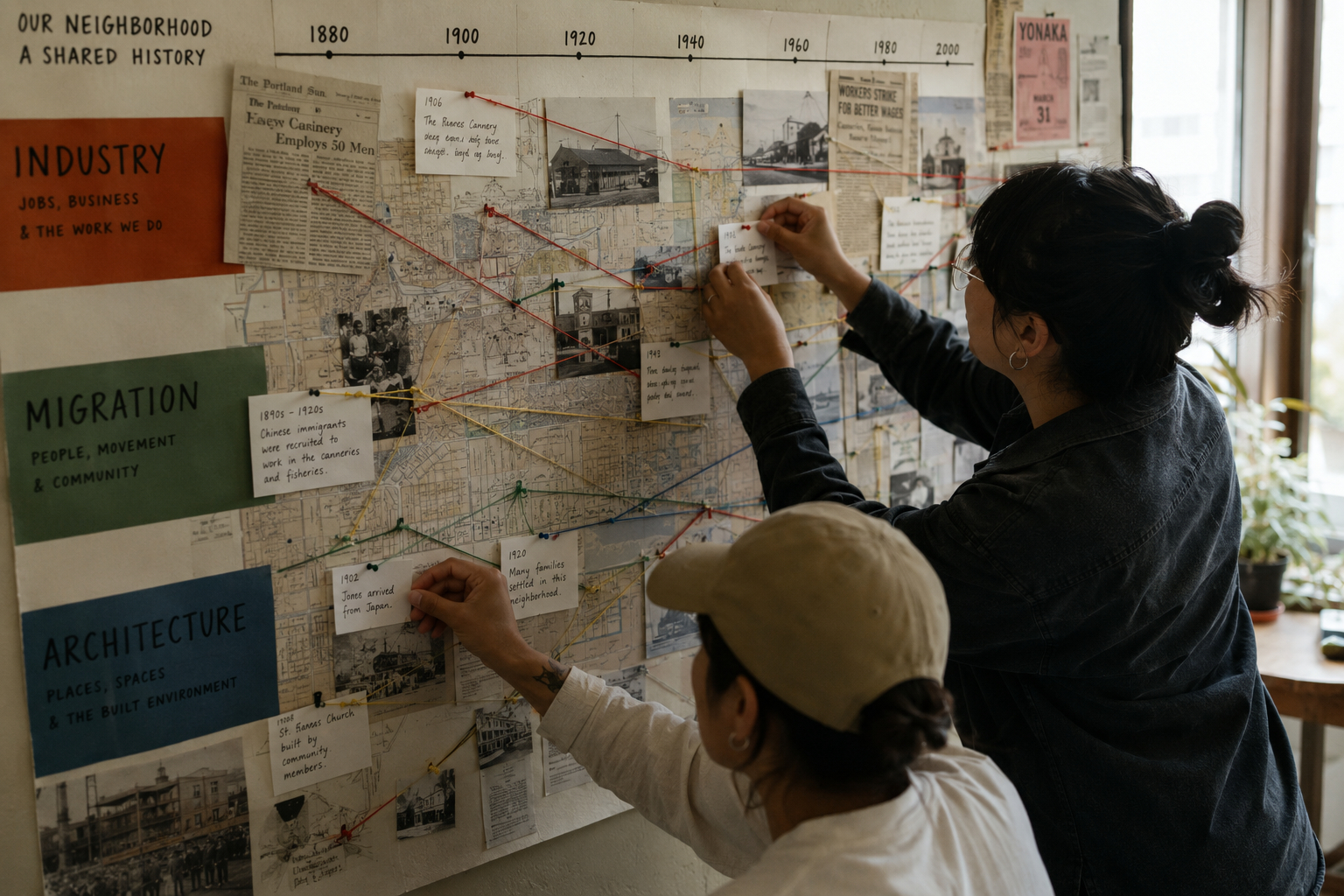
Timelines are powerful tools for making complex histories approachable and meaningful. A well-crafted timeline clarifies relationships between events, trends, and lived experience without overwhelming the viewer. Focusing on clear scope, readable structure, and careful sourcing helps timelines support curiosity and further inquiry. Thoughtful choices about scale and emphasis shape how people understand local historical patterns.
Defining Purpose and Audience
Begin by identifying the timeline’s primary purpose and the audience you intend to reach. Is the goal to introduce a topic, support research, or prompt community discussion? Different goals change how much detail to include, the language you use, and whether to highlight personal stories or institutional milestones. Imagining specific users helps set limits on scope and design choices.
Keep the user in mind as you prioritize events and threads. Clear goals reduce clutter and ensure each entry advances the narrative or learning objective.
Choosing Scope and Scale
Select a temporal range and granularity that support your purpose while remaining legible. Narrow themes—such as industrial change in a neighborhood—benefit from finer scales, while broad transformations require summary points and anchored milestones. Decide what to omit as carefully as what to include; absence can be meaningful if intentional. Use consistent dating conventions and note ambiguous or contested dates to maintain transparency.
Balancing breadth and depth prevents timelines from becoming either shallow lists or impenetrable archives. Clear scope fosters coherence and invites focused engagement.
Creating Visual Hierarchy and Narrative Threads
Establish a hierarchy that guides readers from major turning points to supporting details. Use spacing, typography, and color sparingly to distinguish primary events, recurring themes, and parallel threads. Consider organizing entries into lanes for institutions, everyday life, and cultural shifts so patterns emerge across strands. Short captions and concise contextual notes help convey cause-and-effect without long blocks of text.
- Primary events: key turning points that anchor the timeline.
- Thematic lanes: recurring issues like migration, labor, or architecture.
- Source links or references for readers who want deeper context.
Intentional layout encourages comparison and reveals connections that a simple list would obscure. Visual clarity supports interpretive possibilities rather than dictating a single meaning.
Research, Testing, and Maintenance
Ground entries in reliable sources and annotate choices where interpretation matters. Pilot the timeline with representative users to catch points of confusion and to test reading flow across devices or installations. Plan for updates: histories evolve as new sources appear and community priorities shift. A maintenance strategy preserves accuracy and keeps the timeline relevant to audiences.
Document editorial decisions and provide a contact path for corrections or contributions. Ongoing stewardship sustains trust and educational value.
Conclusion
Effective timelines combine clear purpose, careful scope, and readable structure to surface local historical patterns. Prioritize user needs, transparent sourcing, and iterative testing to make complexity accessible. With deliberate design and sustained care, timelines become tools for learning, reflection, and community dialogue.