

Uncover History’s Secrets with Daily Updates!
Daily News Entertainment
  • Home
  • History
  • Biographies
  • Eras
  • Regions
  • Timeline
No Result
View All Result
History Ours
  • Home
  • History
  • Biographies
  • Eras
  • Regions
  • Timeline
No Result
View All Result
History Ours
No Result
View All Result
Home Timeline

Practical Principles for Crafting Public History Timelines

in Timeline
Practical Principles for Crafting Public History Timelines

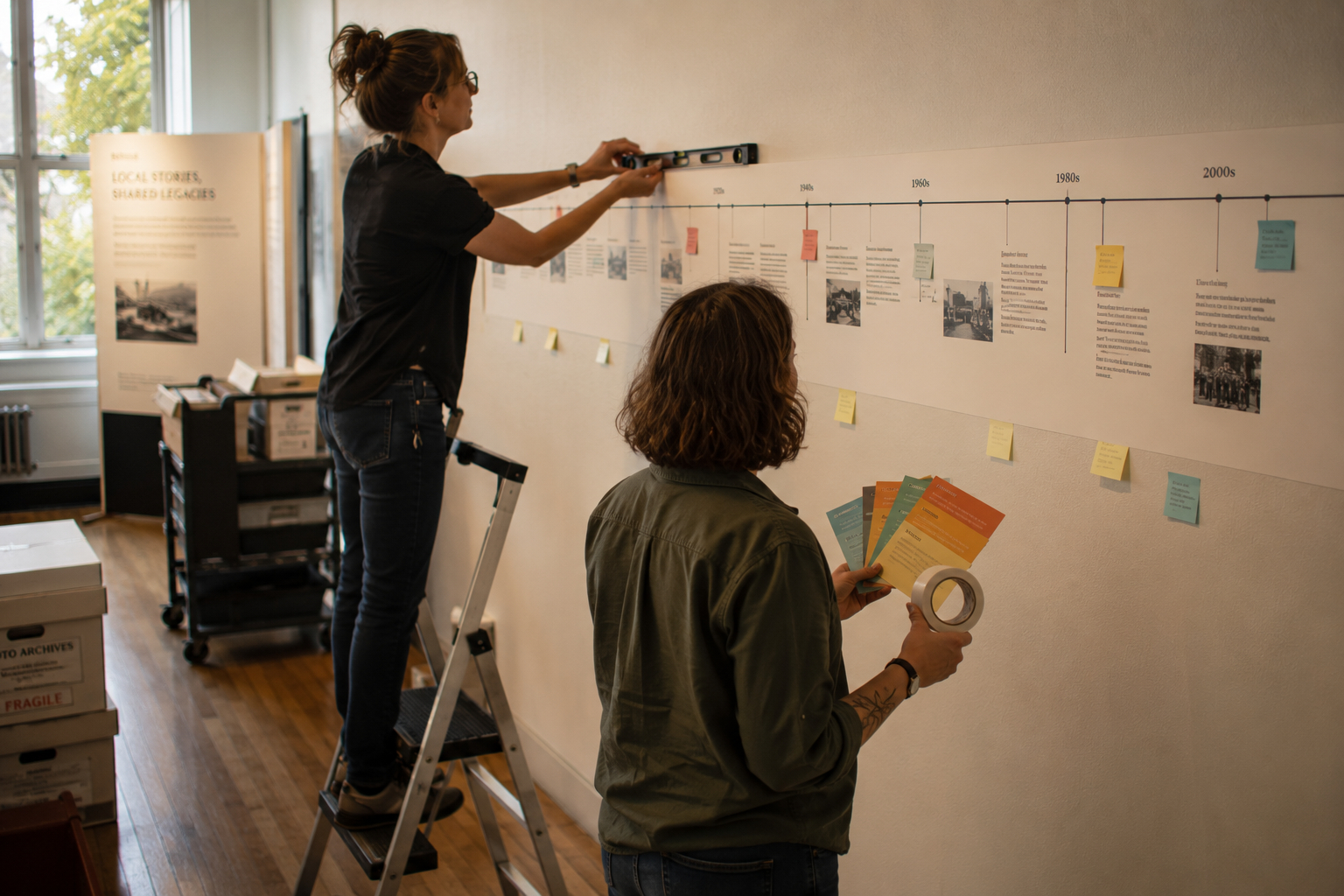
Effective public history timelines turn dates into meaningful stories that guide visitors through change and continuity. Good timelines begin with a clear purpose and audience, which shape choices of scope, scale, and presentation. They balance factual accuracy with readable narrative flow so that both casual viewers and curious researchers can find value. This article outlines practical steps to plan, design, and test timelines that communicate context without overwhelming readers.

These guidelines work for digital displays, exhibition panels, or printed timelines and are adaptable to thematic or chronological projects. They emphasize clarity, verification, and accessibility as core goals.

Define Purpose, Audience, and Scope

Start by asking what question the timeline should answer and who will use it: students, local visitors, or general readers. Define the chronological span and the level of granularity—decades, years, or specific days—based on that purpose. Limiting scope helps avoid clutter and lets you select representative events that support your narrative. Keep the central argument or theme visible to ensure each entry contributes to the overall story.

Document these decisions in a project brief so contributors can make consistent choices during research and design.

Select Events, Sources, and Context

Choose events that illuminate patterns, turning points, and everyday continuities, not just headline moments. Prioritize primary sources and reputable secondary accounts, and record citations clearly for each entry. Provide brief contextual notes that explain significance rather than just stating dates and names. Where appropriate, include multiple perspectives to avoid a single, simplistic narrative.

Create a simple metadata system—date, source, significance—to keep entries consistent and verifiable.

Design Visual Hierarchy and Layout

Use visual hierarchy to guide attention: anchor points for major events, secondary markers for related developments, and different shapes or colors for thematic strands. Keep typography legible and maintain consistent spacing so viewers can track chronology without confusion. Consider interactive or layered displays for complex subjects, allowing users to toggle themes or zoom into time ranges. Maintain clear color-contrast and readable font sizes for accessibility.

Legend and scale markers help users interpret symbols and temporal distances quickly.

Test, Revise, and Document

Prototype the timeline and test it with representative users to identify confusing labels, pacing issues, or missing context. Collect feedback on readability and perceived bias, and revise entries or design elements accordingly. Keep an editable source file and a changelog so future updates remain traceable and transparent. Finalize a citation list and short guidance for users on how to interpret the timeline’s choices.

Iteration ensures the timeline stays accurate, accessible, and aligned with its intended purpose.

Conclusion

Clear public history timelines combine purposeful scope, careful sourcing, and thoughtful visual hierarchy to communicate meaning. Testing and documentation preserve both accuracy and usability over time. Applied consistently, these principles make timelines useful tools for education and public engagement.


Previous Post

Sequencing Stories: Practical Timeline Design for Museums

Next Post

Windows, Wells, and Walkways: Material Life in Market Towns

Related Posts

How Haiti Broke Its Chains: A 1791–1804 Timeline
Timeline

How Haiti Broke Its Chains: A 1791–1804 Timeline

September 15, 2026
From Horses to Wires: How the Pony Express Met the Telegraph
Timeline

From Horses to Wires: How the Pony Express Met the Telegraph

September 15, 2026
From Swamps to Shortcut: A Timeline of the Panama Canal
Timeline

From Swamps to Shortcut: A Timeline of the Panama Canal

September 15, 2026
1815–1818: The Tambora Eruption and the Year Without a Summer
Timeline

1815–1818: The Tambora Eruption and the Year Without a Summer

September 15, 2026
Next Post
Windows, Wells, and Walkways: Material Life in Market Towns

Windows, Wells, and Walkways: Material Life in Market Towns

Search..

No Result
View All Result

Recent Articles

The Disguise That Broke Chains: Ellen and William Craft

The Disguise That Broke Chains: Ellen and William Craft

September 15, 2026
Bass Reeves: The Marshal Who Hunted Outlaws in Indian Territory

Bass Reeves: The Marshal Who Hunted Outlaws in Indian Territory

September 15, 2026
How the Crystal Palace Turned Glass and Iron into a Modern Stage

How the Crystal Palace Turned Glass and Iron into a Modern Stage

September 15, 2026
Anne Bonny: The Pirate Who Broke Rules and Expectations

Anne Bonny: The Pirate Who Broke Rules and Expectations

September 15, 2026
How Haiti Broke Its Chains: A 1791–1804 Timeline

How Haiti Broke Its Chains: A 1791–1804 Timeline

September 15, 2026

Subscribe Us

By clicking submit, I authorize History Ours and its affiliated companies to: (1) use, sell, and share my information for marketing purposes, including cross-context behavioral advertising, as described in our Terms of Service and Privacy Policy, (2) supplement the information that I provide with additional information lawfully obtained from other sources, like demographic data from public sources, interests inferred from web page views, or other data relevant to what might interest me, like past purchase or location data, (3) contact me or enable others to contact me by email with offers for goods and services from any category at the email address provided, and (4) retain my information while I am engaging with marketing messages that I receive and for a reasonable amount of time thereafter. I understand I can opt out at any time through an email that I receive, or by clicking here

Subscribe To Our Newsletter

By clicking submit, I authorize History Ours and its affiliated companies to: (1) use, sell, and share my information for marketing purposes, including cross-context behavioral advertising, as described in our Terms of Service and Privacy Policy, (2) supplement the information that I provide with additional information lawfully obtained from other sources, like demographic data from public sources, interests inferred from web page views, or other data relevant to what might interest me, like past purchase or location data, (3) contact me or enable others to contact me by email with offers for goods and services from any category at the email address provided, and (4) retain my information while I am engaging with marketing messages that I receive and for a reasonable amount of time thereafter. I understand I can opt out at any time through an email that I receive, or by clicking here.

© 2026 History Ours | All Rights Reserved

  • Contact Us
  • Privacy Policy
  • Terms of Service
  • Unsubscribe
  • Privacy Choices
  • Contact Us
  • Privacy Policy
  • Terms of Service
  • Unsubscribe
  • Privacy Choices

© 2026 History Ours | All Rights Reserved

No Result
View All Result
  • Home
  • History
  • Biographies
  • Eras
  • Regions
  • Timeline

© 2026 History Ours | All Rights Reserved

Skip to content
Open toolbar Accessibility Tools

Accessibility Tools

  • Increase TextIncrease Text
  • Decrease TextDecrease Text
  • GrayscaleGrayscale
  • High ContrastHigh Contrast
  • Negative ContrastNegative Contrast
  • Light BackgroundLight Background
  • Links UnderlineLinks Underline
  • Readable FontReadable Font
  • Reset Reset