
Uncover History’s Secrets with Daily Updates!
Daily News Entertainment
  • Home
  • History
  • Biographies
  • Eras
  • Regions
  • Timeline
No Result
View All Result
History Ours
  • Home
  • History
  • Biographies
  • Eras
  • Regions
  • Timeline
No Result
View All Result
History Ours
No Result
View All Result
Home Regions

Anchoring a Region: How Neighborhood Routines Shape Memory

in Regions
Anchoring a Region: How Neighborhood Routines Shape Memory

Everyday routines in neighborhoods, markets, and fields do more than organize daily life; they quietly anchor a region’s sense of past and belonging. Ordinary schedules and repeated movements create durable patterns that people recognize across generations. When historians attend to these small, recurring acts they find continuity where formal documents are sparse. This perspective helps recover how residents themselves narrate and sustain regional identity over time.

Neighborhood Routines as Historical Anchors

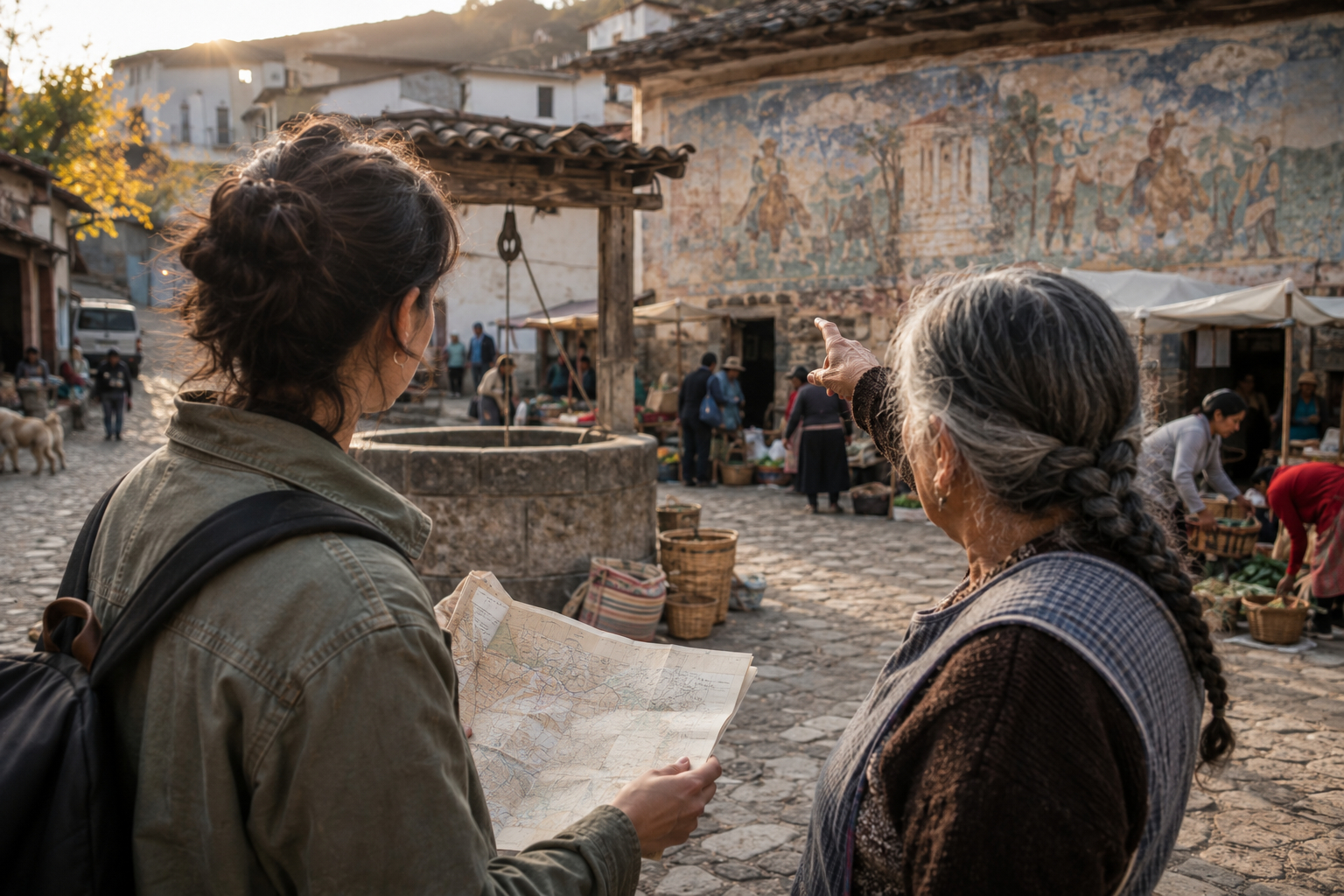
Regular practices such as weekly markets, communal cleaning days, seasonal festivals and commuting paths shape how people experience place and time. These routines produce expectations and shared references that persist even when political boundaries or administrations change. They create a tacit knowledge about where to gather, what work matters, and which stories are worth retelling. Over decades, that tacit knowledge becomes part of a region’s cultural grammar, shaping memory in practical ways.

Paying attention to repetition reveals layers of belonging that formal archives often overlook. These practices act as living documents of continuity and change.

Material Traces in Everyday Sites

Built features and ordinary objects register repeated use and shifting meanings: a market stall, a roadside shrine, a communal well or a faded mural can all mark long-term practices. Material traces accumulate through repair, adaptation, and informal re-use, offering historians tangible clues about routines and relations. Studying wear patterns, ad hoc additions, or local signage helps reconstruct flows of goods, people, and information. Such evidence complements oral testimony and official records to produce a fuller regional narrative.

Material remains orient research toward places where memory is enacted daily. They invite interdisciplinary methods that combine archaeology, architecture, and ethnography.

Small Institutions and Informal Networks

Local schools, cooperatives, religious meeting places, and market associations mediate routine practices and circulate knowledge across households. Informal networks—neighbors, craft guilds, or seasonal labor groups—help translate routines into durable expectations about credit, work, and care. These small institutions often preserve procedural memories: how to repair a roof, when to sow, or how to prepare a festival meal. Their records, oral archives, and rituals provide rich sources for reconstructing regional life.

Recognizing the role of these organizations highlights how community governance and mutual aid shape long-term identity. They function as intermediaries between everyday practice and broader social change.

Approaches for Study and Preservation

Researchers can combine mapping of habitual routes, timed observations of markets and workplaces, and structured oral histories to register routines as historical data. Micro-histories focused on single streets or institutions often reveal wider regional dynamics when aggregated and compared. Digital tools that record movement patterns and crowd-sourced memory projects can make ephemeral practices legible without erasing local nuance. Collaboration with local residents ensures that preservation respects living uses while documenting change.

Methodological pluralism produces a more textured account of regional pasts. It also supports practical conservation that keeps places meaningful for those who use them.

Conclusion

Small, repeated acts and the places that host them are central resources for understanding how regions remember and become themselves. Attending to routines and material traces reconnects large historical questions to lived practice and everyday knowledge. That connection offers historians a grounded path to interpret continuity and change across time.

Previous Post

Markets, Rituals, and the Slow Making of Regional Identity

Next Post

Layering Time: Practical Approaches to Timeline Narratives

Related Posts

Trieste: A Port at the Edge of Empires
Regions

Trieste: A Port at the Edge of Empires

September 15, 2026
Svalbard: How a Frozen Archipelago Became an International Outpost
Regions

Svalbard: How a Frozen Archipelago Became an International Outpost

September 15, 2026
Orkney: Where Norse Law and Scottish Life Intertwined
Regions

Orkney: Where Norse Law and Scottish Life Intertwined

September 15, 2026
Inside the Covered Streets: The Grand Bazaar and Istanbul’s Life
Regions

Inside the Covered Streets: The Grand Bazaar and Istanbul’s Life

September 15, 2026
Next Post
Layering Time: Practical Approaches to Timeline Narratives

Layering Time: Practical Approaches to Timeline Narratives

Search..

No Result
View All Result

Recent Articles

The Disguise That Broke Chains: Ellen and William Craft

The Disguise That Broke Chains: Ellen and William Craft

September 15, 2026
Bass Reeves: The Marshal Who Hunted Outlaws in Indian Territory

Bass Reeves: The Marshal Who Hunted Outlaws in Indian Territory

September 15, 2026
How the Crystal Palace Turned Glass and Iron into a Modern Stage

How the Crystal Palace Turned Glass and Iron into a Modern Stage

September 15, 2026
Anne Bonny: The Pirate Who Broke Rules and Expectations

Anne Bonny: The Pirate Who Broke Rules and Expectations

September 15, 2026
How Haiti Broke Its Chains: A 1791–1804 Timeline

How Haiti Broke Its Chains: A 1791–1804 Timeline

September 15, 2026

Subscribe Us

By clicking submit, I authorize History Ours and its affiliated companies to: (1) use, sell, and share my information for marketing purposes, including cross-context behavioral advertising, as described in our Terms of Service and Privacy Policy, (2) supplement the information that I provide with additional information lawfully obtained from other sources, like demographic data from public sources, interests inferred from web page views, or other data relevant to what might interest me, like past purchase or location data, (3) contact me or enable others to contact me by email with offers for goods and services from any category at the email address provided, and (4) retain my information while I am engaging with marketing messages that I receive and for a reasonable amount of time thereafter. I understand I can opt out at any time through an email that I receive, or by clicking here

Subscribe To Our Newsletter

By clicking submit, I authorize History Ours and its affiliated companies to: (1) use, sell, and share my information for marketing purposes, including cross-context behavioral advertising, as described in our Terms of Service and Privacy Policy, (2) supplement the information that I provide with additional information lawfully obtained from other sources, like demographic data from public sources, interests inferred from web page views, or other data relevant to what might interest me, like past purchase or location data, (3) contact me or enable others to contact me by email with offers for goods and services from any category at the email address provided, and (4) retain my information while I am engaging with marketing messages that I receive and for a reasonable amount of time thereafter. I understand I can opt out at any time through an email that I receive, or by clicking here.

© 2026 History Ours | All Rights Reserved

  • Contact Us
  • Privacy Policy
  • Terms of Service
  • Unsubscribe
  • Privacy Choices
  • Contact Us
  • Privacy Policy
  • Terms of Service
  • Unsubscribe
  • Privacy Choices

© 2026 History Ours | All Rights Reserved

No Result
View All Result
  • Home
  • History
  • Biographies
  • Eras
  • Regions
  • Timeline

© 2026 History Ours | All Rights Reserved

Skip to content
Open toolbar Accessibility Tools

Accessibility Tools

  • Increase TextIncrease Text
  • Decrease TextDecrease Text
  • GrayscaleGrayscale
  • High ContrastHigh Contrast
  • Negative ContrastNegative Contrast
  • Light BackgroundLight Background
  • Links UnderlineLinks Underline
  • Readable FontReadable Font
  • Reset Reset